




In Memoriam:<br>F. James McDonald, 1922-2010
DETROIT - F. James (Jim) McDonald, former president and chief operating officer of General Motors throughout much of the 1980s, passed away June 13. He was 87.
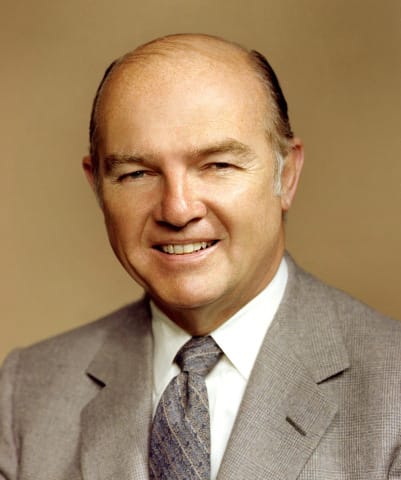
McDONALD
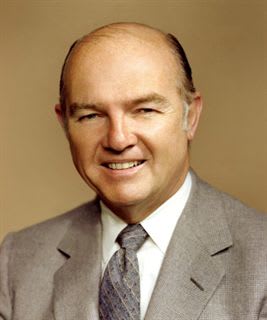
DETROIT - F. James (Jim) McDonald, former president and chief operating officer of General Motors Corp. throughout much of the 1980s, passed away June 13. He was 87.
McDonald's career spanned the post World War II auto boom. Among his many GM assignments, he served as general manager at both Pontiac and Chevrolet.
McDonald was named president and chief operating officer of GM Feb. 1, 1981, and served in those positions until his retirement on Aug. 31, 1987. During that period, he also served as chairman of the executive and administrative committees for the GM Board of Directors, and as a member of the finance committee.
As president, McDonald made improving GM quality a top priority. He opened a dialogue with UAW leaders that let to creation of the UAW-GM Quality Network, a new approach involving local plant and union leadership in efforts to improve product quality and customer satisfaction. The Quality Network continued long after McDonald's retirement.
Prior to being named president and chief operating officer, McDonald had been an executive vice president and member of the GM board with responsibility for car and truck, body and assembly, electrical components, mechanical components, power products, and overseas operations. He served as general manager for the Pontiac Motor Division from February 1969 through October 1972, when he became general manager of Chevrolet Motor Division, a position he held until he was named executive vice president and a member of the board in December 1974.
McDonald was born on Aug. 3, 1922 in Saginaw, Mich., and attended the General Motors Institute (now Kettering University), in Flint, Mich., under the sponsorship of the Saginaw Malleable Iron Division. Upon graduation, he became an engineering officer in the submarine service and served aboard two submarines in the Pacific Theater.
After leaving the Navy in 1946, McDonald returned to Saginaw Malleable Iron and served in various engineering, sales, production and control, and manufacturing positions. He also served as works manager and as general manager of Detroit Transmission Division, which became Hydra-matic Division; as works manager of the Pontiac Motor Division; and as director of manufacturing operations for Chevrolet.
He is survived by his wife of 66 years, Betty; daughter Marybeth Cunningham; sons John and Tim; seven grandchildren, and four great-grandchildren.
In lieu of flowers, memorial contributions can be made to Boys and Girls Clubs of Indian River County, P.O. Box 643068, Vero Beach, FL 32964; or Indian River Medical Center Foundation, 1000 36th Street, Vero Beach, FL 32960; or Riverside Theatre, 3250 Riverside Park Drive, Vero Beach, FL 32963.
A burial mass will be held June 17 at Holy Cross Catholic Church in Vero Beach, Fla.
More Operations

Fleet Has a Talent Pipeline Problem. What Comes Next? | AF News Recap
Where will fleet’s next generation of leaders come from? This week, we’re looking at the industry’s talent pipeline, what certification can add to a fleet career, how to build an award-worthy track record, and the return of Automotive Fleet’s Personal Use Survey.
Read More →
Smith System Launches Driver Risk Management Program
Fleets have more driver data than ever, but identifying risky behavior doesn't necessarily correct it. Smith System's new Driver Risk Management program combines monitoring, training, and follow-up coaching to help fleets connect risk signals with driver intervention.
Read More →
Automotive Fleet Opens 2026 Personal Use Survey for Commercial Fleet Managers
Less than two weeks left! Commercial and corporate fleet managers are invited to share how their organizations handle company vehicle personal-use policies, charges, and driver eligibility.
Read More →
From AI Prompts to AI-Generated Safety Songs | AF News Recap
Can better prompts make AI more useful for fleet managers? This week, we’re breaking down smarter fleet analysis, an AI-assisted experiment that turned safety training into music, and what happened to fuel prices in August.
Read More →
How to Write Better AI Prompts for Fleet Analysis
Include these six elements in your fleet prompts to generate more relevant analysis and accurate answers.
Read More →
Fleet Meets: Eric Kilgore
This edition of the Fleet Meets series features one of the industry's best leaders driving multi-market and national operations.
Read More →
Why Reactive Fleet Management Is Becoming Too Expensive to Sustain
Research highlights a growing need for proactive management strategies to address rising costs in fleet operations effectively.
Read More →
What Your Fleet KPIs Aren’t Telling You
Tracking fleet metrics is only useful when the data leads to better decisions. This guide helps fleet leaders assess cost, utilization, and downtime more accurately, identify performance gaps, and prioritize the actions that can improve operational results.
Read More →
Hidden in Plain Sight: Fleet Compliance Risks
Fleet compliance isn't just about having policies — it's about consistently enforcing them. This practical guide reveals six hidden compliance risks common in public sector and shared fleet operations and outlines proven strategies to improve visibility, accountability, and audit readiness
Read More →
Turning Fleet Payment Data into Executive Insights
Does data alone drive results in operations?
Read More →