




Hyundai's Second-Generation Azera to Get 23 MPG Combined
LOS ANGELES – Hyundai Motor America introduced its all-new 2012-MY Azera at the Los Angeles Auto Show. The automaker said the sedan’s new 3.3L gasoline direction-injection engine and six-speed automatic transmission provide combined mpg of 23 and 293 hp at 6,400 rpm.
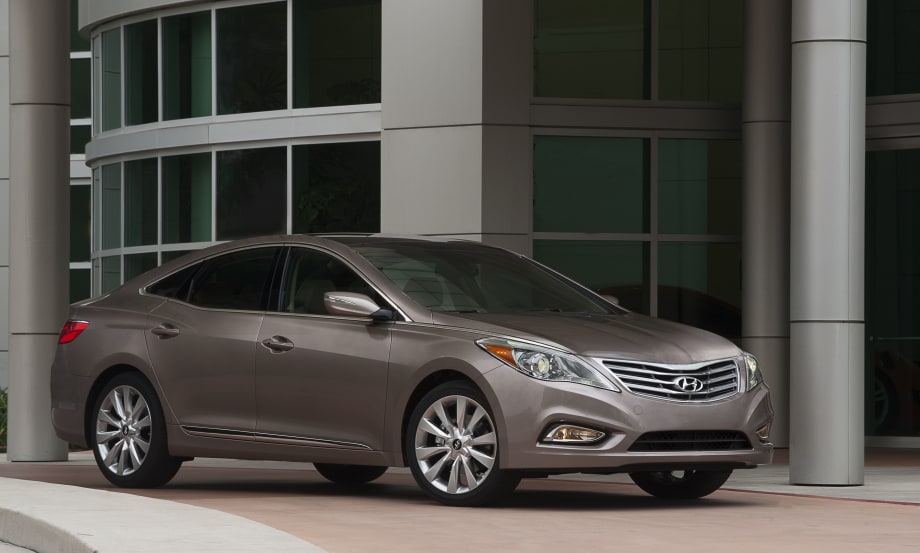
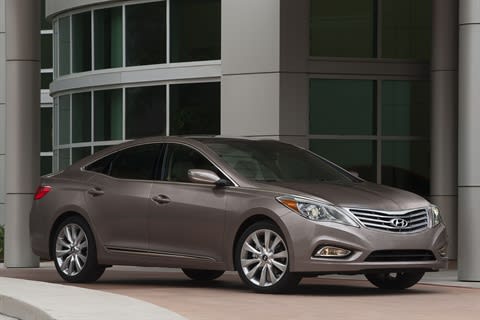
LOS ANGELES – Hyundai Motor America introduced its all-new 2012-MY Azera at the Los Angeles Auto Show. The automaker said the sedan’s new 3.3L gasoline direction-injection engine and six-speed automatic transmission provide combined mpg of 23 and 293 hp at 6,400 rpm.
Hyundai said the Azera is the company’s seventh vehicle in its 24/7 version 2.0 product initiative (which involves producing seven new models in 24 months), and comes on the heels of the all-new Tucson, Sonata, Equus, Elantra, Accent, and Veloster. The automaker said this vehicle uses the company’s “Fluidic Sculpture design language” and represents a “modern approach to the traditional large sedan segment by using an advanced powertrain.”
Performance
Under the hood, Hyundai’s Lambda II 3.3L GDI engine produces output of 88.8 horsepower per liter (for a total of 293 hp) while having the smallest displacement V-6 in the segment, according to Hyundai. The company said EPA fuel economy estimates for the Azera are 20 mpg city, 29 mpg highway, 23 mpg combined. Hyundai said the Azera’s powertrain also has an “Active Eco” mode, which modifies engine and transmission control to boost real-world fuel economy by 5%.
Exterior
Hyundai said the exterior design is “long, light, and low,” with a sleek roofline accented by the third window and wraparound LED taillights. The automaker said the vehicle’s front features a chrome grille, and HID headlamps. The sedan’s dimensions are 112 inches for the wheelbase, an overall length of 193.3 inches, and a width of 73.2 inches. The vehicle rides on standard 245/45R18 tires on 18-inch Hyper silver alloy wheels or optional 19-inch Hyper silver alloy wheel fitted with a 245/40R19 tire.
The Azera comes in a number of colors, including Black Onyx Pearl, Porcelain White Pearl, Silver Frost Metallic, Smoke Gray Metallic, Hyper Silver Metallic, Venetian Red Pearl, Bronze Mist Metallic, and Midnight Blue Pearl. Interior color choices are Camel, Graphite Black, and Chestnut Brown.
Interior
Inside the Azera, the vehicle provides a cabin with more than 45 inches of legroom and 40 inches of headroom for front-seat passengers. Other interior details include an optional panoramic sunroof and 3D Carbon interior accents. Other luxury appointments include an electrochromic auto-dimming mirror with HomeLink and power rear sunshade and manual rear-side window shades.
The Azera comes with standard leather seating surfaces. The 10-way driver’s seat and 8-way adjustable front passenger’s seat systems also come standard. The driver’s seat has an optional cushion extension and an integrated memory system for the seat itself, steering wheel, and side mirrors. The front seats are also optionally ventilated (with fans in the front seat back and bottom cushions). Heated front and rear seats are standard. Other standard interior features include dual automatic climate control, second-row air vents, and a cooled glove box.
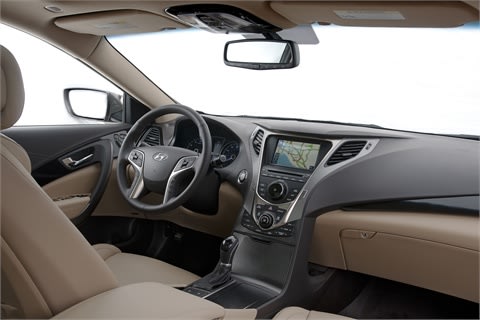
When it comes to infotainment features, the Azera features a standard navigation system with a 7-inch screen; standard three months of XM Satellite Radio; real-time XM NavTraffic, XM NAV Weather, XM Sports Ticker and XM Stock Ticker; a Bluetooth hands-free phone system as standard; and standard auxiliary iPod/USB inputs. The vehicle also features an audio system with HD Radio and 12 speakers.
Hyundai Blue Link telematics is standard on the Azera with a 90-day complimentary trial period. Blue Link can be accessed from the buttons on the rearview mirror inside the Azera, the Web, and via a smartphone. Blue Link comes in three packages: Assurance, Essentials, and Guidance. You can read more about it at www.hyundaibluelink.com.
Safety
The Azera features a seating system that’s designed to reduce impacts. It eliminates the need for active front head restraints and is expected to reduce head and neck injuries by 17 percent over the front seats in the previous-generation Azera, according to Hyundai. The automaker said it achieves this by optimizing the seat back structure to further absorb impacts.
The Azera comes equipped with a Vehicle Stability Management (VSM) system, which manages ESC (Electronic Stability Control), and the vehicle’s Motor-Driven electric Power Steering (MDPS).
Nine airbags, including dual front, front and rear seat-mounted side-impact, front and rear side curtain airbags and a driver’s knee airbag, are standard.
In terms of stopping ability, the braking package includes four-wheel disc brakes (12.6-inch front and 11.2-inch rear) and an Anti-Lock Braking System (ABS) that includes Brake Assist. Brake Assist provides maximum braking force when the system detects a panic stop. Electronic Brake-force Distribution (EBD) is another feature. It automatically adjusts the braking force to the front and rear axles based on vehicle loading conditions. Also, the Azera’s passive safety features include the Lower Anchors and Tethers for Children (LATCH) system for children’s seats and three-point seatbelts for all positions.
More Operations

Fleet Has a Talent Pipeline Problem. What Comes Next? | AF News Recap
Where will fleet’s next generation of leaders come from? This week, we’re looking at the industry’s talent pipeline, what certification can add to a fleet career, how to build an award-worthy track record, and the return of Automotive Fleet’s Personal Use Survey.
Read More →
Smith System Launches Driver Risk Management Program
Fleets have more driver data than ever, but identifying risky behavior doesn't necessarily correct it. Smith System's new Driver Risk Management program combines monitoring, training, and follow-up coaching to help fleets connect risk signals with driver intervention.
Read More →
Automotive Fleet Opens 2026 Personal Use Survey for Commercial Fleet Managers
Less than two weeks left! Commercial and corporate fleet managers are invited to share how their organizations handle company vehicle personal-use policies, charges, and driver eligibility.
Read More →
From AI Prompts to AI-Generated Safety Songs | AF News Recap
Can better prompts make AI more useful for fleet managers? This week, we’re breaking down smarter fleet analysis, an AI-assisted experiment that turned safety training into music, and what happened to fuel prices in August.
Read More →
How to Write Better AI Prompts for Fleet Analysis
Include these six elements in your fleet prompts to generate more relevant analysis and accurate answers.
Read More →
Fleet Meets: Eric Kilgore
This edition of the Fleet Meets series features one of the industry's best leaders driving multi-market and national operations.
Read More →
Why Reactive Fleet Management Is Becoming Too Expensive to Sustain
Research highlights a growing need for proactive management strategies to address rising costs in fleet operations effectively.
Read More →
What Your Fleet KPIs Aren’t Telling You
Tracking fleet metrics is only useful when the data leads to better decisions. This guide helps fleet leaders assess cost, utilization, and downtime more accurately, identify performance gaps, and prioritize the actions that can improve operational results.
Read More →
Hidden in Plain Sight: Fleet Compliance Risks
Fleet compliance isn't just about having policies — it's about consistently enforcing them. This practical guide reveals six hidden compliance risks common in public sector and shared fleet operations and outlines proven strategies to improve visibility, accountability, and audit readiness
Read More →
Turning Fleet Payment Data into Executive Insights
Does data alone drive results in operations?
Read More →