




Hyundai Updates Equus’ Exterior and Interior, and Adds Safety and Technology Features, for 2014
Hyundai is redesigning its Equus luxury sedan for 2014 with exterior and interior enhancements, new technology displays, and more advanced safety features.
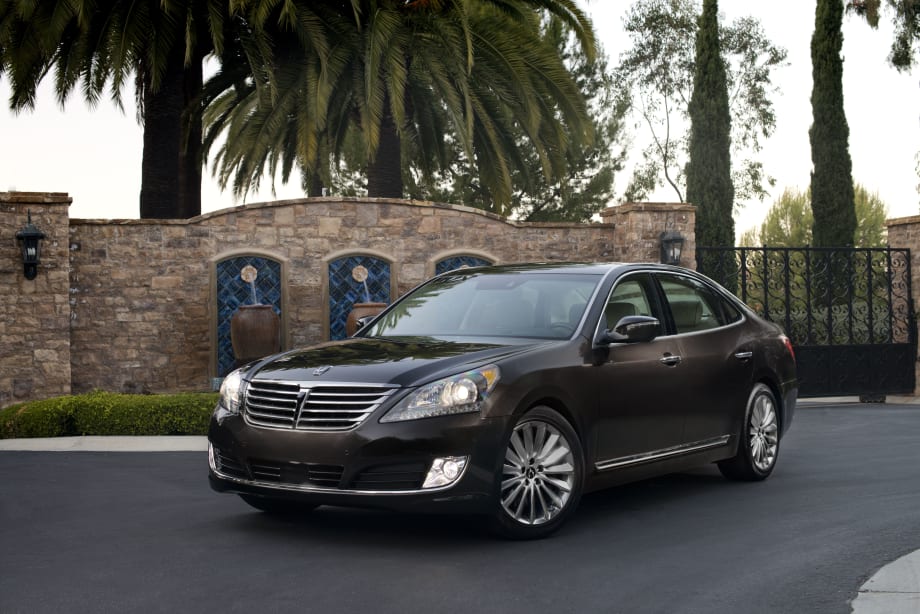
Hyundai said it redesigned the front fascia and grille for 2014. Photo courtesy Hyundai.
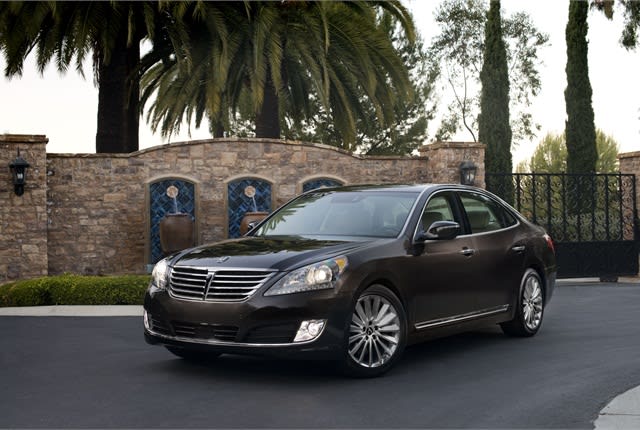
Hyundai said it redesigned the front fascia and grille for 2014. Photo courtesy Hyundai.
Hyundai is redesigning its Equus luxury sedan for 2014 with exterior and interior enhancements, new technology displays, and more advanced safety features.
For 2014, Hyundaii said it redesigned the Equus’ exterior look, giving the vehicle a new front fascia, a new grille with thinner chrome bars, new design elements in the headlamps, new standard LED fog lamps, and different tail lamp graphics. The automaker also redesigned the vehicle’s side mirrors to improve their aerodynamic characteristics. Hyundai also redesigned the Equus’ wheels, giving them a new 19-inch “turbine blade” alloy design in a polished silver finish.
On the inside, Hyundai said it wanted the Equus’ interior to complement the exterior design. The automaker redesigned the instrument panel and center stack with more premium materials and improved the center stack’s layout so it’s more ergonomic. Hyundai also changed the button icons for faster feature recognition. Other changes include an improved steering wheel control layout, a new rear console with a different button layout, and available 9.2-inch high-resolution adjustable seat back video screens that passengers can use to watch different types of media or use the available navigation system.
The automaker said it enhanced the climate control system with three temperature zones for the driver, front passenger, and rear-seat passengers. Other interior updates include an automatic power door closure assist function and power lumbar support on rear outboard passenger seats on Ultimate models.
For the 2014 model-year, Hyundai added a new color, Night Shadow Brown, and a new Ivory leather interior option, plus three wood accents, including Jet Black with Walnut, Ivory with Ash or Saddle brown with Madrona.
On the technology front, Hyundai improved the driver interface displays via a larger, 7-inch LCD center cluster display on Signature models, a large 12.3-inch LCD center cluster display on Ultimate models, and a larger, standard 9.2-inch center instrument panel LCD display on all models. The smart proximity key now includes key-fob and card-key vehicle entry options.
Hyundai is also adding its Bluelink telematics system to the 2014 Equus. Bluelink comes in three packages, and Hyundai is making it Assurance Connected Care, a services suite with safety and ownership assistance features, complimentary for three years.
For safety, Hyundai is adding a number of new features, including a new Blind Spot Detection system, a Heads-up Display and a multi-view camera system that provides an aerial view of the vehicle on the Ultimate model, and Rear Cross-Traffic Alert on all models. The automaker also offers a lane departure warning system, and a smart cruise control system that manages the vehicle’s speed to maintain a safe distance from vehicles up ahead.
Other safety features include electronic stability control (ESC), nine airbags, and a Vehicle Stability Management system that manages ESC, the vehicle’s electronic parking brake, the smart cruise control system, and the seatbelt tensioning system.
Under the hood, the vehicle is powered by Hyundai’s 5.0L Tau DOHC V-8 engine, the same as in the 2013 edition.
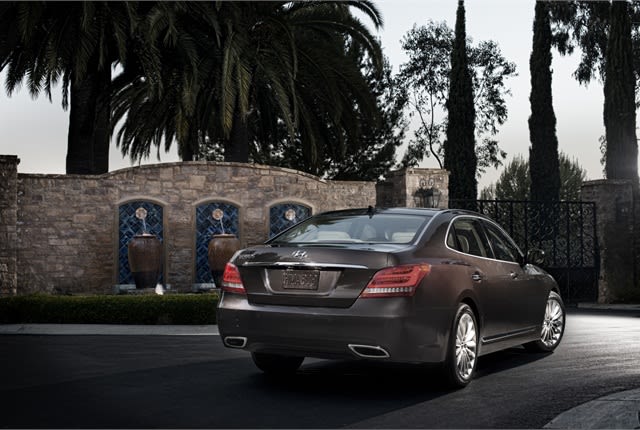
Hyundai is offering a new color, Night Shadow Brown, for 2014. Photo courtesy Hyundai.
More Operations

Moventum Fleet Management Names Mark Iorillo Head of Sales
Iorillo brings nearly 20 years of fleet management and sales experience to the role, including previous positions at Element Fleet Management, CEI, Donlen and Ryder.
Read More →
Fleet Has a Talent Pipeline Problem. What Comes Next? | AF News Recap
Where will fleet’s next generation of leaders come from? This week, we’re looking at the industry’s talent pipeline, what certification can add to a fleet career, how to build an award-worthy track record, and the return of Automotive Fleet’s Personal Use Survey.
Read More →
Smith System Launches Driver Risk Management Program
Fleets have more driver data than ever, but identifying risky behavior doesn't necessarily correct it. Smith System's new Driver Risk Management program combines monitoring, training, and follow-up coaching to help fleets connect risk signals with driver intervention.
Read More →
Automotive Fleet Opens 2026 Personal Use Survey for Commercial Fleet Managers
Less than two weeks left! Commercial and corporate fleet managers are invited to share how their organizations handle company vehicle personal-use policies, charges, and driver eligibility.
Read More →
From AI Prompts to AI-Generated Safety Songs | AF News Recap
Can better prompts make AI more useful for fleet managers? This week, we’re breaking down smarter fleet analysis, an AI-assisted experiment that turned safety training into music, and what happened to fuel prices in August.
Read More →
How to Write Better AI Prompts for Fleet Analysis
Include these six elements in your fleet prompts to generate more relevant analysis and accurate answers.
Read More →
Fleet Meets: Eric Kilgore
This edition of the Fleet Meets series features one of the industry's best leaders driving multi-market and national operations.
Read More →
Why Reactive Fleet Management Is Becoming Too Expensive to Sustain
Research highlights a growing need for proactive management strategies to address rising costs in fleet operations effectively.
Read More →
What Your Fleet KPIs Aren’t Telling You
Tracking fleet metrics is only useful when the data leads to better decisions. This guide helps fleet leaders assess cost, utilization, and downtime more accurately, identify performance gaps, and prioritize the actions that can improve operational results.
Read More →
Hidden in Plain Sight: Fleet Compliance Risks
Fleet compliance isn't just about having policies — it's about consistently enforcing them. This practical guide reveals six hidden compliance risks common in public sector and shared fleet operations and outlines proven strategies to improve visibility, accountability, and audit readiness
Read More →