





Learn More: Hyundai to Invest $7.4 Billion in the U.S. by 2025
Hyundai Completes Acquisition of Boston Dynamics from SoftBank
The OEM expects synergy between the companies to accelerate development of cutting-edge robotics featuring advanced mobility, manipulation, and vision capabilities.
June 23, 2021
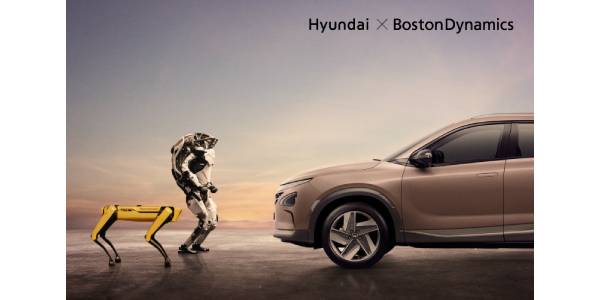
The OEM expects synergy between the companies to accelerate development of cutting-edge robotics featuring advanced mobility, manipulation, and vision capabilities.
Photo: Hyundai
1 min to read
Hyundai Motor Group, Boston Dynamics, and SoftBank Group Corp., announced June 21 the completion of the Hyundai's acquisition of a controlling interest in Boston Dynamics from SoftBank, following the receipt of regulatory approvals and other customary closing conditions. The deal valued the mobile robot firm at $1.1 billion. Additional financial details were not disclosed.
Post-closing, Hyundai holds an 80% stake in Boston Dynamics and SoftBank, through one of its affiliates, retains the remaining 20% stake.
Boston Dynamics develops agile, mobile robots that have been successfully integrated into business operations of many of the world’s leading industrial firms. Advanced robotics offer opportunities for rapid growth with the potential to positively impact society by making work safer and more productive.
Hyundai has invested substantially in the development of future technologies, including autonomous driving, artificial intelligence (AI), Urban Air Mobility (UAM), smart factories, and robots.
The deal is also expected to allow Hyundai and Boston Dynamics to leverage each other’s respective strengths in manufacturing, logistics, construction, and automation. Together, they will create a robotics value chain, from robot component manufacturing to smart logistics solutions. Additionally, Hyundai will support Boston Dynamics’ continued expansion of its product line and global sales and service footprint.
More Operations
Here's When You Should Make an Exception to Fleet Policy
Fleet policies are designed to create consistency, but not every driver or situation fits neatly within standard rules.
Read More →
AI-Native or AI-Acquired: What Should Fleet Managers Look for in an AI Platform?
Six questions can help fleet managers look beyond AI marketing claims to evaluate integration, data access, and real-world operational performance.
Read More →
Sponsored•October 14, 2026
A buyer's guide to fleet management software in 2027
Buying fleet management software in 2027 means looking beyond features and price. As fleet operations, technology and expectations evolve, this guide explores what today’s fleet professionals should consider when choosing a system that can deliver value now and adapt to what comes next.
Read More →

What Will Shape the Next Era of Fleet Management?
EVs, AI, and autonomous vehicles are reshaping fleet management. Discover what’s ahead—and how fleet leaders can prepare for the next era.
Read More →
How Fleets Can Recruit and Train Veterans for Technician Roles
Here's how the technician shortage has affected uptime for fleets, and what to do about it.
Read More →
Avis Budget Group Deploys Neology Toll Management Technology Across Major Brands
Neology’s neoFleet platform will manage toll transactions and toll-authority operations for vehicles across Avis, Budget, Payless, Budget Truck and Zipcar.
Read More →
Fleet Personal-Use Charges Edge Higher in 2026
Nearly eight in 10 surveyed fleets allow personal use of company vehicles, while just over half of respondents report charging employees for the privilege.
Read More →
The Future of Fleet + What’s Changing Right Now | AF News Recap
Could developments overseas offer a preview of what’s coming for U.S. fleets? This week, we’re looking at the future of AI, autonomy, and electrification, plus Ford Pro’s new certified pre-owned program, smarter vehicle offboarding, and a new way for fleets to manage toll expenses.
Read More →
How to Handle Vehicle Offboarding
What do fleet managers need to do when a driver leaves?
Read More →
Sponsored•October 1, 2026
Fleet Manager’s Ultimate Playbook: Navigating the New Standard in OEM Connectivity
Rising operating costs, driver safety concerns, and unplanned downtime are putting unprecedented pressure on modern fleets. Discover how fleet managers use embedded OEM connectivity and real-time vehicle data to cut TCO, prevent downtime, and protect drivers without aftermarket telematics hardware.
Read More →