




Hyundai Announces Pricing for Redesigned 2012 Azera
COSTA MESA, CA – Hyundai Motor America has announced pricing for the completely redesigned 2012 Azera, starting at $32,000 for the Azera and $36,000 for the Azera with Technology Package.
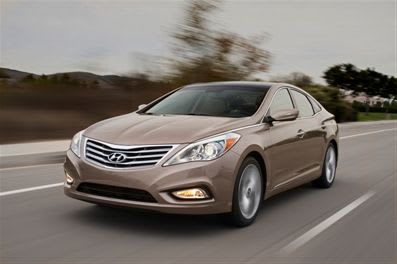
Hyundai Azera
Hyundai Azera
COSTA MESA, CA - Hyundai Motor America has announced pricing for the completely redesigned 2012 Azera, starting at $32,000 for the Azera and $36,000 for the Azera with Technology Package. According to the company, the all-new 2012 Azera is better equipped than the fully-loaded, previous generation 2011 Azera Limited.
Among the new 2012 standard features are:
Gasoline Direct Injection (GDI) engine technology.
Best-in-class combined fuel economy of 23 mpg.
293 hp.
Blue Link telematics system.
Proximity key with push-button start.
Heated rear seats.
18-inch alloy wheels.
SACHS Amplitude Selective Dampers (ASD) for improved ride comfort without compromising handling.
The Technology Package includes:
19-inch alloy wheels and tires(P245/40VR)
Panoramic Sunroof
HID Xenon headlights
Power rear sunshade
Manual side window sunshades
Infinity premium speakers with subwoofer and external amplifier
Power adjustable tilt and telescopic steering column
Integrated Memory System (IMS): Power driver's seat, exterior mirrors, and steering column
Driver's seat cushion extension
Ventilated front seats
Rear parking assistance sensors
Interior ambient lighting
The 2012 Azera will be offered in just two equipment levels and will go on sale in April.
The 2012 Azera is powered by the new Lambda II 3.3L Gasoline Direct Injection (GDI) engine, mated to a 6-speed automatic transmission with SHIFTRONIC. The powertrain is rated at 293 hp, while delivering best-in-class fuel economy of 20 mpg city, 29 mpg highway, and 23 mpg combined. Azera's powertrain also has an Active Eco system, which modifies engine and transmission control for improved fuel economy, translating into more than 5 percent improvement in real-world fuel economy.
Technology isn't forgotten in addition to the array of interior premium features. Premium sedan consumers can stay connected with the standard Bluetooth hands-free phone system and Hyundai's Blue Link telematics system, which combines safety, service and infotainment.
Hyundai's commitment to safety continues with the new Azera, offering best-in-class standard safety features, including nine airbags and impact-absorbing front seats. The Vehicle Stability Management system links safety features such as ESC, TCS, EBD, and Brake Assist to maximize their effectiveness in potential collision situations.
The all-new 2012 Azera is a premium large sedan positioned between the midsize Sonata and the mid-luxury Genesis, in regards to vehicle dimensions, powertrain and features content. Azera comprehensively delivers on customers' stylistic and functional needs and will serve as an aspirational product for move-up sedan buyers within Hyundai's model lineup.
More Operations

Moventum Fleet Management Names Mark Iorillo Head of Sales
Iorillo brings nearly 20 years of fleet management and sales experience to the role, including previous positions at Element Fleet Management, CEI, Donlen and Ryder.
Read More →
Fleet Has a Talent Pipeline Problem. What Comes Next? | AF News Recap
Where will fleet’s next generation of leaders come from? This week, we’re looking at the industry’s talent pipeline, what certification can add to a fleet career, how to build an award-worthy track record, and the return of Automotive Fleet’s Personal Use Survey.
Read More →
Smith System Launches Driver Risk Management Program
Fleets have more driver data than ever, but identifying risky behavior doesn't necessarily correct it. Smith System's new Driver Risk Management program combines monitoring, training, and follow-up coaching to help fleets connect risk signals with driver intervention.
Read More →
Automotive Fleet Opens 2026 Personal Use Survey for Commercial Fleet Managers
Less than two weeks left! Commercial and corporate fleet managers are invited to share how their organizations handle company vehicle personal-use policies, charges, and driver eligibility.
Read More →
From AI Prompts to AI-Generated Safety Songs | AF News Recap
Can better prompts make AI more useful for fleet managers? This week, we’re breaking down smarter fleet analysis, an AI-assisted experiment that turned safety training into music, and what happened to fuel prices in August.
Read More →
How to Write Better AI Prompts for Fleet Analysis
Include these six elements in your fleet prompts to generate more relevant analysis and accurate answers.
Read More →
Fleet Meets: Eric Kilgore
This edition of the Fleet Meets series features one of the industry's best leaders driving multi-market and national operations.
Read More →
Why Reactive Fleet Management Is Becoming Too Expensive to Sustain
Research highlights a growing need for proactive management strategies to address rising costs in fleet operations effectively.
Read More →
What Your Fleet KPIs Aren’t Telling You
Tracking fleet metrics is only useful when the data leads to better decisions. This guide helps fleet leaders assess cost, utilization, and downtime more accurately, identify performance gaps, and prioritize the actions that can improve operational results.
Read More →
Hidden in Plain Sight: Fleet Compliance Risks
Fleet compliance isn't just about having policies — it's about consistently enforcing them. This practical guide reveals six hidden compliance risks common in public sector and shared fleet operations and outlines proven strategies to improve visibility, accountability, and audit readiness
Read More →