




Hurricane Harvey Could Disrupt Trucking for Some Time
Hurricane Harvey, whose heavy rains brought devastating flooding to Houston and much of south Texas, may yet cause more trouble for the region-- the National Weather Service predicting an additional 25 inches of rain through the end of the week in certain areas.
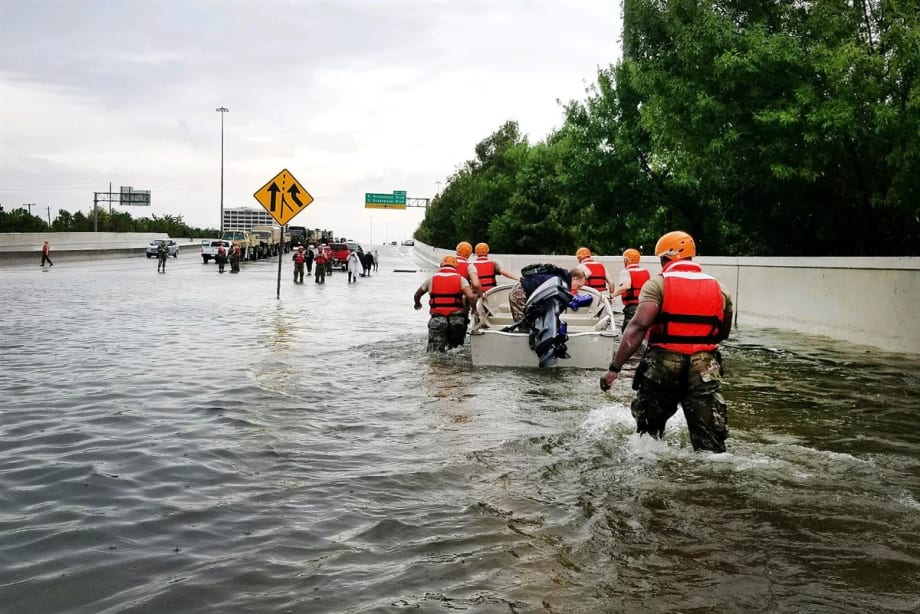
Photo: Texas Army National Guard/ Lt. Zachary West
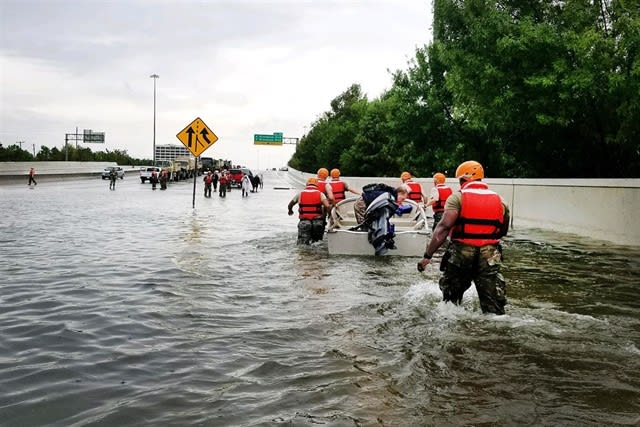
Photo: Texas Army National Guard/ Lt. Zachary West
Hurricane Harvey, whose heavy rains brought devastating flooding to Houston and much of south Texas, may yet cause more trouble for the region-- the National Weather Service is predicting an additional 25 inches of rain through the end of the week in certain areas.
Some parts of Texas have already seen as much as 30 inches of rainfall, with flood waters covering freeways, homes, and neighborhoods across south Texas in an area the size of Lake Michigan, a Red Cross administrator told National Public Radio.
It will be a while before the totality of the damage is realized in the fourth largest city in the U.S., but some are estimating that 30,000 are currently without a home. Many key roads in the area are impassable or washed away and that is also impacting businesses, including trucking operations.
The Texas Department of Transportation discouraged travel in the affected area, warning drivers that Harvey would continue to linger in Southeast Texas, bringing substantial wind and rain to the area. TxDOT is also providing an interactive map that shows current road conditions in the state.
Trucking research and analysis firm FTR estimates that Hurricane Harvey could strongly affect over 7% of U.S. trucking with up to 10% of all U.S. trucking being affected during this first week.
FTR attributed this disruption to trucking to a few broad effects. Trucks will have to wait for the water to recede from roads and docks in the region before freight begins to move. Extra shipments of relief construction supplies will take precedence, so overall productivity could decrease due to out-of-cycle supply chain demands. Then, most obviously, there is the infrastructure nightmare due to congestion and backed up loading docks.
The hurricane will also have significant pricing effects on the spot market based on observations made after similar storms, such as Hurricane Katrina in 2005, according to FTR. Ports and railways are also jammed with traffic waiting just outside the affected area, falling behind schedule.
“Look for spot prices to jump over the next several weeks with very strong effects in Texas and the South Central region,” said Noël Perry, partner at FTR. “Spot pricing was already up strong, in double-digit territory. Market participants could easily add 5 percentage points to those numbers.”
Fuel prices are also expected to jump as Texas provides 30% of U.S. refinery capacity. Regional diesel prices are expected to be strongly affected with national prices increasing as well. The storm could cause temporary shortages for the Gulf Region and increase prices in the Northeast, which supplies some of its oil from the region, according to the Washington Post.
While Harvey is no longer a hurricane, having been downgraded to a tropical storm as it weakened over land, it could still deliver buckets of rain that could cause more congestion and problems for transportation along its path.
The storm is expected to stall over the Gulf region, near Louisiana, before eventually moving northeast through the Mississippi River region into parts of Arkansas, Mississippi, Alabama, Tennessee, Missouri, and Kentucky. There are also reports that another tropical storm, named Irma, is being tracked off the coast of Florida could bring additional problems to the East Coast.
Word came late this afternoon that Texas Governor Greg Abbott (R) has activated the entire Texas National Guard in response to Hurricane Harvey, bringing the total number of deployed guardsmen to roughly 12,000. The governor’s office said the National Guard will assist in the ongoing search and rescue effort for any Texans in immediate danger, and will be “heavily involved in the extensive recovery effort” in the storm’s aftermath.
“It is imperative that we do everything possible to protect the lives and safety of people across the state of Texas as we continue to face the aftermath of this storm,” said Gov. Abbott. “The Texas National Guard is working closely with FEMA and federal troops to respond urgently to the growing needs of Texans who have fallen victim to Hurricane Harvey, and the activation of the entire Guard will assist in the efforts already under way.”
"While this is still a dangerous situation with a long response effort ahead, the state and people of Texas are resilient," said FEMA Administrator Brock Long. "FEMA was here before the storm hit, and we will be here as long as needed, actively coordinating the full resources of the federal government, to support Gov. Abbott and the state."
More Operations

Fleet Has a Talent Pipeline Problem. What Comes Next? | AF News Recap
Where will fleet’s next generation of leaders come from? This week, we’re looking at the industry’s talent pipeline, what certification can add to a fleet career, how to build an award-worthy track record, and the return of Automotive Fleet’s Personal Use Survey.
Read More →
Smith System Launches Driver Risk Management Program
Fleets have more driver data than ever, but identifying risky behavior doesn't necessarily correct it. Smith System's new Driver Risk Management program combines monitoring, training, and follow-up coaching to help fleets connect risk signals with driver intervention.
Read More →
Automotive Fleet Opens 2026 Personal Use Survey for Commercial Fleet Managers
Less than two weeks left! Commercial and corporate fleet managers are invited to share how their organizations handle company vehicle personal-use policies, charges, and driver eligibility.
Read More →
From AI Prompts to AI-Generated Safety Songs | AF News Recap
Can better prompts make AI more useful for fleet managers? This week, we’re breaking down smarter fleet analysis, an AI-assisted experiment that turned safety training into music, and what happened to fuel prices in August.
Read More →
How to Write Better AI Prompts for Fleet Analysis
Include these six elements in your fleet prompts to generate more relevant analysis and accurate answers.
Read More →
Fleet Meets: Eric Kilgore
This edition of the Fleet Meets series features one of the industry's best leaders driving multi-market and national operations.
Read More →
Why Reactive Fleet Management Is Becoming Too Expensive to Sustain
Research highlights a growing need for proactive management strategies to address rising costs in fleet operations effectively.
Read More →
What Your Fleet KPIs Aren’t Telling You
Tracking fleet metrics is only useful when the data leads to better decisions. This guide helps fleet leaders assess cost, utilization, and downtime more accurately, identify performance gaps, and prioritize the actions that can improve operational results.
Read More →
Hidden in Plain Sight: Fleet Compliance Risks
Fleet compliance isn't just about having policies — it's about consistently enforcing them. This practical guide reveals six hidden compliance risks common in public sector and shared fleet operations and outlines proven strategies to improve visibility, accountability, and audit readiness
Read More →
Turning Fleet Payment Data into Executive Insights
Does data alone drive results in operations?
Read More →