




How to Reduce Collisions
Commercial fleet drivers log a lot of miles, which puts them at higher risk for accidents. The annual accident rate for commercial fleets is around 20% with some industries even higher.

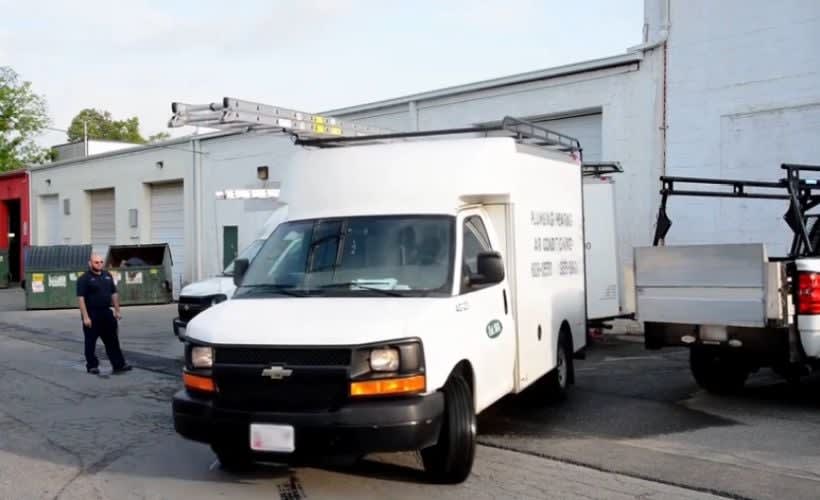
Effectively selecting, training, and supervising drivers will help any fleet reduce its number of collisions.
Screenshot via FCCI Fleet Safety/YouTube.
Commercial fleet drivers log a lot of miles, which puts them at higher risk for accidents.
For example, a typical U.S. motorist drives 12,000 to 15,000 miles annually, and each year has a one in 15 chance of being involved in a vehicle collision. Compare that to the average fleet driver — he or she travels 20,000 to 25,000 miles or more each year.
It should come as no surprise then that the annual accident rate for commercial fleets is around 20%, with some industries even higher.
Collisions are costly in time, money and lost lives. In addition to direct costs like vehicle repairs and medical bills, fleet owners are hit with indirect costs such as higher insurance premiums and a damaged reputation.
Protecting your drivers to the best of your ability is not only good for business; it's the right thing to do.
For all these reasons, fleet safety should be an integral part of every risk management program. Don't know where to begin when crafting a fleet safety program? Experts say start by focusing on three key areas.
Driver Selection
Review drivers' motor vehicle records (MVRs) before you put them in the driver's seat. It's important to understand a potential driver's history and evaluate whether or not he or she engages in high-risk driving behaviors. Once hired, make sure to review MVRs for all your drivers at least once a year. The goal is to be informed before an incident occurs.
Driver Training
As a fleet owner, it is your responsibility to make sure your drivers know your safety policies. Make sure your fleet drivers are informed about expectations and understand consequences or unsafe driving practices. In addition, good behaviors should be continually reinforced.
Driver Supervision
Monitoring drivers ensures they are meeting expectations for the safe operation of your fleet. There are a number of ways to do so, including: "How's My Driving?" decal programs, a periodic ride-along, and installing a GPS telematics program in your vehicles.
In addition to the above, experts say every fleet safety program should address distracted driving, vehicle maintenance and inspection, and crash investigation practices.
More Safety

Fleet Manager’s Ultimate Playbook: Navigating the New Standard in OEM Connectivity
Rising operating costs, driver safety concerns, and unplanned downtime are putting unprecedented pressure on modern fleets. Discover how fleet managers use embedded OEM connectivity and real-time vehicle data to cut TCO, prevent downtime, and protect drivers without aftermarket telematics hardware.
Read More →
From Driver Well-Being to EV Charging | AF News Recap
Mental health belongs in the fleet safety conversation. This week, we’re looking at five ways fleets can support employee well-being before a crisis, plus Holman’s expansion in Mexico, new one-day Fleet Forward passes, and why EV charging demand is outpacing infrastructure growth.
Read More →
Nexar-Nauto Merger Aims to Give Fleets Better Safety Intelligence Through Larger Driving Dataset
Stefan Heck tells Automotive Fleet that combining more than 10 billion miles of driving history with Nexar's AI models will give fleets deeper insights into driver risk and roadway conditions than either company could provide independently.
Read More →
Don't Wait for a Crisis: 5 Ways to Build Mental Health Into Your Fleet Safety Program
For Suicide Prevention Month, fleet and safety leaders have an opportunity to put mental health where it belongs: at the center of workplace safety.
Read More →
How Camera Data Can Strengthen a Fleet’s Insurance Renewal
Insights from a commercial insurance carrier and a broker show how fleets can turn video telematic data, driver coaching, and improved claims results into a stronger case at insurance renewal.
Read More →
The Safest Fleets Aren’t the Ones with the Most Technology
You’ve made the telematics investment. Here’s how to capture the other half of its value and build the safest fleet on the road.
Read More →
Hidden in Plain Sight: Fleet Compliance Risks
Fleet compliance isn't just about having policies — it's about consistently enforcing them. This practical guide reveals six hidden compliance risks common in public sector and shared fleet operations and outlines proven strategies to improve visibility, accountability, and audit readiness
Read More →
NETS Sets 2026 Fleet Safety Benchmark Conference for Indianapolis
The Sept. 15–17 program will feature fleet benchmarking data, case studies, emerging technologies, and implementation strategies while running alongside the NSC Safety Congress & Expo.
Read More →
Off-the-Job Crashes Account for 43% of Employers’ $61.7 Billion Crash Burden
NETS quantifies costs dispersed across fleet, risk, HR, and other departments while providing new per-crash benchmarks for employers.
Read More →
Ram Recalls More Than 1.27 Million 1500 Pickups for Seat Belt Anchor Issue
The recall affects certain 2019-2026 Ram 1500 pickups that may have improperly attached second-row seat belt buckle anchors.
Read More →