




How Safe Are Teslas with Autopilot Activated?
Tesla has released internal data showing the number of crashes its electric cars in the U.S. have incurred with Autopilot engaged compared to the national average of automobile crashes.
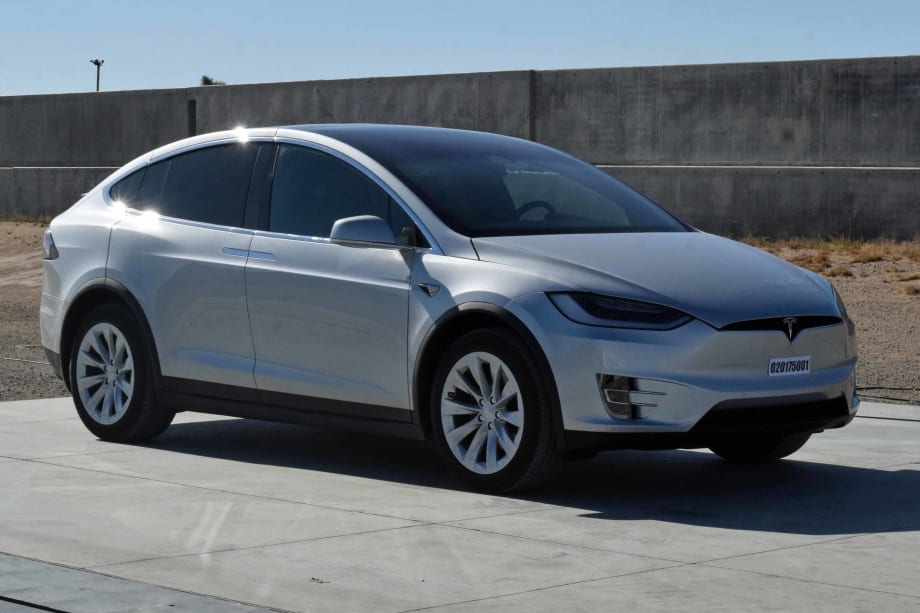
Tesla Model 3 waits to be crashed as part of NHTSA's frontal, side, and rollover tests.
Photo via NHTSA.
In the first quarter of 2020, Tesla vehicles in the U.S. registered one crash for every 4.68 million miles driven in which drivers had Autopilot engaged, the company released this week on its website.
The data, pulled from the Tesla vehicles’ telematics, reveals a correlation between crashes when various levels of safety technology are engaged in Tesla vehicles:
For those driving Teslas without Autopilot but with active safety features, Tesla vehicles registered one crash for every 1.99 million miles driven in the first quarter. For those driving without Autopilot and without active safety features, Teslas registered one crash for every 1.42 million miles driven.
Active safety features, which have been standard on Tesla models since 2014, include automatic emergency braking, lane departure avoidance, and conditional speed limits based on time of day and weather conditions.
The crash rates can be compared by quarter since October 2018, when Tesla began voluntarily releasing a quarterly Vehicle Safety Report.
By comparison, NHTSA’s data during that timeframe showed that in the U.S. there is an automobile crash every from 479,000 miles to 492,000 miles.
Crash data by quarter (below) show a steady — yet uneven — improvement by quarter since the third quarter of 2018. In the report, Tesla made the point that crash rates among all vehicles on the road can vary from quarter to quarter and can be affected by seasonality, like reduced daylight and inclement weather conditions.
Crash Data by Quarter
Q1 2020
Autopilot: One crash every 4.68 million miles driven
No Autopilot, with active safety features: one every 1.99 million miles
No Autopilot, no active safety features: one every 1.42 million miles
Q4 2019
Autopilot: One crash every 3.07 million miles driven
No Autopilot, with active safety features: one every 2.1 million miles
No Autopilot, no active safety features: one every 1.64 million miles
Q3 2019
Autopilot: One crash every 4.34 million miles driven
No Autopilot, with active safety features: one every 2.7 million miles
No Autopilot, no active safety features: one every 1.82 million miles
Q2 2019
Autopilot: One crash every 3.27 million miles driven
No Autopilot, with active safety features: one every 2.19 million miles
No Autopilot, no active safety features: one every 1.41 million miles
Q1 2019
Autopilot: One crash every 2.87 million miles driven
No Autopilot, with active safety features: one every 1.76 million miles
No Autopilot, no active safety features: one every 1.26 million miles
Q4 2018
Autopilot: One crash every 2.91 million miles driven
No Autopilot, with active safety features: one every 1.58 million miles
No Autopilot, no active safety features: one every 1.25 million miles
Q3 2018
Autopilot: One crash every 3.34 million miles driven
No Autopilot, with active safety features: one every 1.92 million miles
No Autopilot, no active safety features: one every 2.02 million miles
More Fleet Forward

Fleet Forward Conference Introduces One-Day Passes for 2026
New one-day registration gives fleet professionals the flexibility to attend Tuesday, Wednesday, or Thursday, with passes available for $199 through Sept. 18.
Read More →
Vibe Coding: When Fleet Managers Become Software Builders
Five fleet professionals — none with programming skills — discuss how they’re using AI to build fleet solutions in-house and in a fraction of the time.
Read More →
Fleet Forward Conference Tackles Fleet Industry’s Growing Leadership Gap
This session will examine succession planning, knowledge transfer, and the skills the next generation of fleet leaders will need as veteran professionals leave the industry.
Read More →
2026 Fleet Manager of the Year Finalists Announced
Who are the 2026 Fleet Manager of the Year finalists?
Read More →
John Rossant to Deliver Opening Keynote at 2026 Fleet Forward Conference
The CoMotion founder will draw on developments across Europe, China, the Middle East, and other international markets to identify trends that could influence how U.S. fleets plan for the coming decade.
Read More →
How to Build Custom Fleet Tools With AI and Vibe Coding [Webinar]
A new Automotive Fleet webinar explores how fleet managers are using AI and vibe coding to automate routine work and create simple operational tools without traditional programming skills.
Read More →
Is Fleet Ready for Its New Disruptors?
Three emerging leaders from a corporate fleet, public fleet, and the automotive supply chain will bring new ideas and a willingness to challenge industry norms to the Fleet Forward Conference stage.
Read More →
NAFA Announces 2026 Fleet Safety Symposium Education Program
Register for NAFA’s Fleet Safety Symposium and save $200 on your Fleet Forward Conference registration.
Read More →
Fleet Managers Take the Lead in Hands-On AI Workshop at FFC
The fleet manager-led session will show how to use “vibe coding” to build practical fleet tools without a traditional programming background.
Read More →
NETS Crash-Cost Data and CoolSys’ 80% Loss Reduction Take Center Stage at FFC
NETS will present findings from its latest Cost of Crashes research, then CoolSys safety leader and author Shawn Martinez will explain how the company built a safer driving culture across 3,500 employees.
Read More →