




How Companies Can Think, Message, and Manage Clearly
CAR 2025: The commander of the U.S.S. Cole, attacked by al-Qaeda terrorists in 2000, will keynote the conference, drawing on his frontline experience with leadership and crisis management.

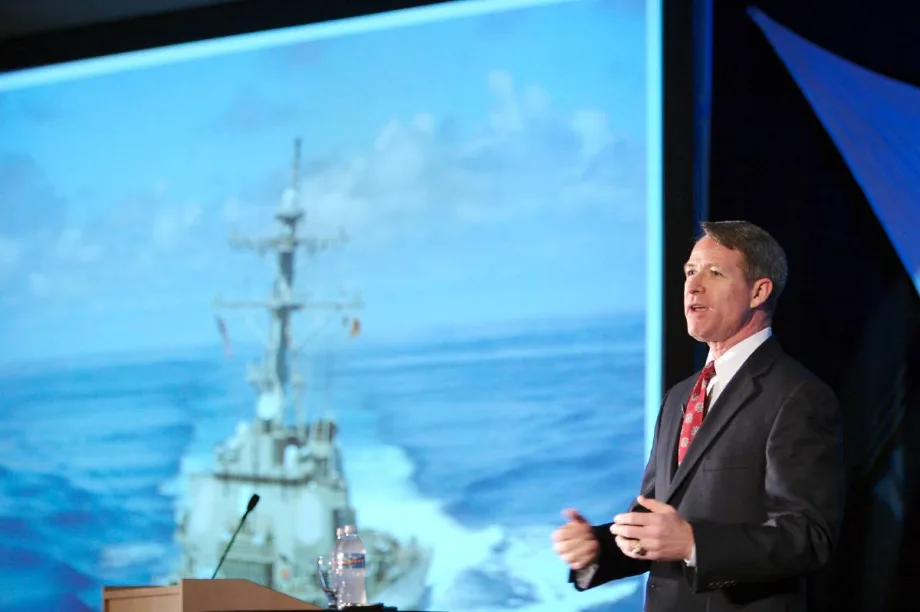
U.S. Navy Commander (Ret.) Kirk Lippold, former commanding officer of the U.S.S. Cole, will deliver the keynote presenation at the Conference of Automotive Remarketing in San Diego on March 19.
Photo: Kirk Lippold
U.S. Navy Commander (Ret.) Kirk Lippold presents a challenging paradox about executive leadership: You invest in yourself, but it’s not really about you.”
“Every individual who wants to be a leader or is put in a leadership position needs to decide up front that they will begin investing in themselves to exercise those leadership traits that they want to exemplify,” said Lippold, who served as the commanding officer of the U.S. Cole when it came under suicide terrorist attack in the port of Aden, Yemen, on Oct. 12, 2000. “Leadership is always by example.”
Leaders should not just be good to themselves but prioritize developing the next generations of leaders.
“You job as a leader is to make sure the leaders behind you become even better than you are,” he said. “The next generation of leaders are looking up to you and watching what you do, how you do it, and how you interact with and treat people. That truly sets the benchmark.”
During an early February interview previewing his keynote presentation at the Conference of Automotive Remarketing in San Diego on March 18-20, Lippold spoke about how companies can avoid the flaws and shortfalls in management and direction.
Critical Thinking Depends on Vision, Planning
To spur critical thinking that leads to solutions, companies need to set a vision, Lippold said.
“Where are they now and where do they want to be? And [what is] the timeline? Where do they want to be in three months, six months, or a year? That’s what keeps the investors, stockholders, and others happy with how a company is being run.”
A company needs to project its growth and expansion for two to five years to see where it should be.
“When you're looking at all those critical thinking skills, you learn to make decisions, whether it's on a short or a long timeline: What do I need to be thinking about next? What do I need to plan for next? And what do I need to do next?”
Employees want leadership that knows where a company is today versus where it’s headed tomorrow, Lippold said. “Do they understand the challenges that I'm facing here [in the business] or within the industry, and do they understand where they will take us and how I'm going to contribute and fit into that larger vision for the success of my company?”
Diffusing A Culture of Fear
One of the most important company practices for the individual worker is to specify their job role and how it should be done, Lippold said.
“If people understand their jobs, then what you want to do to get rid of that fear is encourage initiative and innovation and allow people to go to the boss and say, ‘Hey, I know we're doing it this way. But have we thought about trying it like this?’”
You want to be able to clearly communicate up and down the chain of command within any company or organization where people feel comfortable asking why you are doing something a particular way.
“The typical safe answer is, ‘Because I told you so.’ That may be great when you're trying to parent young kids. Still, when you’re working with adults who want to contribute to an organization's success, you want to make sure they understand why they’re doing what they’re doing and how that’s fitting into the overall picture.” People want to be part of an organization, especially one that will succeed and look out for their welfare and that of the organization.”
Employees will occasionally put forward a better idea or ask to consider or try one.
“It’s that clear flow of communications, not just down the chain of command, but also, more importantly, up the chain of command, where people can take the time as leaders to listen and have that open door policy,” Lippold said. “I would always ask that you work it through the chain of command first, but when you knock on my door, I don’t care whether you are a low seamen recruit or an executive officer. Let’s sit down and discuss how can we do business better to make a more combat-effective ship and, in the case of a business, how to be more efficient and effective. and successful in any industry.”
Communicating In a Crisis
Sooner or later, every business will face a crisis, a reputational challenge, a public relations problem, and/or a media embarrassment.
Lippold outlined several rules when communicating with the public and stakeholders during a negative or urgent event:
Be succinct and clear
Always tell the truth: “I think the number one thing is you have to be absolutely truthful and transparent in what you know.”
If you don't know something, say so. Don’t just say “I don't know.” Instead say, “I will find out,” or “We are working to get to the bottom of this. This is what we're doing. We hope to have an answer to that question or aspect of what you're asking within X period.”
At deadline, make sure to follow up with more information, what you’ve learned to date, or that you are still working on an answer, Lippold said. Sometimes the media and other people, especially employees or their families, will want to know what is going on as soon as possible.
Public Relations and Media Mistakes
Lippold underscored a vital rule: Do not dance around the point. Do not be afraid and always answer the question.
“Be upfront with the facts you know and tell them, but also be comfortable with saying, “’This is what we don't know, and we are working to find out.’”
In answering a question, that doesn't mean you can't pivot to emphasize a particular point, he said. “If you've had an incident, be able to answer the question and mention the fact that you have an exemplary safety record, for example. This may be a one off, but you're looking to find the root causes.”
People want brevity and a straightforward answer, and not just yes or no, he said.
Establishing the Best Management Style
While management styles and structures may vary, employees and members of an organization look for timeless leadership traits, Lippold said.
People want to be in an organization that has some degree of structure so that they know their job, supervisors, goals and expectations, and performance targets.
They also want flexibility to take initiative with their work and innovate.
Most importantly, trust your people, Lippold said. “Are you as leaders willing to take risks on their behalf?”
Successful organizations, regardless of leadership style, will also avoid throwing employees under the bus. If you give someone authority on a project or task, which fails or results in mistakes, the leaders should hold themselves accountable.
“That is a huge thing for many businesses because many businesses tend to be risk-adverse,” Lippold said. “Why? Because money and profit are involved. And when you start messing with those things, that's when you run into many issues. By the same token, the most successful businesses in the world are the ones that allow their people to take risks and reward them accordingly for the success that the business enjoys because of their work.”
Businesses and operations also need clear standards for performance, he said. “As you share those leadership techniques with others, you begin to build better leaders for the future. And that’s truly the mark of a successful organization.”
More Operations

How Fleets Can Recruit and Train Veterans for Technician Roles
Here's how the technician shortage has affected uptime for fleets, and what to do about it.
Read More →
Avis Budget Group Deploys Neology Toll Management Technology Across Major Brands
Neology’s neoFleet platform will manage toll transactions and toll-authority operations for vehicles across Avis, Budget, Payless, Budget Truck and Zipcar.
Read More →
Fleet Personal-Use Charges Edge Higher in 2026
Nearly eight in 10 surveyed fleets allow personal use of company vehicles, while just over half of respondents report charging employees for the privilege.
Read More →
The Future of Fleet + What’s Changing Right Now | AF News Recap
Could developments overseas offer a preview of what’s coming for U.S. fleets? This week, we’re looking at the future of AI, autonomy, and electrification, plus Ford Pro’s new certified pre-owned program, smarter vehicle offboarding, and a new way for fleets to manage toll expenses.
Read More →
How to Handle Vehicle Offboarding
What do fleet managers need to do when a driver leaves?
Read More →
Fleet Manager’s Ultimate Playbook: Navigating the New Standard in OEM Connectivity
Rising operating costs, driver safety concerns, and unplanned downtime are putting unprecedented pressure on modern fleets. Discover how fleet managers use embedded OEM connectivity and real-time vehicle data to cut TCO, prevent downtime, and protect drivers without aftermarket telematics hardware.
Read More →
U.S. Bank Adds Verra Mobility Toll Management to Voyager Fleet Platform
The integration allows U.S. Bank Voyager fleet customers to manage toll payments and violations alongside fuel, EV charging and maintenance expenses.
Read More →
ADAS Prevents Crashes. But Repairs Cost More | AF News Recap
ADAS-equipped vehicles may crash less often, but they can cost more when they do. This week, we’re breaking down what that tradeoff means for fleets, plus Subaru’s first Forester Wilderness Hybrid, Nissan’s new e-POWER Rogue, and why Calstart has become Catalyst Mobility.
Read More →
Moventum Fleet Management Names Mark Iorillo Head of Sales
Iorillo brings nearly 20 years of fleet management and sales experience to the role, including previous positions at Element Fleet Management, CEI, Donlen and Ryder.
Read More →
Fleet Has a Talent Pipeline Problem. What Comes Next? | AF News Recap
Where will fleet’s next generation of leaders come from? This week, we’re looking at the industry’s talent pipeline, what certification can add to a fleet career, how to build an award-worthy track record, and the return of Automotive Fleet’s Personal Use Survey.
Read More →