





Related: Senate Highway Bill Dodges Potholes
House Won't Consider Senate Highway Bill
UPDATED: An issue unrelated to transportation may keep the House from taking up the Senate's six-year highway bill. The clock is ticking as funds run out midnight Friday and the House is leaving for August recess.
July 27, 2015
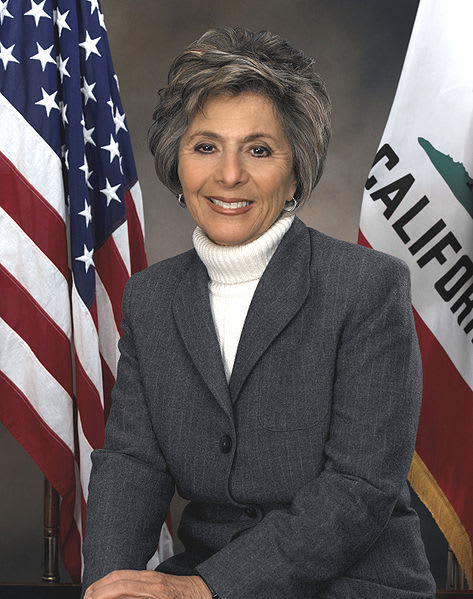
Barbara Boxer: "if we have a bill, we're sending it."
3 min to read

Barbara Boxer: "if we have a bill, we're sending it."
UPDATED -- An issue unrelated to transportation has prompted the House to declare the Senate highway bill (which has yet to win passage) dead on arrival.
The Senate bill, a six-year highway bill that actually only funds the first three years, would revive the expired Export-Import Bank. Because of that, reports The Hill, House Majority Leader Kevin McCarthy Monday said the House will not vote on the Senate bill.
Instead, McCarthy says the Senate should take up the short-term House bill, yet another kick-the-can-down-the-road patch, this one for five months.
The Export-Import Bank is an 81-year-old institution that provides loan guarantees to help U.S. corporations sell goods overseas. Its charter expired on June 30. Conservatives say it's corporate welfare.
Nevertheless, the Senate voted to include the Export-Import Bank amendment Monday just hours after McCarthy's comments, leading GOP presidential candidate Sen. Ted Cruz, (R-Texas) to blast the Senate for "casting votes in favor of cronyism and special interests," reports Fox News.
The Senate also set aside a two-month extension of federal highway funding that had been offered as an amendment, effectively killing the proposal for now, reports The Hill, and moving the six-year bill forward.
The Senate bill is a bipartisan effort led by Majority Leader Mitch McConnell (R-Ky.) and Sen. Barbara Boxer (D-Calif.).
Sen. James Inhofe (R-Okla.), who helped broker a deal on the legislation, pointed to that bipartisan support in urging House lawmakers to take up the Senate bill.
“I am confident we will have this legislation ready for the House before the July 31 deadline," Inhofe said in a statement after the vote. "It is my hope that the House will reconsider taking up this bipartisan piece of legislation that gives long-term funding certainty for our nation’s highway system, the backbone of our economy."
The House leaves for August recess on Thursday. McCarthy said it's not fair for the Senate to send the House a 1,000-plus-page bill days before the July 31 funding deadline.
Boxer, however, said in response, "if we have a bill, we're sending it."
“You know what, we’re staying an extra week in August. You can stay an extra week in August," she said in a speech on the Senate floor, according to published reports. " That’s not such a terrible thing."
However, reports the Associated Press, McCarthy flatly told reporters, "We are set to depart on Thursday."
McConnell wants to get this legislation out of the way at least through next year's elections.
The Senate bill also contains a number of provisions affecting trucking beyond highways, such as allowing states to get together and create pilot programs to allow younger drivers to truck interstate, and addressing concerns with the Compliance, Safety, Accountability enforcement program.
Authority for federal highway aid payments to states will expire Friday at midnight if the highway program is not extended, as the balance in the Highway Trust Fund is projected to drop below the $4 billion minimum needed to keep money flowing to the states.
What fix Congress will find by the end of the week is unknown. One possibility is an even shorter-term extension than what the House passed.
Updated 9:20 a.m. EDT 7/27 to add actions taken late Monday evening.
More Operations

Fleet Has a Talent Pipeline Problem. What Comes Next? | AF News Recap
Where will fleet’s next generation of leaders come from? This week, we’re looking at the industry’s talent pipeline, what certification can add to a fleet career, how to build an award-worthy track record, and the return of Automotive Fleet’s Personal Use Survey.
Read More →
Smith System Launches Driver Risk Management Program
Fleets have more driver data than ever, but identifying risky behavior doesn't necessarily correct it. Smith System's new Driver Risk Management program combines monitoring, training, and follow-up coaching to help fleets connect risk signals with driver intervention.
Read More →
Automotive Fleet Opens 2026 Personal Use Survey for Commercial Fleet Managers
Less than two weeks left! Commercial and corporate fleet managers are invited to share how their organizations handle company vehicle personal-use policies, charges, and driver eligibility.
Read More →
From AI Prompts to AI-Generated Safety Songs | AF News Recap
Can better prompts make AI more useful for fleet managers? This week, we’re breaking down smarter fleet analysis, an AI-assisted experiment that turned safety training into music, and what happened to fuel prices in August.
Read More →
How to Write Better AI Prompts for Fleet Analysis
Include these six elements in your fleet prompts to generate more relevant analysis and accurate answers.
Read More →
Fleet Meets: Eric Kilgore
This edition of the Fleet Meets series features one of the industry's best leaders driving multi-market and national operations.
Read More →
Why Reactive Fleet Management Is Becoming Too Expensive to Sustain
Research highlights a growing need for proactive management strategies to address rising costs in fleet operations effectively.
Read More →
Sponsored•August 12, 2026
What Your Fleet KPIs Aren’t Telling You
Tracking fleet metrics is only useful when the data leads to better decisions. This guide helps fleet leaders assess cost, utilization, and downtime more accurately, identify performance gaps, and prioritize the actions that can improve operational results.
Read More →
Sponsored•August 7, 2026
Hidden in Plain Sight: Fleet Compliance Risks
Fleet compliance isn't just about having policies — it's about consistently enforcing them. This practical guide reveals six hidden compliance risks common in public sector and shared fleet operations and outlines proven strategies to improve visibility, accountability, and audit readiness
Read More →
Turning Fleet Payment Data into Executive Insights
Does data alone drive results in operations?
Read More →