




House to Mark Up Highway Bill — At Last
The House Transportation and Infrastructure Committee has finally scheduled a hearing to mark up its version of a long-term highway funding bill for Oct. 22 – seven days before the current short-term patch authorizing spending on transportation runs out.

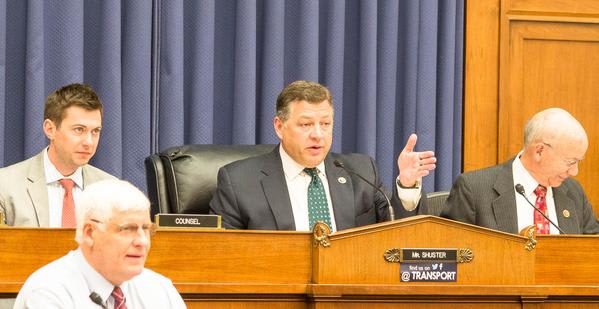
Rep. Bill Shuster, Chairman of the House Transportation and Infrastructure Committee File Photo
Rep. Bill Shuster, Chairman of the House Transportation and Infrastructure Committee File Photo
At least one long wait on Capitol Hill is nearly over. The House Transportation and Infrastructure Committee has finally scheduled a hearing to mark up its version of a long-term highway funding bill for Oct. 22.
That’s exactly seven days before the current short-term patch authorizing spending on transportation runs out on Oct. 27.
That means both chambers of Congress will have to pass one more extension — at least — to keep federal funds flowing for highway projects until the House and Senate can reach agreement on a long-term surface-transportation bill.
“Our nation’s economy depends on a safe, efficient surface transportation system, and one of the Transportation Committee’s priorities is to address the needs of the system,” Committee Chairman Rep. Bill Shuster (R-PA) said in a statement on the planned markup.
“Next week, the Committee will move forward with the policy and authorization provisions of a bill to improve America’s surface transportation infrastructure, reform programs, refocus those programs on national priorities, provide more flexibility and certainty for state and local partners, and welcome innovation,” he continued.
After the T&I Committee completes marking up its legislation, it will still have to be passed by the full House. And both chambers will have to agree to slap in place that next short-term funding patch by Oct. 29.
But those moves will be merely a prelude to circling Congress back to the underlying issue that has long stymied passage of a multi-year highway bill: How to fully fund it in one or more ways that will be acceptable to a majority of members in each chamber.
On July 30, the Senate voted 65-34 to approve a $50-billion six-year bill that would fund federal highway and other surface-transportation infrastructure projects for just three years.The same day, the Senate approved the current funding patch, which the House had passed the day before.
At that time, Rep. Shuster said passage of the extension would provide the House with “time to put forward a fiscally responsible long-term surface transportation proposal when Congress returns [from its August recess] and then go to conference with the Senate. We all share the same goal of completing a long-term bill as soon as possible, and ensuring that critical programs do not shut down before we achieve that goal is the right thing to do.”
That was said two months before the leadership of the House was cast into disarray by Rep. John Boehner's (R-OH) abrupt announcement on Sept. 25 that he would be resigning both his seat in Congress and his Speakership, effective Oct. 30.
The T&I markup hearing will be held Thursday, October 22, at 10:00 am EDT in Room 2167 of the Rayburn House Office Building on Capitol Hill.
More Operations

How Fleets Can Recruit and Train Veterans for Technician Roles
Here's how the technician shortage has affected uptime for fleets, and what to do about it.
Read More →
Avis Budget Group Deploys Neology Toll Management Technology Across Major Brands
Neology’s neoFleet platform will manage toll transactions and toll-authority operations for vehicles across Avis, Budget, Payless, Budget Truck and Zipcar.
Read More →
Fleet Personal-Use Charges Edge Higher in 2026
Nearly eight in 10 surveyed fleets allow personal use of company vehicles, while just over half of respondents report charging employees for the privilege.
Read More →
The Future of Fleet + What’s Changing Right Now | AF News Recap
Could developments overseas offer a preview of what’s coming for U.S. fleets? This week, we’re looking at the future of AI, autonomy, and electrification, plus Ford Pro’s new certified pre-owned program, smarter vehicle offboarding, and a new way for fleets to manage toll expenses.
Read More →
How to Handle Vehicle Offboarding
What do fleet managers need to do when a driver leaves?
Read More →
Fleet Manager’s Ultimate Playbook: Navigating the New Standard in OEM Connectivity
Rising operating costs, driver safety concerns, and unplanned downtime are putting unprecedented pressure on modern fleets. Discover how fleet managers use embedded OEM connectivity and real-time vehicle data to cut TCO, prevent downtime, and protect drivers without aftermarket telematics hardware.
Read More →
U.S. Bank Adds Verra Mobility Toll Management to Voyager Fleet Platform
The integration allows U.S. Bank Voyager fleet customers to manage toll payments and violations alongside fuel, EV charging and maintenance expenses.
Read More →
ADAS Prevents Crashes. But Repairs Cost More | AF News Recap
ADAS-equipped vehicles may crash less often, but they can cost more when they do. This week, we’re breaking down what that tradeoff means for fleets, plus Subaru’s first Forester Wilderness Hybrid, Nissan’s new e-POWER Rogue, and why Calstart has become Catalyst Mobility.
Read More →
Moventum Fleet Management Names Mark Iorillo Head of Sales
Iorillo brings nearly 20 years of fleet management and sales experience to the role, including previous positions at Element Fleet Management, CEI, Donlen and Ryder.
Read More →
Fleet Has a Talent Pipeline Problem. What Comes Next? | AF News Recap
Where will fleet’s next generation of leaders come from? This week, we’re looking at the industry’s talent pipeline, what certification can add to a fleet career, how to build an award-worthy track record, and the return of Automotive Fleet’s Personal Use Survey.
Read More →