





Related: House Highway Committee Hears from Beyond the Beltway
House Rep. Shuster Declares Fuel-Tax Hike DOA
Speaking to reporters yesterday, House Transportation and Infrastructure Chairman Bill Shuster argued that both Congress and President Obama lack the political will to increase federal fuel taxes to pay for funding the next highway bill.
March 19, 2015
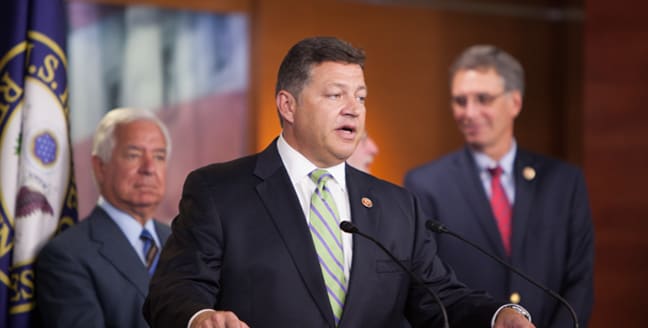
Rep. Bill Shuster (R-PA)
Photo: House T&I Committee
2 min to read
Rep. Bill Shuster (R-PA)
Photo: House T&I Committee
Speaking to reporters yesterday, House Transportation and Infrastructure Chairman Bill Shuster (R-PA) argued that both Congress and President Obama lack the political will to increase federal fuel taxes to pay for funding the next highway bill.
At a Capitol Hill briefing with reporters, the influential congressman said that “pretty much everybody in this town has come to the conclusion that repatriation is where the dollars are," per a news report posted by The Hill, adding that there’s “no willing in this Congress or in the administration to do anything with adjusting user fees or taxes."
On the other hand, according to The Hill report, Shuster remarked that other funding mechanisms are less weighted down with political baggage. In particular, he pointed to repatriation— the policy buzzword for taxing overseas corporate revenue. Shuster noted that one form or another of repatriation has already been floated by both parties.
"The president wants to do tax reform,” Shuster reportedly said. “The House wants to do tax reform. The Senate wants to tax reform… Folks who've been around here a long time know anything on taxes takes a long time."
That being said, Shuster admitted that with clock running down on the May 31st deadline for reauthorization of surface transportation, yet another short-term patch for highway funding may have to be hammered out. He noted that it likely would be after the Congressional recess for the Easter holiday before that decision will be made.
Earlier this week, the House T&I Chairman did not mention that possibility during his opening remarks at the committee’s second hearing on reauthorizing surface-transportation legislation.
Shuster essentially stated that the House, Senate and the Obama administration were on the same page as they were all “talking about the need for a long-term surface transportation bill.” He also said he that felt confident we will get there and make the investment needed."
By contrast, at the same hearing Ranking Member Peter DeFazio (D-OR) argued for swiftly passing a short-term patch that would ensure funds keep flowing to highway and bridge projects through this year.
“We need some sort of commitment from the federal government in the next week or two or three or we will see a dramatic drop-off in construction activity this summer,” DeFazio implored. “I feel a tremendous sense of urgency” about passing a short-term bill."
More Operations
Here's When You Should Make an Exception to Fleet Policy
Fleet policies are designed to create consistency, but not every driver or situation fits neatly within standard rules.
Read More →
AI-Native or AI-Acquired: What Should Fleet Managers Look for in an AI Platform?
Six questions can help fleet managers look beyond AI marketing claims to evaluate integration, data access, and real-world operational performance.
Read More →
Sponsored•October 14, 2026
A buyer's guide to fleet management software in 2027
Buying fleet management software in 2027 means looking beyond features and price. As fleet operations, technology and expectations evolve, this guide explores what today’s fleet professionals should consider when choosing a system that can deliver value now and adapt to what comes next.
Read More →

What Will Shape the Next Era of Fleet Management?
EVs, AI, and autonomous vehicles are reshaping fleet management. Discover what’s ahead—and how fleet leaders can prepare for the next era.
Read More →
How Fleets Can Recruit and Train Veterans for Technician Roles
Here's how the technician shortage has affected uptime for fleets, and what to do about it.
Read More →
Avis Budget Group Deploys Neology Toll Management Technology Across Major Brands
Neology’s neoFleet platform will manage toll transactions and toll-authority operations for vehicles across Avis, Budget, Payless, Budget Truck and Zipcar.
Read More →
Fleet Personal-Use Charges Edge Higher in 2026
Nearly eight in 10 surveyed fleets allow personal use of company vehicles, while just over half of respondents report charging employees for the privilege.
Read More →
The Future of Fleet + What’s Changing Right Now | AF News Recap
Could developments overseas offer a preview of what’s coming for U.S. fleets? This week, we’re looking at the future of AI, autonomy, and electrification, plus Ford Pro’s new certified pre-owned program, smarter vehicle offboarding, and a new way for fleets to manage toll expenses.
Read More →
How to Handle Vehicle Offboarding
What do fleet managers need to do when a driver leaves?
Read More →
Sponsored•October 1, 2026
Fleet Manager’s Ultimate Playbook: Navigating the New Standard in OEM Connectivity
Rising operating costs, driver safety concerns, and unplanned downtime are putting unprecedented pressure on modern fleets. Discover how fleet managers use embedded OEM connectivity and real-time vehicle data to cut TCO, prevent downtime, and protect drivers without aftermarket telematics hardware.
Read More →