




House Committee Approves Long-Term Highway Bill
The House Transportation and Infrastructure Committee unanimously approved its version of a long-term highway bill, the Surface Transportation Reauthorization and Reform (STRR) Act of 2015 (H.R. 3763).

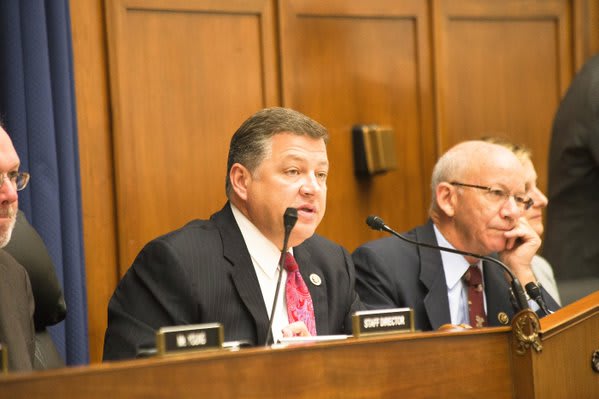
House T&I Committee Chair Bill Shuster (left) and Ranking Member Peter DeFazio at markup of long-term highway bill on Oct. 22. Photo: House T&I Committee
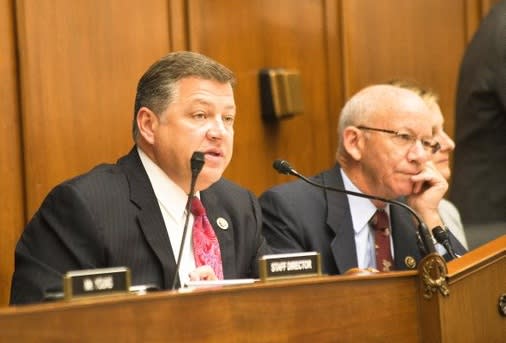
House T&I Committee Chair Bill Shuster (left) and Ranking Member Peter DeFazio at markup of long-term highway bill on Oct. 22. Photo: House T&I Committee
The House Transportation and Infrastructure Committee Thursday afternoon approved by a unanimous voice vote its version of a long-term highway bill, the Surface Transportation Reauthorization and Reform (STRR) Act of 2015 (H.R. 3763).
The committee termed the measure “a bipartisan, multi-year surface transportation bill to reauthorize and reform federal highway, transit, and highway safety programs” and described it as proposal that is “fiscally responsible, provides greater flexibility and more certainty for states and local governments to address their priorities, and accelerates project delivery.”
The STRAA ACT would authorize spending up to $325 billion on transportation projects over the next six years, including $261 billion dedicated to highways.
But instead of providing for six years’ worth of funding up front, the House bill will require Congress to pass separate legislation that would "unlock" additional funding after the first three years of funds are depleted.
By contrast, the long-term measure passed by the Senate back in July would fund infrastructure projects for three years and leave it up to the next Congress to fund the last three years covered.
Transportation and Infrastructure Committee Chairman Rep. Bill Shuster (R-PA) called the unanimous vote for the bill “a positive step forward for our nation’s transportation system and our economy.
“I look forward to House action on the bill and going to conference with the Senate as soon as possible.”
However, there’s another huge roadblock to surpass. Besides reconciling the House highway bill with the long-term Senate measure, the House Ways and Means Committee must come up with funding to cover the transportation investment laid out in the STRR Act.
More immediately though, because the current short-term patch authorizing spending on transportation runs out on Oct. 29, Congress has less than a week to approve yet another brief extension of the existing long-term highway bill – the one that was passed by both chambers way back in 2009.
More Operations

Here's When You Should Make an Exception to Fleet Policy
Fleet policies are designed to create consistency, but not every driver or situation fits neatly within standard rules.
Read More →
AI-Native or AI-Acquired: What Should Fleet Managers Look for in an AI Platform?
Six questions can help fleet managers look beyond AI marketing claims to evaluate integration, data access, and real-world operational performance.
Read More →
A buyer's guide to fleet management software in 2027
Buying fleet management software in 2027 means looking beyond features and price. As fleet operations, technology and expectations evolve, this guide explores what today’s fleet professionals should consider when choosing a system that can deliver value now and adapt to what comes next.
Read More →

What Will Shape the Next Era of Fleet Management?
EVs, AI, and autonomous vehicles are reshaping fleet management. Discover what’s ahead—and how fleet leaders can prepare for the next era.
Read More →
How Fleets Can Recruit and Train Veterans for Technician Roles
Here's how the technician shortage has affected uptime for fleets, and what to do about it.
Read More →
Avis Budget Group Deploys Neology Toll Management Technology Across Major Brands
Neology’s neoFleet platform will manage toll transactions and toll-authority operations for vehicles across Avis, Budget, Payless, Budget Truck and Zipcar.
Read More →
Fleet Personal-Use Charges Edge Higher in 2026
Nearly eight in 10 surveyed fleets allow personal use of company vehicles, while just over half of respondents report charging employees for the privilege.
Read More →
The Future of Fleet + What’s Changing Right Now | AF News Recap
Could developments overseas offer a preview of what’s coming for U.S. fleets? This week, we’re looking at the future of AI, autonomy, and electrification, plus Ford Pro’s new certified pre-owned program, smarter vehicle offboarding, and a new way for fleets to manage toll expenses.
Read More →
How to Handle Vehicle Offboarding
What do fleet managers need to do when a driver leaves?
Read More →
Fleet Manager’s Ultimate Playbook: Navigating the New Standard in OEM Connectivity
Rising operating costs, driver safety concerns, and unplanned downtime are putting unprecedented pressure on modern fleets. Discover how fleet managers use embedded OEM connectivity and real-time vehicle data to cut TCO, prevent downtime, and protect drivers without aftermarket telematics hardware.
Read More →