




Government Safety Officials Eye Drivers With Medical Problems
States must do a better job identifying and removing from roadways drivers with medical conditions like epilepsy and dementia that make them dangerous to other motorists, federal safety officials said on Nov. 9, according to the Associated Press.
States must do a better job identifying and removing from roadways drivers with medical conditions like epilepsy and dementia that make them dangerous to other motorists, federal safety officials said on Nov. 9, according to the Associated Press. The National Transportation Safety Board (NTSB) recommended that states adopt laws to guarantee legal immunity for doctors, family members and others who report dangerous drivers to state motor vehicle officials. Twenty states and the District of Columbia have no such laws. Six states — Nevada, California, Delaware, New Jersey, Oregon and Pennsylvania — require doctors to report drivers with high-risk conditions. Board members said police need to be trained to spot drivers with medical problems and doctors should be taught to talk to patients about whether they should be driving. The board also said federal agencies need to coordinate transportation possibilities for people who can no longer drive. The government has no data on crashes caused by medical conditions, so the extent of the problem is unknown. The NTSB studied six crashes, including five caused by epileptics having seizures and one by a diabetic who had a blackout, before issuing Tuesday's recommendations. The crashes, in Maryland, Pennsylvania and Florida, killed eight people and injured 24. NTSB Chairwoman Ellen Engleman Conners said the board must be cautious about acting without data to show what kinds of drivers pose the greatest risk. ''We don't want to say people with diabetes shouldn't drive,'' she said. Conners said as many as one in four drivers could have a condition that may cause a crash if authorities included arthritis, sleep disorders, high blood pressure, Alzheimer's disease, alcoholism and cataracts. She also wondered whether those conditions are more dangerous than severe allergies or distractions like cell phones. ''You're talking about a huge federal action that's potentially going to reach ... into every patient's life,'' Conners said. ''The concern I have is the potential for overreaching.''
More Operations

How Fleets Can Recruit and Train Veterans for Technician Roles
Here's how the technician shortage has affected uptime for fleets, and what to do about it.
Read More →
Avis Budget Group Deploys Neology Toll Management Technology Across Major Brands
Neology’s neoFleet platform will manage toll transactions and toll-authority operations for vehicles across Avis, Budget, Payless, Budget Truck and Zipcar.
Read More →
Fleet Personal-Use Charges Edge Higher in 2026
Nearly eight in 10 surveyed fleets allow personal use of company vehicles, while just over half of respondents report charging employees for the privilege.
Read More →
The Future of Fleet + What’s Changing Right Now | AF News Recap
Could developments overseas offer a preview of what’s coming for U.S. fleets? This week, we’re looking at the future of AI, autonomy, and electrification, plus Ford Pro’s new certified pre-owned program, smarter vehicle offboarding, and a new way for fleets to manage toll expenses.
Read More →
How to Handle Vehicle Offboarding
What do fleet managers need to do when a driver leaves?
Read More →
Fleet Manager’s Ultimate Playbook: Navigating the New Standard in OEM Connectivity
Rising operating costs, driver safety concerns, and unplanned downtime are putting unprecedented pressure on modern fleets. Discover how fleet managers use embedded OEM connectivity and real-time vehicle data to cut TCO, prevent downtime, and protect drivers without aftermarket telematics hardware.
Read More →
U.S. Bank Adds Verra Mobility Toll Management to Voyager Fleet Platform
The integration allows U.S. Bank Voyager fleet customers to manage toll payments and violations alongside fuel, EV charging and maintenance expenses.
Read More →
ADAS Prevents Crashes. But Repairs Cost More | AF News Recap
ADAS-equipped vehicles may crash less often, but they can cost more when they do. This week, we’re breaking down what that tradeoff means for fleets, plus Subaru’s first Forester Wilderness Hybrid, Nissan’s new e-POWER Rogue, and why Calstart has become Catalyst Mobility.
Read More →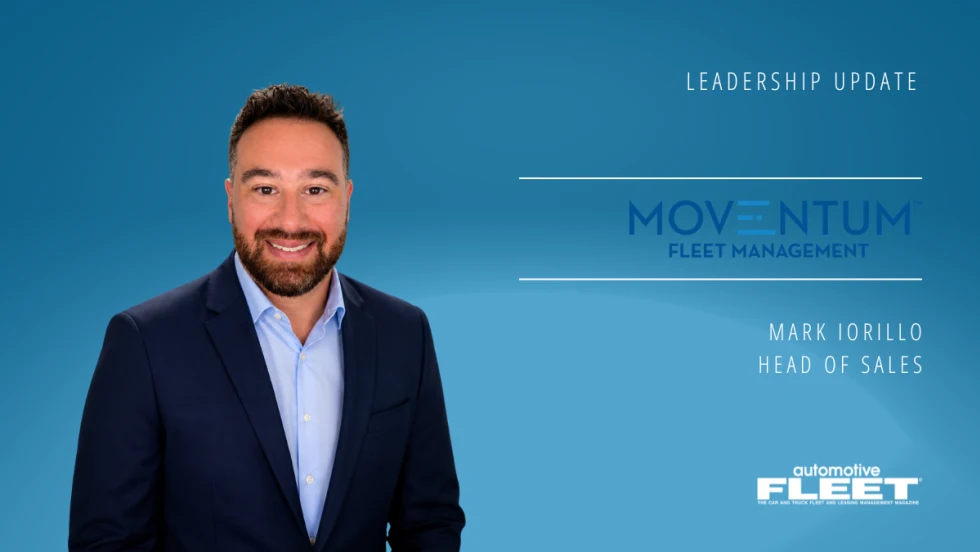
Moventum Fleet Management Names Mark Iorillo Head of Sales
Iorillo brings nearly 20 years of fleet management and sales experience to the role, including previous positions at Element Fleet Management, CEI, Donlen and Ryder.
Read More →
Fleet Has a Talent Pipeline Problem. What Comes Next? | AF News Recap
Where will fleet’s next generation of leaders come from? This week, we’re looking at the industry’s talent pipeline, what certification can add to a fleet career, how to build an award-worthy track record, and the return of Automotive Fleet’s Personal Use Survey.
Read More →