




WASHINGTON, D.C. – The reason for the concern in the legal and privacy-rights communities is that e-plates may expand the ability of police to track individuals by the movement of their vehicles, according to the Web site, www.technewsworld.com. A single RFID reader can identify dozens of vehicles fitted with e-plates moving at any speed at a distance of about 100 yards. A controversial plan to embed radio frequency identification chips in license plates in the United Kingdom also may be coming to the United States, experts told UPI's Wireless World. The e-Plate, developed by the British firm Hills Numberplates, is a license plate that also transmits a vehicle's unique identification via encryption that can be read by a small detector, whose output can be used locally or communicated to a distant host. "RFID is all the rage these days," said Bradley Gross, chairman of Becker & Poliakoff, a law firm in Ft. Lauderdale, Fla., "but my fear is that this use of the technology is tracking at its worst." The reason for the concern in the legal and privacy-rights communities is that e-plates may expand the ability of police to track individuals by the movement of their vehicles. A single RFID reader can identify dozens of vehicles fitted with e-plates moving at any speed at a distance of about 100 yards. The e-plate looks just like a standard plate, but it contains an embedded chip that cannot be seen or removed. It is self-powered with a battery life of up to 10 years. "Police will be able to track your every move when you drive," said Liz McIntyre, an RFID expert and author of the forthcoming book, Spychips: How Major Corporations and the Government Plan to Track Your Every Move With RFID. "What if they put these readers at a mosque?" she asked. "They could tell who was inside at a worship service by which cars were in the parking lot." Indeed, the makers of the technology boast that the e-plates can furnish access control, automated tolling, asset tracking, traffic-flow monitoring, and vehicle crime and "non-compliance." The chips can be outfitted with 128-bit encryption to prevent hacking. The problem is that people other than the vehicle's owner quite often are at the wheel. "Will this, ultimately, stop terrorism?" Gross asked. "The occupants of cars change continuously. Terrorists can steal cars." Similar technology already has been used in the United States, experts said. Some experts said governments already are using chips embedded in tollway access cards without heed to privacy rights. In Texas, for example, tollway authorities have been "making printouts of the records of every time you pass through a toll booth, what time you passed through," McIntyre said. "The government hasn't established a privacy policy for this, and people are not being informed that they are doing this. This is an instance of Big Brother on the highway."
Government May Soon Track Drivers By License Plate
WASHINGTON, D.C. – The reason for the concern in the legal and privacy-rights communities is that e-plates may expand the ability of police to track individuals by the movement of their vehicles.
More Operations
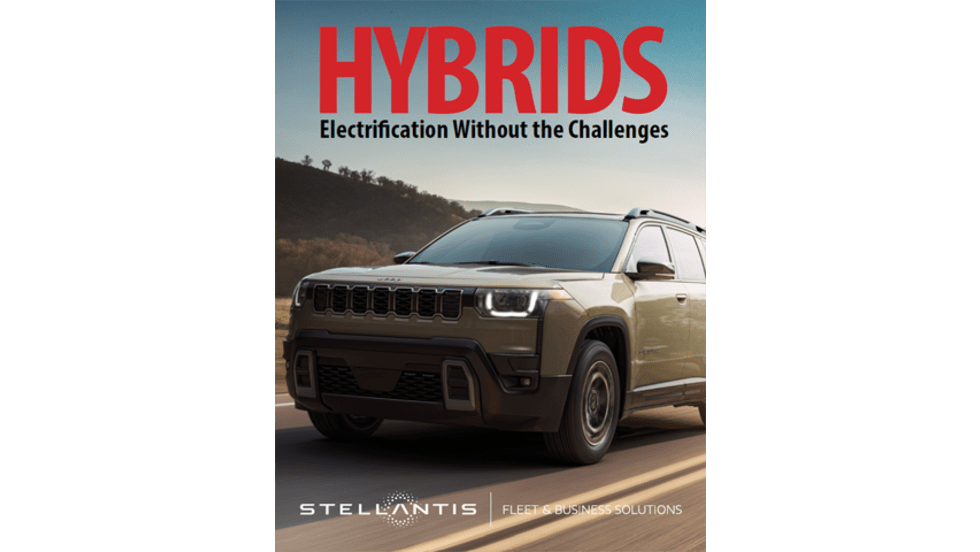
Hybrids: Electrification Without the Challenges
For fleet managers, fuel is one of the biggest line items in the budget — and it's one hybrids can shrink without changing how your people work. Download the eBook to see the numbers, understand the technology, and get a step-by-step guide to making the switch.
Read More →
How NOV Uses Telematics to Improve Fleet Safety Across 160 Locations
James Victory of NOV discusses how the company manages fleet safety, maintenance, and telematics across more than 150 locations supporting oilfield operations throughout the U.S.
Read More →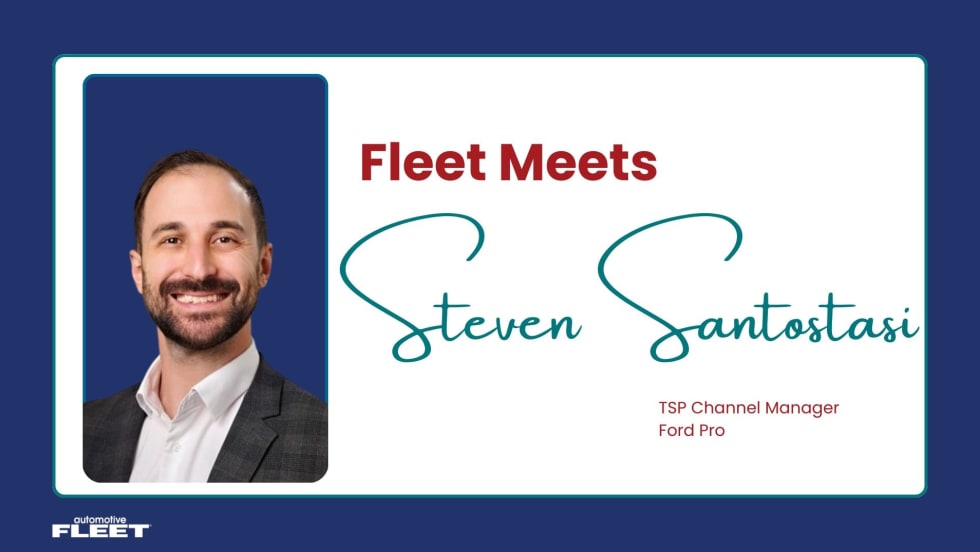
Fleet Meets: Steven Santostasi
This edition of the Fleet Meets series features Steven Santostasi, the current TSP channel manager for Ford Pro.
Read More →
Why Fleet Managers Are Replacing Departmental Vehicles with Shared Motor Pools
Departmentally assigned vehicles often create hidden costs through underutilization, poor visibility, and increased administrative burden. This white paper explores how shared motor pool strategies help fleets reduce costs, improve accountability, and optimize vehicle utilization.
Read More →
Soap Box Derby Challenge: Assembling the Crew
Meet Gabriel, Matthew, and Angel — the team helping bring this soap box derby build to life.
Read More →
BBL Fleet Acquires Velcor Leasing Corporation
BBL Fleet expanded its footprint in the fleet management industry with the acquisition of Velcor Leasing Corporation of Madison through a stock purchase agreement finalized Feb. 27, 2026.
Read More →
Lytx Introduces New AI Fleet Technologies at Protect 2026
The company introduced new AI-driven fleet safety and operations technologies during its annual user conference.
Read More →
Fleet Costs Are Rising: Here’s How Leaders Are Responding
Fleet leaders are under pressure to reduce costs, adapt to economic uncertainty, and make smarter decisions. See how peers across North America are responding with real data, proven strategies, and forward-looking insights. Download the 2026 Market Pulse Report to benchmark your strategy and uncover where you can gain an edge.
Read More →
From Waffle House to AI: Fleet Trends You Need to Know
In this AF news recap, host Faith Howell covers how Waffle House stepped up during disaster response and new AI tech on the market.
Read More →
Fleet Operations in the Age of AI: Navigating Ethical and Legal Challenges
AI is no longer a future concept for fleets—it’s already embedded in the tools, data, and decisions that operators rely on every day. In this episode of the Fleet Forward Podcast, recorded live at Fleet Forward, industry leaders take the conversation beyond hype to examine what responsible AI adoption really looks like in fleet operations.
Read More →