




SAN FRANCISCO – Online search engine company, Google, has unveiled a new feature that will enable its users to zoom in on homes and businesses using satellite images, an advance that may raise privacy concerns as well as intensify the competitive pressures on its rivals, according to the Associated Press. The satellite technology, which Google began offering on April 4 at maps.google.com, is part of the package that the Mountain View-based company acquired when it bought digital map maker Keyhole Corp. for an undisclosed amount nearly six months ago. This marks the first time since the deal closed that Google has offered free access to Keyhole's high-tech maps through its search engine. Users previously had to pay $29.95 to download a version of Keyhole's basic software package. A more traditional map will continue to be the first choice served up by Google's search engine. Users will have the option of retrieving a satellite picture by clicking on a button. The satellite maps could unnerve some people, even as the technology impresses others. That's because the Keyhole technology is designed to provide close-up perspective of specific addresses. Keyhole's previous government ties also have raised anxieties. Founded in 2001, Keyhole raised some money in 2003 from In-Q-Tel, a venture capital firm backed by the Central Intelligence Agency. Leading up to the Google sale, Keyhole's roughly 10,000 customers included a cross-section of government agencies. There is little reason for people to be paranoid about the satellite maps because the images generally are six to 12 months old, said John Hanke, Keyhole's general manager. “And it's not like you are going to be able to read a license plate on a car or see what an individual was doing when a particular image was taken,” he said. Google believes most people will like the convenience of generating a satellite image with a few clicks of a computer mouse. The company envisions people using the service as a way to scout a hotel's proximity to the beach for a possible vacation or size up the neighborhood where an apartment is for rent. Google's free satellite maps initially will be limited to North America, with images covering roughly half the United States, Hanke said. Although Google is offering the satellite maps on a test basis, the feature will probably force its other online rivals to upgrade their technology, predicted search industry analyst Greg Sterling of the Kelsey Group. “To play in this space, you are going to need some robust mapping capabilities.” Sterling said Google's satellite maps pose the biggest threat to Mapquest, a service owned by Time Warner Corp. that has long operated the most popular Web site for finding directions. The satellite maps also up the ante for the many challengers chipping away at Google's share of the lucrative Internet search engine market by adding more bells and whistles. For instance, Amazon.com Inc.'s A9 search engine earlier this year introduced a feature that includes an index containing 20 million street-level photographs of building exteriors in 10 major U.S. cities.
Google Feature Incorporates Satellite Maps
SAN FRANCISCO – Online search engine company, Google, has unveiled a new feature that will enable its users to zoom in on homes and businesses using satellite images, an advance that may raise privacy concerns as well as intensify the competitive pressures on its rivals, according to the Associated Press.
More Operations

Hybrids: Electrification Without the Challenges
For fleet managers, fuel is one of the biggest line items in the budget — and it's one hybrids can shrink without changing how your people work. Download the eBook to see the numbers, understand the technology, and get a step-by-step guide to making the switch.
Read More →
How NOV Uses Telematics to Improve Fleet Safety Across 160 Locations
James Victory of NOV discusses how the company manages fleet safety, maintenance, and telematics across more than 150 locations supporting oilfield operations throughout the U.S.
Read More →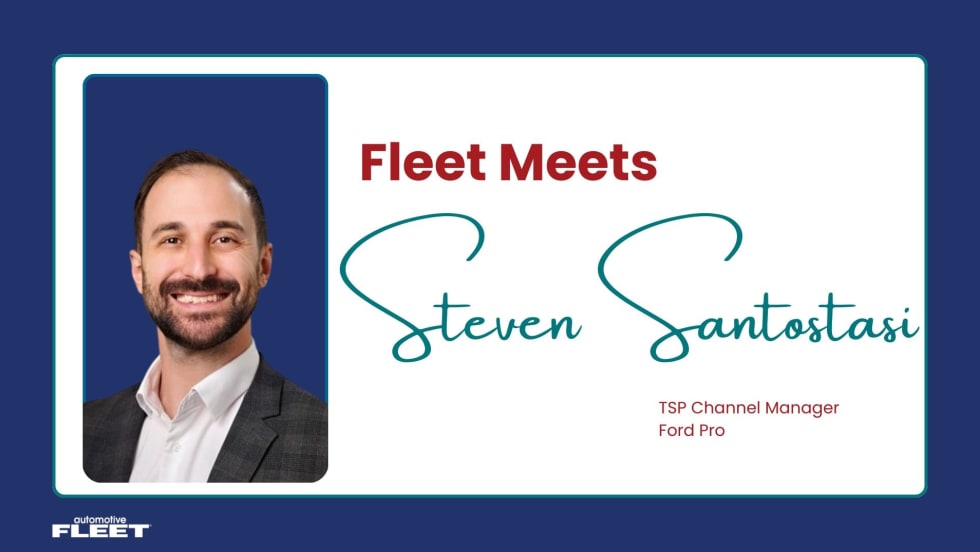
Fleet Meets: Steven Santostasi
This edition of the Fleet Meets series features Steven Santostasi, the current TSP channel manager for Ford Pro.
Read More →
Why Fleet Managers Are Replacing Departmental Vehicles with Shared Motor Pools
Departmentally assigned vehicles often create hidden costs through underutilization, poor visibility, and increased administrative burden. This white paper explores how shared motor pool strategies help fleets reduce costs, improve accountability, and optimize vehicle utilization.
Read More →
Soap Box Derby Challenge: Assembling the Crew
Meet Gabriel, Matthew, and Angel — the team helping bring this soap box derby build to life.
Read More →
BBL Fleet Acquires Velcor Leasing Corporation
BBL Fleet expanded its footprint in the fleet management industry with the acquisition of Velcor Leasing Corporation of Madison through a stock purchase agreement finalized Feb. 27, 2026.
Read More →
Lytx Introduces New AI Fleet Technologies at Protect 2026
The company introduced new AI-driven fleet safety and operations technologies during its annual user conference.
Read More →
Fleet Costs Are Rising: Here’s How Leaders Are Responding
Fleet leaders are under pressure to reduce costs, adapt to economic uncertainty, and make smarter decisions. See how peers across North America are responding with real data, proven strategies, and forward-looking insights. Download the 2026 Market Pulse Report to benchmark your strategy and uncover where you can gain an edge.
Read More →
From Waffle House to AI: Fleet Trends You Need to Know
In this AF news recap, host Faith Howell covers how Waffle House stepped up during disaster response and new AI tech on the market.
Read More →
Fleet Operations in the Age of AI: Navigating Ethical and Legal Challenges
AI is no longer a future concept for fleets—it’s already embedded in the tools, data, and decisions that operators rely on every day. In this episode of the Fleet Forward Podcast, recorded live at Fleet Forward, industry leaders take the conversation beyond hype to examine what responsible AI adoption really looks like in fleet operations.
Read More →