




GM’s Maven Launches Carsharing Service in Los Angeles
General Motors’ carsharing program Maven continues its expansion by launching in Los Angeles. Maven is now available in nine U.S. cities.
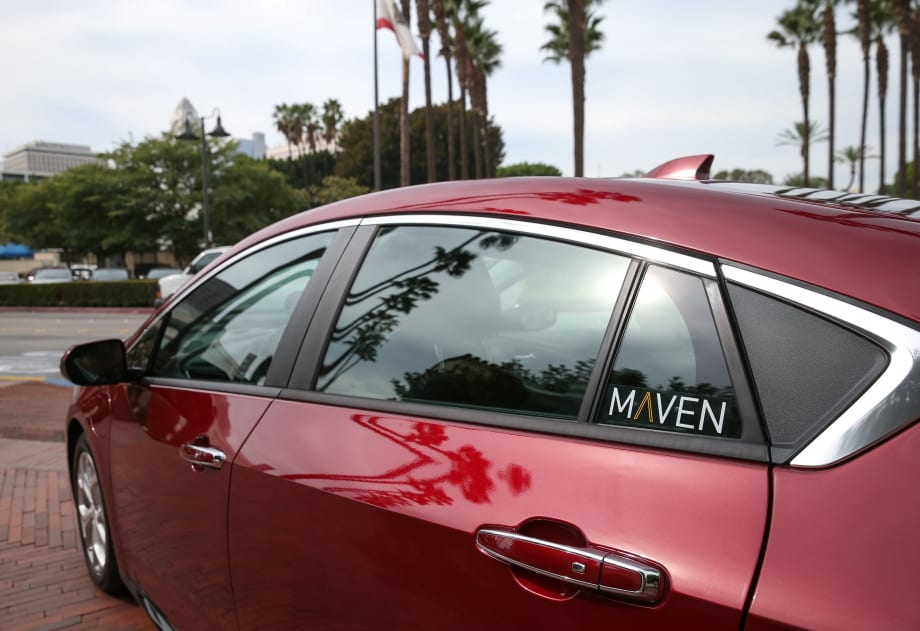
GM's carsharing service Maven is now available in Los Angeles. Photo courtesy of General Motors.
GM's carsharing service Maven is now available in Los Angeles. Photo courtesy of General Motors.
General Motors’ carsharing program Maven continues its expansion with the announcement of its launch in Los Angeles.
Maven users can reserve one of 60 initial vehicles at more than 24 sites throughout Los Angeles, according to GM. Pricing options start at $8 per hour — with fuel and insurance costs included. This is no application fee for Maven members.
For Los Angeles users, the fleet will include the Chevrolet Cruze, Malibu, Tahoe, and Volt; GMC Acadia and Yukon; and Cadillac ATS, CTS, CT6, XT5, and Escalade. Initially, the stations will be located in downtown Los Angeles, Little Tokyo, South Park, and near the University of Southern California campus.
“Los Angeles is a natural fit for Maven because of the city’s incredible appetite for cars,” said Julia Steyn, vice president of Urban Mobility and Maven. “We are excited to offer an elevated carsharing experience with seamless connectivity in a fleet of luxury sedans, electric vehicles, and SUVs.”
In addition to Los Angeles, Maven is available in eight other cities, including Baltimore, Boston, Chicago, Detroit, New York City, San Francisco, Washington D.C., and Ann Arbor, Mich.
Maven carsharing members have now driven more than 23 million miles through more than 12,000 reservations, according to GM.
More Operations

Company Vehicle or Reimbursement? How Fleets Are Rethinking Assignments
As fleet costs and insurance pressures rise, fleet managers are taking a closer look at which employees need company-provided vehicles and when a reimbursement program may make more sense.

Fleetio, ASE Launch Scholarship Program for Automotive Technicians
The second annual program will award 15 scholarships totaling $35,000 to support ASE certification, testing fees, and equipment costs.

Reading the Global Signals: What AI and the Energy Transition Mean for Fleets Now
In this opening keynote of the 2026 Fleet Forward Conference, John Rossant, founder of CoMotion, How can fleet managers navigate a never-ending, changing industry landscape?

90% Use Telematics. Are Fleets Getting Safer? | AF News Recap
This week, we're breaking down which industries have the highest rates, how Jamie McKay manages 2,400 vehicles, what's happening with the 2027 fleet awards, and why software-defined vehicles could introduce new costs.

What's Best Handled by an FMC, and What's Better Done Directly?
Fleet managers continue to rely on FMCs for essential services but are taking a closer look at where working directly with suppliers can improve efficiency and responsiveness.

Fleet Meets: Erin Gilchrist
Meet Erin Gilchrist, the inaugural Mike Antich Spirit of Fleet Award winner, as she shares insights on leadership, mentorship, the power of industry connections, and why people remain at the heart of fleet's future.

How 2026 Fleet Visionary Jamie McKay Manages 2,400 Vehicles Across 37 States
How do you keep 2,400 vehicles running across 37 states? Fleet Visionary Award winner Jamie McKay shares how collaboration, flexibility, and a few simple strategies help her tackle fleet management challenges at Aptive Pest Control.

Managing Fleet Costs in an Era of Permanent Volatility
Fleet operating costs have risen more than 20% since 2020, raising a key question: When does extending a vehicle's service life stop making financial sense?

The Next Evolution of Fleet Management: Autonomous Operations
This opening keynote session at the Fleet Forward Conference highlights the future of autonomous driving for fleets.

How to Reduce the Total Cost of Risk From Catalytic Converter Theft
A stolen catalytic converter can cost fleets far more in downtime and lost productivity than in repairs. A total-cost-of-risk approach can help fleet managers quantify their exposure and prioritize theft prevention.