




GM’s Akerson Gives ‘State of Company’ Address, Cites New Products in U.S. as Major Part of Strategy
DETROIT - General Motors’ Chairman and CEO Dan Akerson gave a “state of the company” address on Tuesday, June 12, at its Annual Meeting of Stockholders of GM. He discussed the business and product plans it's implementing to improve profitability and protect its core vehicle business from economic shocks.
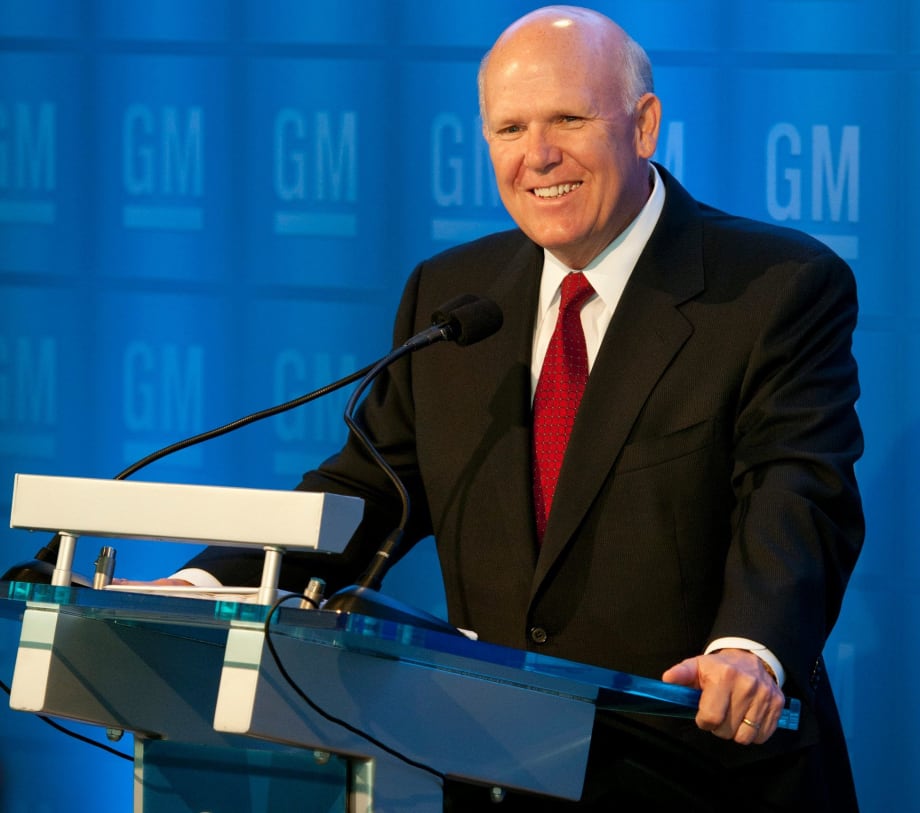
Dan Akerson, Chairman and CEO for GM.
Dan Akerson, Chairman and CEO for GM.
DETROIT – General Motors’ Chairman and CEO Dan Akerson gave a “state of the company” address on Tuesday, June 12, at its Annual Meeting of Stockholders of GM. He discussed where the company is and where it plans to go in the coming years.
Akerson said new products are a key company focus in the U.S., where in 2012 and 2013 roughly 70% of the automaker’s nameplates will be freshened. He described the launch of new GM products as “one of the biggest global product offensives in our history,” adding that many of these vehicles will be in segments new to GM.
The vehicles he mentioned in his remarks included the Buick Verano, that brand’s third all-new sedan in three years, the Chevrolet Spark, which is designed for buyers in urban areas (and first-time retail buyers), and the new Cadillac ATS and XTS luxury sedans, which are designed to establish Cadillac as a strong brand in the luxury segment. Akerson also mentioned that the XTS is the company’s launch platform for its new in-vehicle connectivity platform, CUE (Cadillac User Experience).
The company’s goal with regard to product design and manufacturing is to reduce the total number of architectures it’s using by 50% by 2018, which Akerson said will result in significant savings, though he didn’t put a dollar figure on the amount. He said fewer architectures will result in better pricing on material and commodities, shared tooling designs globally, better quality and warranty costs, and the ability to get products to market faster.
He did say the company faces challenges, citing the recession in Europe as a major concern, with overcapacity being made worse by the economic situation there. Working with unions in Europe, and delivering “synergies” with Peugot, are ways the company is managing its economic situation in that region. GM said it has created a “fortress” balance sheet that shields its core vehicle manufacturing business from economic shocks. He said that in terms of automotive debt, the company was at $5.4 billion during Q1 2012, and that it has total liquidity of $37.5 billion.
Akerson also discussed another recent change where the company moved its salaried employees from a pension system to 401(k) plans going forward. The overall plan to deal with pension costs will reduce GM’s U.S. salaried pension obligation by an estimated $26 billion, he said.
Overall, Akerson said that although the company earned record net income in 2011 of $7.6 billion (and EBIT-adjusted of $8.3 billion), and that sales were up in every region, the company wasn’t where he wanted it to be in terms of profitability. Although GM ranked fifth in revenue on the Fortune 500 list, it ranked 20th in profits. The plans he outlined above are designed to close the gap between revenue and profitability, and he reiterated the broad “culture change” happening at the company that is helping to bring this about.
More Operations

Fleet Has a Talent Pipeline Problem. What Comes Next? | AF News Recap
Where will fleet’s next generation of leaders come from? This week, we’re looking at the industry’s talent pipeline, what certification can add to a fleet career, how to build an award-worthy track record, and the return of Automotive Fleet’s Personal Use Survey.
Read More →
Smith System Launches Driver Risk Management Program
Fleets have more driver data than ever, but identifying risky behavior doesn't necessarily correct it. Smith System's new Driver Risk Management program combines monitoring, training, and follow-up coaching to help fleets connect risk signals with driver intervention.
Read More →
Automotive Fleet Opens 2026 Personal Use Survey for Commercial Fleet Managers
Less than two weeks left! Commercial and corporate fleet managers are invited to share how their organizations handle company vehicle personal-use policies, charges, and driver eligibility.
Read More →
From AI Prompts to AI-Generated Safety Songs | AF News Recap
Can better prompts make AI more useful for fleet managers? This week, we’re breaking down smarter fleet analysis, an AI-assisted experiment that turned safety training into music, and what happened to fuel prices in August.
Read More →
How to Write Better AI Prompts for Fleet Analysis
Include these six elements in your fleet prompts to generate more relevant analysis and accurate answers.
Read More →
Fleet Meets: Eric Kilgore
This edition of the Fleet Meets series features one of the industry's best leaders driving multi-market and national operations.
Read More →
Why Reactive Fleet Management Is Becoming Too Expensive to Sustain
Research highlights a growing need for proactive management strategies to address rising costs in fleet operations effectively.
Read More →
What Your Fleet KPIs Aren’t Telling You
Tracking fleet metrics is only useful when the data leads to better decisions. This guide helps fleet leaders assess cost, utilization, and downtime more accurately, identify performance gaps, and prioritize the actions that can improve operational results.
Read More →
Hidden in Plain Sight: Fleet Compliance Risks
Fleet compliance isn't just about having policies — it's about consistently enforcing them. This practical guide reveals six hidden compliance risks common in public sector and shared fleet operations and outlines proven strategies to improve visibility, accountability, and audit readiness
Read More →
Turning Fleet Payment Data into Executive Insights
Does data alone drive results in operations?
Read More →