




GM's Baltimore Transmission Facility Achieves Landfill Free Status
BALTIMORE – General Motors Corp.'s Baltimore transmission plant, which will build the industry's first two-mode hybrid transmission for GM's full-size SUVs and pickups, announced it has officially achieved “landfill free” status.
BALTIMORE – General Motors Corp.’s Baltimore transmission plant, which will build the industry’s first two-mode hybrid transmission for GM’s full-size SUVs and pickups, announced it has officially achieved “landfill free” status – meaning it will no longer send any waste from its production operations to landfills.
Changes at the plant – the new landfill-free manufacturing process and a new hybrid drivetrain – will provide significant environmental benefits.
“Our Baltimore facility is a great example of how GM is working to reduce the impact of both our operations and our vehicles on the environment,” said John R. Buttermore, GM Powertrain vice president of global manufacturing. “Many manufacturing plants generate waste along with their products, but here at our Baltimore plant, fuel-efficient transmissions for our vehicles are our only output. All wastes generated here are recycled or reused in some way. We are very proud of the environmentally responsible work that has been done working jointly with the leadership of UAW Local 239 and our Baltimore employees that made this possible.”
The GM Powertrain Baltimore plant will be the exclusive manufacturer of GM’s all-new two-mode hybrid transmission. This leading hybrid technology will increase the fuel efficiency of GM’s full-size SUVs and pickups up to 25 percent over conventional gasoline Powertrain systems. The transmission will debut in the 2008 Chevrolet Tahoe and GMC Yukon two-mode hybrids available in the market later this year.
Buttermore added, “With today’s announcement, Baltimore becomes the eighth GM facility worldwide to reach zero landfill status. Eliminating waste to this degree is a GM manufacturing priority and is the right thing to do for our business and the environment.”
As of May, the GM Powertrain Baltimore transmission facility has been operating with landfill-free status for waste materials generated directly from its daily operations. This year, approximately 97 percent of the waste materials from the site (7,300 tons) will be recycled or reused and 3 percent (215 tons) will be converted to energy at a waste-to-energy facility. In 2006, the plant was close to landfill-free status, with 99 percent of its waste recycled, reused or converted to energy.
Items recycled or reused at the site this year will include approximately 510 tons of aluminum, 600 tons of steel, 10 tons of alloy metals, 360 tons of wood pallets, 3 tons of paper, 20 tons in empty totes and drums, 250 tons of used oil, 220 tons waste water residual, and 5,400 tons of returnable packaging.
Part of the challenge in reaching landfill-free status is finding uses for recyclable materials. Today, even the tiniest scrap of trash is put to beneficial reuse. Aluminum is recycled by GM foundries that produce engine and transmission components. Steel, alloy metals, and paper are sent to recyclers for reconstitution into a variety of products. Used oil is reconditioned for use as a manufacturing fuel additive. Wood pallets are given to Baltimore area fire departments or sent to energy recovery. Empty drums and totes are refurbished and used again and again.
The plant’s total elimination of waste is having an immediate impact on carbon dioxide (CO2) emissions. Over 13,000 tons of CO2 will no longer enter the atmosphere each year as a result of the plant’s manufacturing operations, which avoid CO2 emissions normally generated when waste is landfilled.
Additional reductions in CO2 emissions will occur when GM’s hybrid vehicles using the new two-mode transmission begin appearing on roadways late this year. A 25 percent increase in fuel economy, and associated CO2 emission reductions, will result from the hybrid system. The hybrid system uses both electric motors and a gasoline engine to power the vehicle.
Previously, General Motors announced a goal to reduce CO2 emissions from its North American manufacturing facilities by 40 percent by 2010, based on 2000 baseline levels. In addition, General Motors recently became the first carmaker to join the U.S. Climate Action Partnership (USCAP), a non-partisan group of companies and non-governmental organizations formed to support a mandatory, economy-wide, market-driven approach to climate protection.
Baltimore Transmission is the eighth GM facility to reach landfill-free status. Other GM landfill-free facilities include plants in Tonawanda, NY; Flint and Wixom, Mich.; Gunsan and Bupyeong, Korea; and Kaiserslautern and Eisenach, Germany. In North America, GM facilities have reduced non-recycled waste by over 76 percent since 1997, by either eliminating the generation of waste or increasing recycling. These same North American facilities currently recycle nearly 88 percent of the waste they generate. Globally, the recycling rate for GM facilities is approximately 86 percent. GM was one of the first organizations — and to date is the only automaker — inducted into the U.S. EPA WasteWise Hall of Fame. This recognition was the result of continual waste reduction and recycling efforts at GM. For more information about GM environmental initiatives go to www.gmability.com.
The GM Powertrain Baltimore transmission plant, located in White Marsh, Md., employs approximately 400 people. Last year, the plant produced 189,000 transmissions for the Chevrolet Silverado and GMC Sierra full-size pickups. The 425,000 square foot facility opened in 2001.
More Operations

Moventum Fleet Management Names Mark Iorillo Head of Sales
Iorillo brings nearly 20 years of fleet management and sales experience to the role, including previous positions at Element Fleet Management, CEI, Donlen and Ryder.
Read More →
Fleet Has a Talent Pipeline Problem. What Comes Next? | AF News Recap
Where will fleet’s next generation of leaders come from? This week, we’re looking at the industry’s talent pipeline, what certification can add to a fleet career, how to build an award-worthy track record, and the return of Automotive Fleet’s Personal Use Survey.
Read More →
Smith System Launches Driver Risk Management Program
Fleets have more driver data than ever, but identifying risky behavior doesn't necessarily correct it. Smith System's new Driver Risk Management program combines monitoring, training, and follow-up coaching to help fleets connect risk signals with driver intervention.
Read More →
Automotive Fleet Opens 2026 Personal Use Survey for Commercial Fleet Managers
Less than two weeks left! Commercial and corporate fleet managers are invited to share how their organizations handle company vehicle personal-use policies, charges, and driver eligibility.
Read More →
From AI Prompts to AI-Generated Safety Songs | AF News Recap
Can better prompts make AI more useful for fleet managers? This week, we’re breaking down smarter fleet analysis, an AI-assisted experiment that turned safety training into music, and what happened to fuel prices in August.
Read More →
How to Write Better AI Prompts for Fleet Analysis
Include these six elements in your fleet prompts to generate more relevant analysis and accurate answers.
Read More →
Fleet Meets: Eric Kilgore
This edition of the Fleet Meets series features one of the industry's best leaders driving multi-market and national operations.
Read More →
Why Reactive Fleet Management Is Becoming Too Expensive to Sustain
Research highlights a growing need for proactive management strategies to address rising costs in fleet operations effectively.
Read More →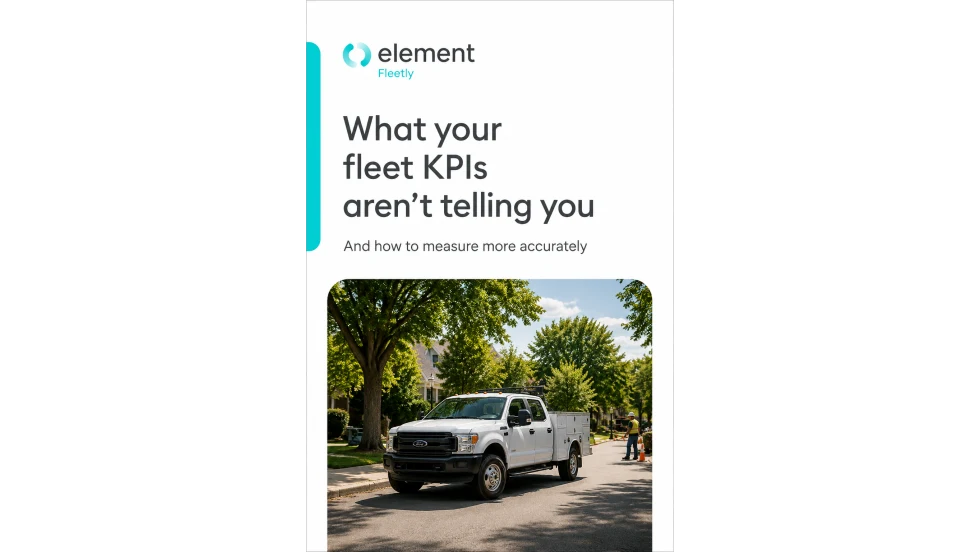
What Your Fleet KPIs Aren’t Telling You
Tracking fleet metrics is only useful when the data leads to better decisions. This guide helps fleet leaders assess cost, utilization, and downtime more accurately, identify performance gaps, and prioritize the actions that can improve operational results.
Read More →
Hidden in Plain Sight: Fleet Compliance Risks
Fleet compliance isn't just about having policies — it's about consistently enforcing them. This practical guide reveals six hidden compliance risks common in public sector and shared fleet operations and outlines proven strategies to improve visibility, accountability, and audit readiness
Read More →