




GM to Offer 2013-MY Terrain Denali Luxury Small SUV in Q3 2012
NEW YORK – General Motors said it’s expanding its Denali sub-brand with the debut of the 2013 Terrain Denali, which is powered by a new 3.6L V-6 engine. The automaker said this engine is more powerful than its predecessor but will get the same fuel economy.
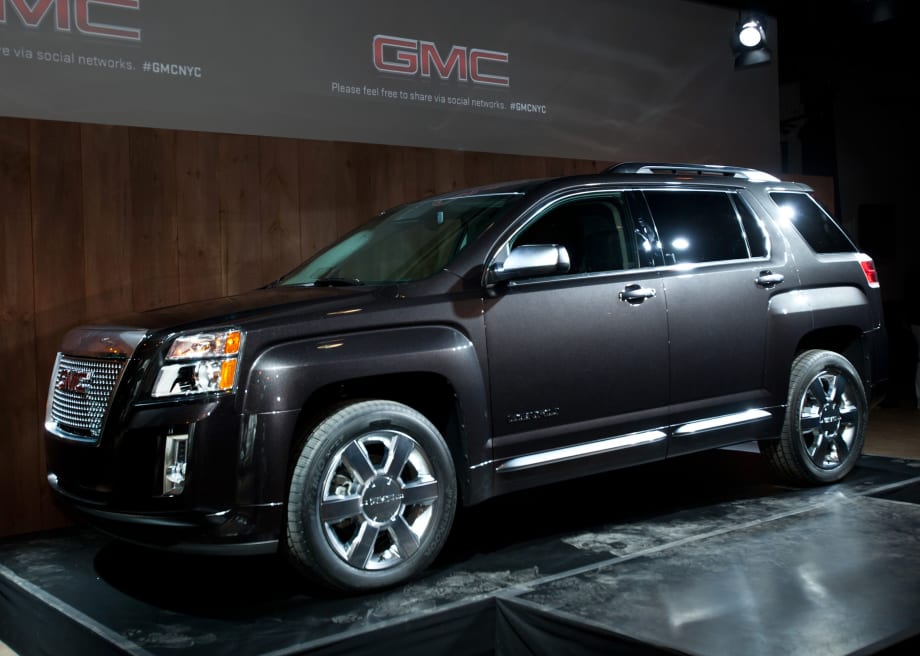
The 2013-MY GMC Terrain Denali.
The 2013-MY GMC Terrain Denali.
NEW YORK – General Motors said it’s expanding its Denali sub-brand with the debut of the 2013 Terrain Denali, which is powered by a new 3.6-liter V-6 engine. The new engine features direct injection and continuously variable valve timing, and replaces the 3.0L V-6 engine in Terrain lineup for the 2013 model-year.
Powertrain and Performance
GM said the vehicle’s new 3.6L engine is SAE certified at 301 horsepower (224 kW) and 272 lb.-ft. (369 Nm) of torque, better than its predecessor, but the company expects it to deliver the same fuel economy (the automaker hasn’t announced official numbers yet).
The Terrain’s standard Ecotec 2.4L inline four-cylinder engine with direct injection and continuously variable valve timing is also available for this vehicle, and gets 32 mpg highway (2WD model). Front-wheel drive is standard on Terrain Denali, with all-wheel drive available for both engines.
In terms of features, GM said models with the 2.4L engine feature 18-inch wheels, while the V-6 engine is paired with 19-inch wheels.
Exterior
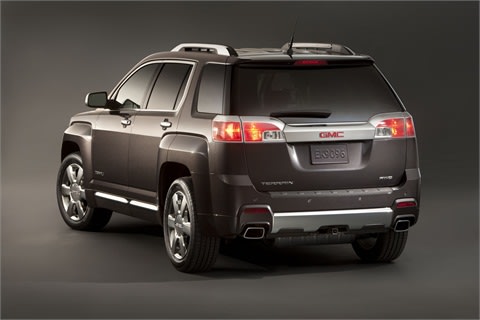
The new Terrain Denali will feature a programmable power liftgate.
Other Denali-specific exterior features include the following:
Signature chrome grille
Satin chrome accents
Body color front and rear fascias
Body color rocker panels with satin chrome molding
New headlamp and taillamp designs
Dual chrome finish exhaust outlets (single outlet on 2.4L)
Interior
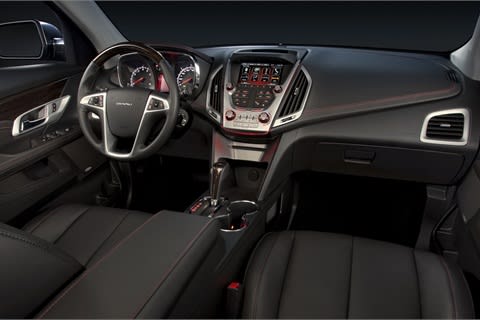
Inside, the new vehicle will feature a range of safety systems, such as forward collisin and lane departure alerts, as well as the touch- or voice-controlled IntelliLink system.
The automaker said the Terrain Denali’s cabin updates are highlighted by soft-touch Jet Black leather, which lines the seats and door inserts. The interior also features contrast stitching and red accent lighting. Other Denali-exclusive interior details include:
Soft-touch instrument panel with French stitching
Leather-wrapped steering wheel with smoked mahogany wood accents
Embossed Denali logos on front seatbacks
Smoked mahogany wood trim accents
Denali illuminated front sill plates
Eight-way power driver and passenger seat
The new 2013-MY Terrain Denali comes standard with a color touch radio with IntelliLink. This new infotainment system features a reconfigurable home screen; voice commands; Bluetooth smartphone integration; control of streaming Internet radio apps, such as Pandora and Stitcher; and iPod controls with Gracenote music database technology.
Safety Features
The new vehicle also features a range of safety features, including forward collision alert and lane departure warning, which are standard on Terrain Denali. They use a single-camera crash-avoidance system to visually and audibly warn drivers when a collision is about to happen or when the vehicle crosses a lane marker. The vehicle also features a side blind zone and rear cross traffic alert that helps avoid collisions by using radar to watch areas on the road that driver might not be able to see and provide warnings (visual and audbile).
Options and Convenience Features
The 2013-MY Terrain Denali comes with a programmable power liftgate, which is standard. Cargo space is at 63.9 cubic feet (behind the first row). A memory function can stop the liftgate at height the user chooses.
Available technology options include color touch navigation and a rear-seat entertainment system.
The Terrain Denali comes with six free months of OnStar’s Directions and Connections plan. It includes Automatic Crash Response, Turn-by-Turn Navigation, roadside assistance, emergency services link, stolen vehicle assistance, and remote door unlock.
GM said it plans to announce pricing and availability of the 2013 Terrain Denali and Terrain 3.6L V-6 closer to the on-sale date in the third quarter of 2012.
More Operations

Fleet Has a Talent Pipeline Problem. What Comes Next? | AF News Recap
Where will fleet’s next generation of leaders come from? This week, we’re looking at the industry’s talent pipeline, what certification can add to a fleet career, how to build an award-worthy track record, and the return of Automotive Fleet’s Personal Use Survey.
Read More →
Smith System Launches Driver Risk Management Program
Fleets have more driver data than ever, but identifying risky behavior doesn't necessarily correct it. Smith System's new Driver Risk Management program combines monitoring, training, and follow-up coaching to help fleets connect risk signals with driver intervention.
Read More →
Automotive Fleet Opens 2026 Personal Use Survey for Commercial Fleet Managers
Less than two weeks left! Commercial and corporate fleet managers are invited to share how their organizations handle company vehicle personal-use policies, charges, and driver eligibility.
Read More →
From AI Prompts to AI-Generated Safety Songs | AF News Recap
Can better prompts make AI more useful for fleet managers? This week, we’re breaking down smarter fleet analysis, an AI-assisted experiment that turned safety training into music, and what happened to fuel prices in August.
Read More →
How to Write Better AI Prompts for Fleet Analysis
Include these six elements in your fleet prompts to generate more relevant analysis and accurate answers.
Read More →
Fleet Meets: Eric Kilgore
This edition of the Fleet Meets series features one of the industry's best leaders driving multi-market and national operations.
Read More →
Why Reactive Fleet Management Is Becoming Too Expensive to Sustain
Research highlights a growing need for proactive management strategies to address rising costs in fleet operations effectively.
Read More →
What Your Fleet KPIs Aren’t Telling You
Tracking fleet metrics is only useful when the data leads to better decisions. This guide helps fleet leaders assess cost, utilization, and downtime more accurately, identify performance gaps, and prioritize the actions that can improve operational results.
Read More →
Hidden in Plain Sight: Fleet Compliance Risks
Fleet compliance isn't just about having policies — it's about consistently enforcing them. This practical guide reveals six hidden compliance risks common in public sector and shared fleet operations and outlines proven strategies to improve visibility, accountability, and audit readiness
Read More →
Turning Fleet Payment Data into Executive Insights
Does data alone drive results in operations?
Read More →