




GM Recalls Nearly 7.6M More Vehicles in U.S.
In addition to older models, this latest round of recalls includes some late-model Chevrolet, Cadillac and Buick vehicles.
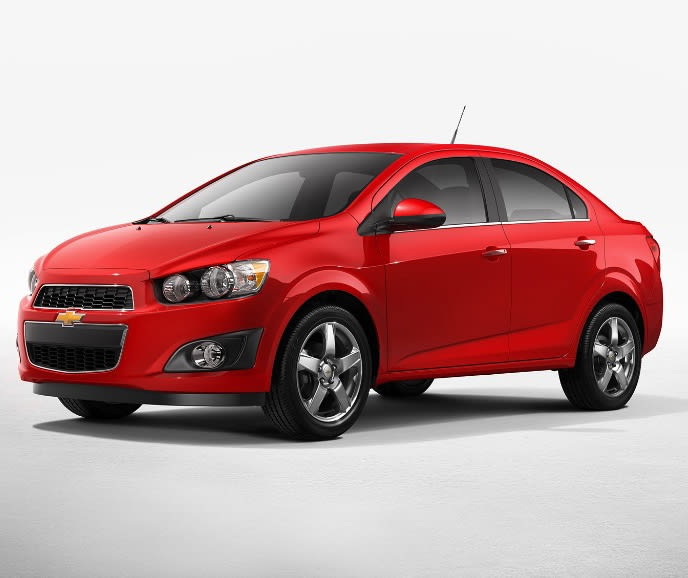
Photo of 2014 Chevrolet Sonic courtesy of General Motors.
Photo of 2014 Chevrolet Sonic courtesy of General Motors.
General Motors on June 30 announced six new recalls covering nearly 7.6 million vehicles in the U.S. On a global scale, the latest recalls total about 8.4 million vehicles.
GM said it is aware of seven crashes, eight injuries and three fatalities linked to these recalled vehicles. The fatal crashes occurred in older model, full-size sedans being recalled for inadvertent ignition key rotation. But there is no conclusive evidence that the defect caused those crashes, the automaker said.
The first of the six recalls involves 6.8 million vehicles in the U.S. (7.6 million globally) that might have unintended ignition key rotation. These models include:
1997-2005 MY Chevrolet Malibu
1998-2002 MY Oldsmobile Intrigue
1999-2004 MY Oldsmobile Alero
1999-2005 MY Pontiac Grand Am
2000-2005 MY Chevrolet Impala
2000-2005 MY Chevrolet Monte Carlo
2004-2008 MY Pontiac Grand Prix.
The second recall, which also addresses unintended ignition key rotation, involves 554,328 vehicles in the U.S. (616,179 globally). These models include:
2003-2014 MY Cadillac CTS
2004-2006 MY Cadillac SRX.
The third recall focuses on insulation on the engine block heater power cord that may become damaged during very cold conditions. This recall involves 2,990 vehicles in the U.S. (20,134 globally). These models include:
2011-2014 MY Chevrolet Cruze
2012-2014 MY Chevrolet Sonic
2013-2014 Chevrolet Trax
2013-2014 Buick Encore
2013-2014 Buick Verano.
The fourth recall affects 106 vehicles in the U.S. (117 globally) that may not have had a “Superhold” joint fastener torqued to specification at the assembly plant. Models include:
2014 MY Chevrolet Camaro
2014 MY Chevrolet Impala
2014 MY Buick Regal
2014 MY Cadillac XTS.
The fifth recall involves 9,371 2007-2011-MY Chevrolet Silverado HD and GMC Sierra HD trucks in the U.S. (12,008 globally). The trucks in question are each equipped with an auxiliary battery. An overload in the feed may cause the underhood fusible link to melt because of electrical overload. This condition can result in smoke or flames that might damage the electrical center cover, the nearby wiring harness conduit, or both.
The sixth recall addresses a possible electrical short in the driver’s door module that could disable the power door lock and window switches. In rare cases, the short could also overheat the module. This recall involves 181,984 vehicles in the U.S. (188,705 globally) Models include:
2005-2007 MY Buick Rainier
2005-2007 MY Chevrolet TrailBlazer
2005-2007 MY GMC Envoy
2005-2007 MY Isuzu Ascender
2005-2007 MY Saab 9-7x
2006 MY Chevrolet TrailBlazer EXT
2006 MY GMC Envoy XL.
“We have worked aggressively to identify and address the major outstanding issues that could impact the safety of our customers,” said General Motors CEO Mary Barra. “If any other issues come to our attention, we will act appropriately and without hesitation.”
Meanwhile, until their ignition-recall repairs have been performed, customers need to remove all items – including the key fob -- from their key ring. Only the vehicle key should be on the key ring, GM said.
More Safety

Fleet Manager’s Ultimate Playbook: Navigating the New Standard in OEM Connectivity
Rising operating costs, driver safety concerns, and unplanned downtime are putting unprecedented pressure on modern fleets. Discover how fleet managers use embedded OEM connectivity and real-time vehicle data to cut TCO, prevent downtime, and protect drivers without aftermarket telematics hardware.
Read More →
From Driver Well-Being to EV Charging | AF News Recap
Mental health belongs in the fleet safety conversation. This week, we’re looking at five ways fleets can support employee well-being before a crisis, plus Holman’s expansion in Mexico, new one-day Fleet Forward passes, and why EV charging demand is outpacing infrastructure growth.
Read More →
Nexar-Nauto Merger Aims to Give Fleets Better Safety Intelligence Through Larger Driving Dataset
Stefan Heck tells Automotive Fleet that combining more than 10 billion miles of driving history with Nexar's AI models will give fleets deeper insights into driver risk and roadway conditions than either company could provide independently.
Read More →
Don't Wait for a Crisis: 5 Ways to Build Mental Health Into Your Fleet Safety Program
For Suicide Prevention Month, fleet and safety leaders have an opportunity to put mental health where it belongs: at the center of workplace safety.
Read More →
How Camera Data Can Strengthen a Fleet’s Insurance Renewal
Insights from a commercial insurance carrier and a broker show how fleets can turn video telematic data, driver coaching, and improved claims results into a stronger case at insurance renewal.
Read More →
The Safest Fleets Aren’t the Ones with the Most Technology
You’ve made the telematics investment. Here’s how to capture the other half of its value and build the safest fleet on the road.
Read More →
Hidden in Plain Sight: Fleet Compliance Risks
Fleet compliance isn't just about having policies — it's about consistently enforcing them. This practical guide reveals six hidden compliance risks common in public sector and shared fleet operations and outlines proven strategies to improve visibility, accountability, and audit readiness
Read More →
NETS Sets 2026 Fleet Safety Benchmark Conference for Indianapolis
The Sept. 15–17 program will feature fleet benchmarking data, case studies, emerging technologies, and implementation strategies while running alongside the NSC Safety Congress & Expo.
Read More →
Off-the-Job Crashes Account for 43% of Employers’ $61.7 Billion Crash Burden
NETS quantifies costs dispersed across fleet, risk, HR, and other departments while providing new per-crash benchmarks for employers.
Read More →
Ram Recalls More Than 1.27 Million 1500 Pickups for Seat Belt Anchor Issue
The recall affects certain 2019-2026 Ram 1500 pickups that may have improperly attached second-row seat belt buckle anchors.
Read More →