




GM Recalls Buick LaCrosse, Chevrolet Sonic
Three separate actions add nearly 70K vehicles to the growing list of GM vehicles recalled in North America in 2014.
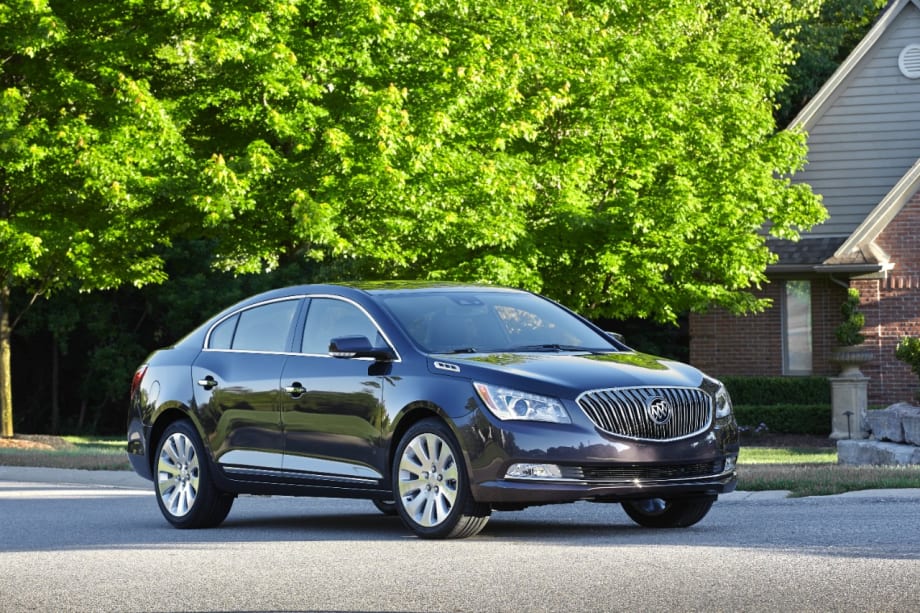
Photo of 2014 Buick LaCrosse courtesy of General Motors.
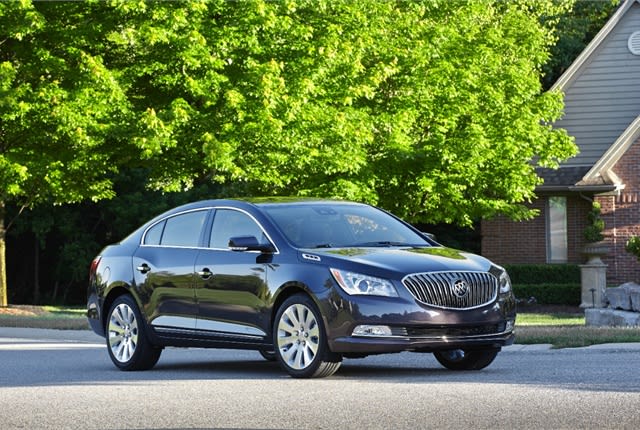
Photo of 2014 Buick LaCrosse courtesy of General Motors.
General Motors on June 13 announced new recall plans involving certain Chevrolet Sonic compacts, Buick LaCrosse sedans and Saab 9-3 convertibles. Together, the three separate actions add another 69,839 vehicles to GM’s tally for North American recalls in 2014. A total of 65,121 of these vehicles are in the U.S.
GM said it informed the National Highway Traffic Safety Administration about the new recall plans on June 11.
One of these recalls involves 21,567 2012 model-year Chevrolet Sonics equipped with a six-speed automatic transmission and a 1.8-liter four-cylinder engine. Because of a supplier quality issue, the transmission turbine shaft might fracture. If this occurs in first or second gear, the vehicle will be unable to upshift into third through sixth gears. If the turbine shift fractures while in one of the higher gears, however, the vehicle will coast until it’s moving slow enough for the driver to downshift into first or second gear, GM said.
In both instances, a malfunction indicator lamp may illuminate. If driven in this condition for a long period of time, all forward gears may become inoperable. But the engine would continue to run and all power accessories would function, GM said.
Dealers will replace the transmission turbine shaft. GM noted it is unaware of any crashes, injuries or fatalities related to this condition.
A second recall covers 14,765 2014 model-year Buick LaCrosse sedans. A wiring splice in the driver’s door might corrode and break. That may communicate incorrect information to circuits that control the door chime and allow passenger windows, rear windows and the sunroof to function when the vehicle is turned off and the driver is not in the vehicle, GM said. In addition, a chime will not sound when the driver’s door is opened if the key is in the ignition.
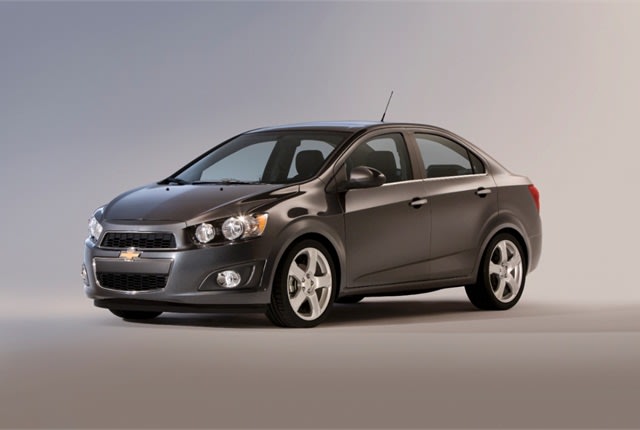
Photo of 2012 Chevrolet Sonic courtesy of General Motors.
Dealers will inspect the driver door window motor harness and, if necessary, replace an electrical splice. GM said it’s unaware of any thefts, crashes, injuries or fatalities related to this condition.
A third recall includes 28,789 2004-2011 model-year Saab 9-3 convertibles. An automatic tensioning system cable in the driver’s-side front seatbelt retractor might break. If this occurs, seatbelt webbing spooled out by the driver would not retract. The convertibles and sedans were investigated at the same time, but the convertible parts were not identical to the sedan parts. GM has since learned some customers have filed complaints about the issue with NHTSA.
Dealers will replace the driver’s-side retractor in the recalled vehicles. In addition, GM has issued a special coverage, so that if the same repair is required to the passenger-side retractor it will be covered for the life of the vehicle.
GM also extended the special coverage for passenger-side belt retractors on the 2004 Saab 9-3 sedan -- from the original 10-year coverage to the life of the vehicle, just like the convertibles. GM said it is unaware of any crashes, injuries or fatalities arising from this condition.
In all three recalls, GM dealers will make the needed repairs free of charge. Courtesy transportation will be provided as needed.
More Safety

Fleet Manager’s Ultimate Playbook: Navigating the New Standard in OEM Connectivity
Rising operating costs, driver safety concerns, and unplanned downtime are putting unprecedented pressure on modern fleets. Discover how fleet managers use embedded OEM connectivity and real-time vehicle data to cut TCO, prevent downtime, and protect drivers without aftermarket telematics hardware.
Read More →
From Driver Well-Being to EV Charging | AF News Recap
Mental health belongs in the fleet safety conversation. This week, we’re looking at five ways fleets can support employee well-being before a crisis, plus Holman’s expansion in Mexico, new one-day Fleet Forward passes, and why EV charging demand is outpacing infrastructure growth.
Read More →
Nexar-Nauto Merger Aims to Give Fleets Better Safety Intelligence Through Larger Driving Dataset
Stefan Heck tells Automotive Fleet that combining more than 10 billion miles of driving history with Nexar's AI models will give fleets deeper insights into driver risk and roadway conditions than either company could provide independently.
Read More →
Don't Wait for a Crisis: 5 Ways to Build Mental Health Into Your Fleet Safety Program
For Suicide Prevention Month, fleet and safety leaders have an opportunity to put mental health where it belongs: at the center of workplace safety.
Read More →
How Camera Data Can Strengthen a Fleet’s Insurance Renewal
Insights from a commercial insurance carrier and a broker show how fleets can turn video telematic data, driver coaching, and improved claims results into a stronger case at insurance renewal.
Read More →
The Safest Fleets Aren’t the Ones with the Most Technology
You’ve made the telematics investment. Here’s how to capture the other half of its value and build the safest fleet on the road.
Read More →
Hidden in Plain Sight: Fleet Compliance Risks
Fleet compliance isn't just about having policies — it's about consistently enforcing them. This practical guide reveals six hidden compliance risks common in public sector and shared fleet operations and outlines proven strategies to improve visibility, accountability, and audit readiness
Read More →
NETS Sets 2026 Fleet Safety Benchmark Conference for Indianapolis
The Sept. 15–17 program will feature fleet benchmarking data, case studies, emerging technologies, and implementation strategies while running alongside the NSC Safety Congress & Expo.
Read More →
Off-the-Job Crashes Account for 43% of Employers’ $61.7 Billion Crash Burden
NETS quantifies costs dispersed across fleet, risk, HR, and other departments while providing new per-crash benchmarks for employers.
Read More →
Ram Recalls More Than 1.27 Million 1500 Pickups for Seat Belt Anchor Issue
The recall affects certain 2019-2026 Ram 1500 pickups that may have improperly attached second-row seat belt buckle anchors.
Read More →