General Motors reaffirmed its commitment to further reduce the energy used and the environmental impacts of building and operating an automobile, detailing product goals and tracking progress toward its 2020 manufacturing priorities in its 2012 Sustainability Report.
The report covers energy, emissions, waste reduction and other areas that drive long-term sustainability.
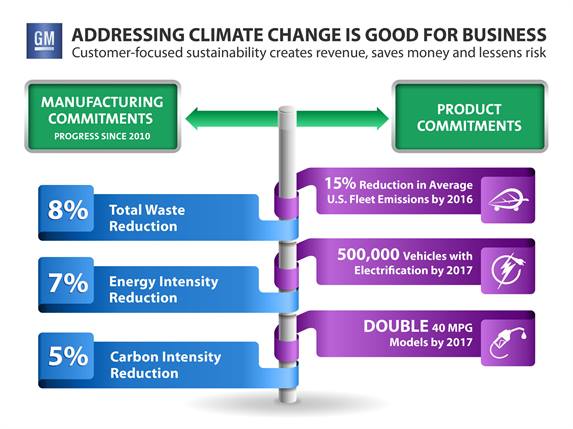
Reducing energy used and emissions output in its plants, operations and products is important to customers and stakeholders, GM says in the report. The company's overall sustainability strategy creates value for customers through new technologies and lower operating costs and improves the bottom line through revenue generation, cost savings and risk mitigation.
GM developed the following commitments to meet customer needs for efficient vehicles and significantly reduce the environmental impact of its products:
Put 500,000 vehicles on the road in the U.S. with some form of electrification by 2017. GM's electrified vehicles today include the extended-range electric Chevrolet Volt, Spark EV and Buick LaCrosse, Regal, Chevrolet Malibu, and Impala with eAssist.
Double the models that achieve 40-mpg highway or better by 2017, such as the Chevrolet Volt, Sonic, and Cruze Eco, and the all-new Cadillac ELR and Chevrolet Spark EV and Cruze Clean Turbo Diesel.
Reduce average U.S. fleet CO2 emissions 15 percent by 2016 and Opel/Vauxhall fleet CO2 emissions 27 percent by 2020.
GM bases its sustainability priorities on an assessment of the most pressing global economic, environmental and social issues facing the company's customers and the communities where GM does business. Both internal and external stakeholders identified product efficiency and energy and emissions management of manufacturing operations among the most important for the company.