




GM Launches Multi-State E-85 Promotional Effort
DETROIT — General Motors announced on March 23 that it has provided E-85-capable Chevrolet Avalanches to the Illinois Corn Growers Association, the Kansas Department of Agriculture, and the public-private Minnesota E-85 Team, for use in those states as part of a campaign to promote ethanol and E-85-capable vehicles in the state.
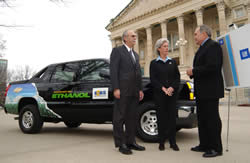
John Gaydash, director of marketing for GM Fleet & Commercial Operations (right), works with the Governors’ Ethanol Coalition to promote the use of E-85-capable vehicles.
DETROIT — General Motors announced on March 23 that it has provided E-85-capable Chevrolet Avalanches to the Illinois Corn Growers Association, the Kansas Department of Agriculture, and the public-private Minnesota E-85 Team, for use in those states as part of a campaign to promote ethanol and E-85-capable vehicles in the state. The presentations were made at events in Illinois at the Chicago Board of Trade (CBOT) to mark the launch of the CBOT Ethanol futures contract; in Kansas to celebrate Kansas Agriculture Day; and in Minnesota to celebrate Agriculture Week. The three states are home to a combined total of 25 ethanol plants, with a total capacity to produce 1,510 million gallons of ethanol annually. The announcements are part of an ongoing campaign by GM and the Governors’ Ethanol Coalition (GEC), a bipartisan group of governors devoted to the promotion and increased use of ethanol. This collaborative effort is designed to increase awareness of ethanol and flexible fuel vehicles, and to promote the increased use of E-85 as a renewable, alternative transportation fuel that is able to meet the demands of today’s drivers. GM is currently the largest producer of E-85 flexible-fuel vehicles in the United States, with over 1.1 million vehicles on the road and with vehicles available for sale in all 50 states. GM approved the use of 10 percent ethanol blended gasoline in all GM products more than 20 years ago, and produces almost five million E-10 capable vehicles annually. “No manufacturer has done more to promote the use of ethanol than GM and today’s announcement is the latest demonstration of our commitment to extend GM’s leadership in manufacturing ethanol-capable vehicles,” said John Gaydash, director of marketing for GM Fleet & Commercial Operations. “We will continue to work with organizations like these today and tomorrow, to promote the use of E-85 and its many available benefits for the environment, the economy and consumers.” GM will provide E-85-capable Chevrolet Avalanches for use in 26 states, including: Arizona, Colorado, Idaho, Illinois, Indiana, Iowa, Kansas, Kentucky, Michigan, Minnesota, Missouri, Montana, Nebraska, New Mexico, North Carolina, North Dakota, Ohio, Oklahoma, Oregon, South Carolina, South Dakota, Tennessee, Texas, Washington, Wisconsin, and Wyoming. Ethanol delivers similar performance to regular gasoline and is a renewable, domestically produced fuel that reduces sulfur and aromatic hydrocarbons for improved exhaust emissions performance. E-85, a blend of 85 percent ethyl alcohol and 15 percent gasoline, is produced from the starch in agricultural products, primarily domestically produced corn. Growing corn actually removes CO2 from the atmosphere so that the total effect of using ethanol made from corn is a significant reduction in greenhouse emissions when compared to the use of petroleum-based fuels. GM’s E-85 vehicles are capable of operating on either gasoline or 85 percent ethanol without any additional modifications, aftermarket conversions, or cumbersome switches for vehicle users. Currently, there are over 300 public E-85 fueling sites in operation across the nation. GM has joined a growing partnership of states and organizations that support the increased use of ethanol that includes the National Ethanol Vehicle Coalition, the Renewable Fuels Association, the National Corn Growers Association, and the Clean Fuels Development Coalition.
More Operations

Here's When You Should Make an Exception to Fleet Policy
Fleet policies are designed to create consistency, but not every driver or situation fits neatly within standard rules.
Read More →
AI-Native or AI-Acquired: What Should Fleet Managers Look for in an AI Platform?
Six questions can help fleet managers look beyond AI marketing claims to evaluate integration, data access, and real-world operational performance.
Read More →
A buyer's guide to fleet management software in 2027
Buying fleet management software in 2027 means looking beyond features and price. As fleet operations, technology and expectations evolve, this guide explores what today’s fleet professionals should consider when choosing a system that can deliver value now and adapt to what comes next.
Read More →

What Will Shape the Next Era of Fleet Management?
EVs, AI, and autonomous vehicles are reshaping fleet management. Discover what’s ahead—and how fleet leaders can prepare for the next era.
Read More →
How Fleets Can Recruit and Train Veterans for Technician Roles
Here's how the technician shortage has affected uptime for fleets, and what to do about it.
Read More →
Avis Budget Group Deploys Neology Toll Management Technology Across Major Brands
Neology’s neoFleet platform will manage toll transactions and toll-authority operations for vehicles across Avis, Budget, Payless, Budget Truck and Zipcar.
Read More →
Fleet Personal-Use Charges Edge Higher in 2026
Nearly eight in 10 surveyed fleets allow personal use of company vehicles, while just over half of respondents report charging employees for the privilege.
Read More →
The Future of Fleet + What’s Changing Right Now | AF News Recap
Could developments overseas offer a preview of what’s coming for U.S. fleets? This week, we’re looking at the future of AI, autonomy, and electrification, plus Ford Pro’s new certified pre-owned program, smarter vehicle offboarding, and a new way for fleets to manage toll expenses.
Read More →
How to Handle Vehicle Offboarding
What do fleet managers need to do when a driver leaves?
Read More →
Fleet Manager’s Ultimate Playbook: Navigating the New Standard in OEM Connectivity
Rising operating costs, driver safety concerns, and unplanned downtime are putting unprecedented pressure on modern fleets. Discover how fleet managers use embedded OEM connectivity and real-time vehicle data to cut TCO, prevent downtime, and protect drivers without aftermarket telematics hardware.
Read More →