




Geotab Releases 2021 Emissions Report
A year after signing the Climate Pledge, Geotab reports its total carbon emissions in 2021 decreasing 14% from its 2019 baseline.

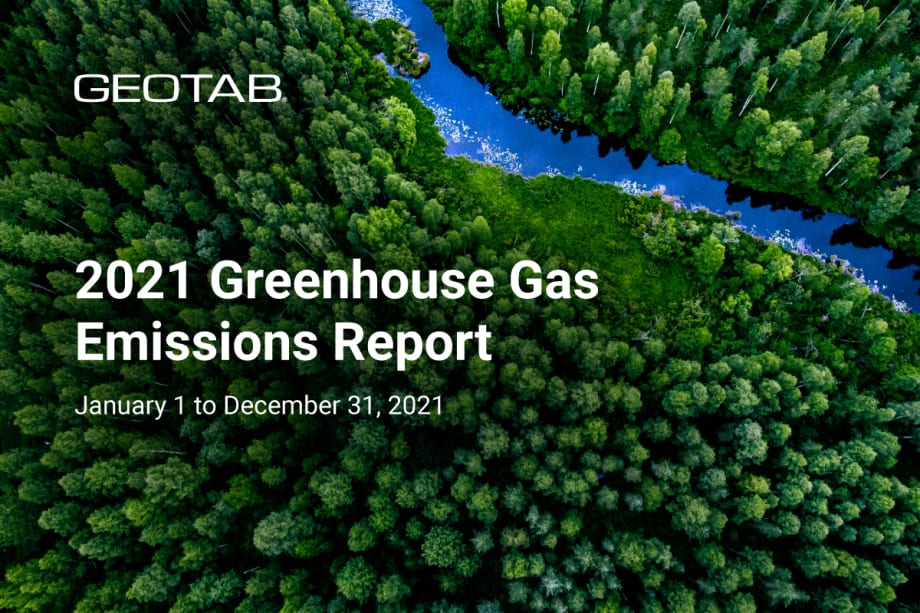
Geotab reports that it is on track to meet its emissions reduction targets of 50% reduction by 2030 and net-zero by 2040.
Photo: Geotab
On Oct. 12, Geotab announced the release of its 2021 GHG Emissions Report. In September 2021, the telematics company agreed to reach net-zero carbon by 2040.
Highlights from the report include:
Geotab’s total carbon emissions in 2021 decreased 14% from the 2019 baseline.
In 2021, Geotab achieved a 6% reduction in Scope 1 emissions, a 21% reduction in Scope 2 emissions, and a 14% reduction in Scope 3 emissions.
The total net change of Scope 1, 2, and 3 greenhouse gas (GHG) emissions in 2021 versus 2019 was a reduction of 6,129 metric tons of CO2e.
Geotab is on track to meet its emissions reduction targets of 50% reduction by 2030 and reaching net-zero by 2040.
“The impact of intensifying climate change is clear, and we must take collective action to limit global carbon emissions,” said Chuck Van Kempen, associate vice president, corporate sustainability at Geotab. “At Geotab, sustainability is at the core of our purpose. As a company, this means setting carbon emissions reduction targets and committing to transparent action; as a partner, this means supporting our customers in accelerating their carbon emissions reduction with data-driven sustainable solutions.”
In 2020, Geotab experienced a significant drop in emissions due to the pandemic, the news announcement said. The reduction of commuting, business travel, and other related factors contributed to lowered emissions. As the world returned to business in 2021 and production increased, Geotab stayed focused on its targets and reduced its emissions by deploying sustainable programs, including EV rebates and public transportation incentives.
Geotab also joined initiatives with the aim of lowering carbon emissions, including The Climate Pledge, Science Based Targets initiative, We Mean Business Coalition, and Race to Zero.
With 3 million connected vehicles on the road today, Geotab said its most significant impact on climate change can be realized by helping decarbonize fleets worldwide.
More Green Fleet

EV Charging Use Is Outpacing Infrastructure Growth
ChargePoint’s 2026 Charging Forward Report points to rising charger use, higher-powered charging, commercial vehicle electrification, and energy-management technology. Here’s what fleets should know.
Read More →
Merchants Fleet Reports 290M EV Miles as Fleets Navigate Changing Electrification Market
From millions in operating savings to hundreds of millions of EV miles, Merchants Fleet’s latest report reveals what’s working and what’s changing in fleet electrification.
Read More →
The EV Breakdown Nobody's Talking About: Why Most Electric Vehicle Roadside Calls Aren't Mechanical Failures
Here's why EV breakdowns are widely misunderstood.
Read More →
ChargePoint Now Available in Energy Pass
ChargePoint and additional planned charging network integrations were added to GM's Energy Pass.
Read More →

First Look: Slate Auto's Electric Fleet Pickup
Could an affordable, modular EV pickup make electrification more practical for fleets?
Read More →
Slate Debuts Colorful, Unique EV Models
A recent media and client event, studded with electric vehicles dressed up on platforms, planted a new position for the manufacturer in the wider EV market. Fleets will find cost-saving advantages.
Read More →
Slate Electric SUV, Pickup Switchable Model Aims For Light-Duty Fleets
Everything about this EV is counterintuitive and understated, making it stand out from the crowd.
Read More →
Inspiration Mobility Acquires Key Electrada Assets
Inspiration Mobility Group has acquired select assets of Electrada, adding the fleet electrification provider's team, technology, and charging infrastructure development capabilities to its energy management business.
Read More →
Turning Connected Vehicle Data Into Decisions That Matter
Fleet leaders have more data than ever, but turning that data into clear, actionable decisions remains a challenge. This white paper shows how leading organizations are using connected vehicle data to improve safety, reduce costs, and optimize fleet performance. Learn how to turn insight into action across your fleet.
Read More →