




Geotab Buys Verizon Connect’s International Commercial Operations
In a strategic move, Geotab has acquired 14 international markets, effective immediately. AF interviewed Geotab's Matt Kassell for more details.
October 1, 2025


Geotab broadens its global reach and gains 400 new employees with new Verizon Connect deal.
Photo: Automotive Fleet
4 min to read
Geotab, announced it has acquired the commercial operations of Verizon Connect’s telematics business in Australia, the United Kingdom, Ireland, Italy, France, Portugal, Poland, the Netherlands, and Germany today.
This acquisition does not include Verizon’s Connect’s product, engineering, and other non-sales-focused teams.
"This acquisition marks a pivotal moment for Geotab and the connected vehicle industry," said Neil Cawse, Founder, President and CEO of Geotab. "By welcoming Verizon Connect employees in Australia and Europe into the Geotab family, we are expanding our global reach and reinforcing the company’s commitment to serving the diverse needs of fleets of all sizes. We are excited about the exceptional opportunities this presents for customers, especially those with small to mid-sized fleets, to unlock greater efficiency, safety, and sustainability."
This move bolsters Geotab’s global reach, making the technology more accessible for small to mid-sized fleets. Additionally, Geotab will welcome 400 Verizon Connect employees from Australia and Europe.
The integration of Verizon Connect’s commercial operations in Australia and Europe into Geotab is effective as of today.
Geotab has promised its European and Australian customers a seamless transition into the new system.
Q&A with Matt Kassel
Matt Kassel is senior vice-president, strategic acquisitions and integration at Geotab.
AF: Can you provide an overview of what this acquisition means for Geotab and its customers?
Matt Kassel: We have acquired Verizon Connect’s international businesses in the regions noted in the release. That means we’ve acquired the people, but also the customers as part of this transaction. These customers will continue to be served as they have been through the Verizon Connect platform, but we also have the significant task ahead of moving them across to Geotab.
AF: Is there a plan to migrate those customers onto the Geotab platform?
Matt Kassel: Correct. We will be migrating them onto the Geotab platform over the coming months. Customers can still access their current product offering through Verizon Connect for 18 months, which gives us time to figure out how to strategically migrate them across.
AF: Will that migration involve hardware swaps or replacements?
Matt Kassel: Not entirely. MyGeotab is able to ingest and serve up data from many different sources. We’re evaluating how much of the hardware may or may not need to be replaced. That’s why we have the 18-month window to make sure customers continue to be served while we determine the best approach.
AF: How would you describe the customer base being acquired?
Matt Kassel: If you looked at it in aggregate, you’d classify it as small- to mid-sized fleets.
AF: What will these customers gain by moving onto the Geotab platform?
Matt Kassel: We’re confident our product offering is market leading. We’re excited to bring our AI tools and data insights into the hands of these customers, who historically have not had access to that level of insight and capability.
AF: Can you share how many customers this acquisition represents?
Matt Kassel: About 40,000. From Geotab’s perspective, that’s almost doubling our size from a customer reach standpoint. We currently serve around 55,000 customers, and now we’re adding another 40,000.
AF: Beyond the customer count, what else does this bring to Geotab?
Matt Kassel: It’s not just the 40,000 customers that are valuable. It’s also the ability to bring on another 40,000 through the capabilities these organizations possess. That’s part of the rationale. This acquisition helps us grow further in that space.
AF: How does this change Geotab’s market position in these regions?
Matt Kassel: Geotab has traditionally been very strong in the mid-size to enterprise space, especially in Europe and international markets. The SMB space is highly underpenetrated, and it’s not a segment Geotab has served significantly through our reseller model. Verizon Connect has a proven track record of going direct to SMB fleets, installing for them and serving them in a way that Geotab historically has not.
AF: What does the “green field” opportunity look like in these markets?
Matt Kassel: It’s substantial. A lot of small to mid-sized fleets still don’t have telematics, or they’re looking for solutions. There are many new businesses coming online with fleets that need telematics. We’re confident the opportunity is large enough to justify this acquisition.
AF: Does this signal more acquisitions from Geotab in the future?
Matt Kassel: Geotab is focused on getting our product into as many hands as possible. Acquisition is one way to do that. We’ll continue to tactically evaluate opportunities, and if they make sense, we’ll pursue them.
More Telematics
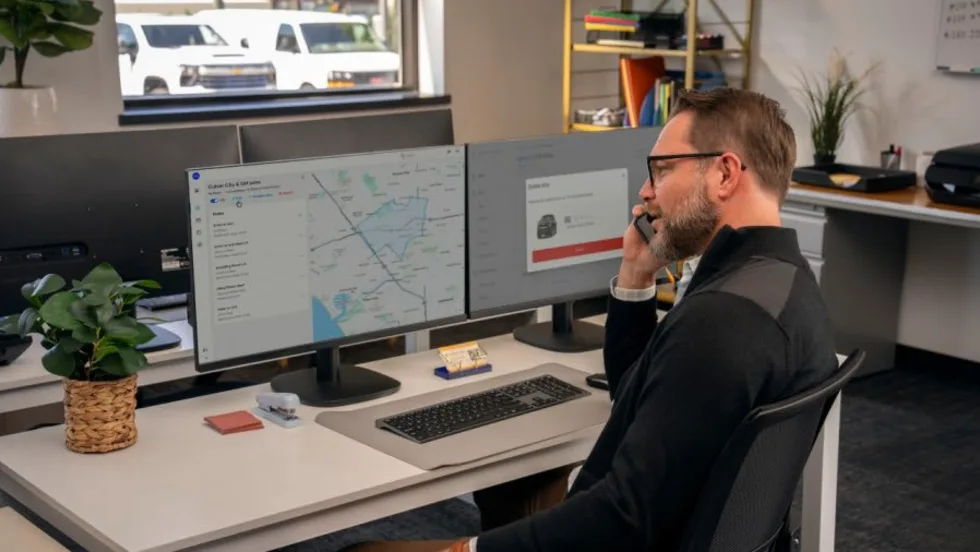
GM Launches OnStar Fleet Intelligence Platform With AI Assistant
The new platform brings vehicle data, order tracking, connected services and fleet analytics into one system, with an AI assistant that can answer fleet questions using natural-language prompts.
Read More →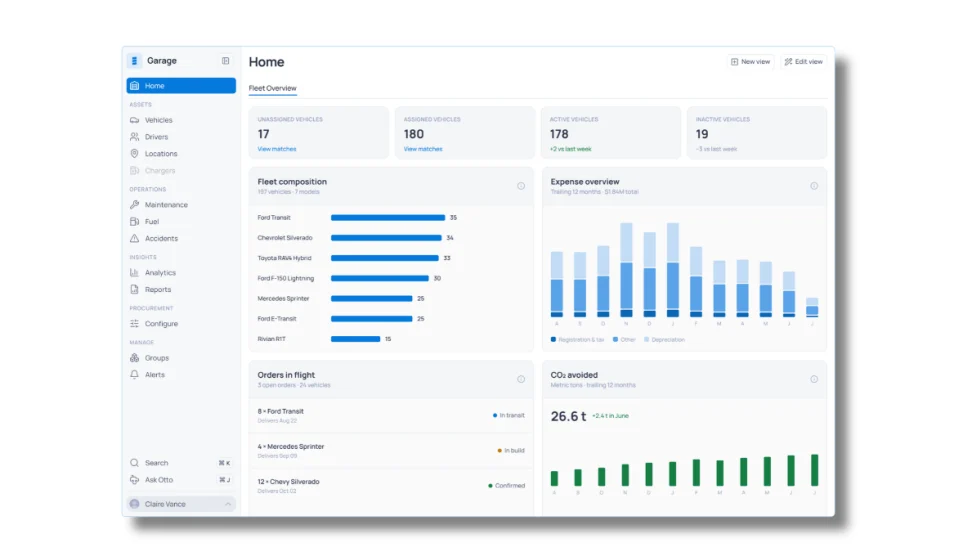
Inspiration Fleet Introduces Garage 2.0 Fleet Intelligence Platform
Fleet managers increasingly have access to data from vehicles, telematics, fuel, charging, and other systems, but those sources don't always communicate with one another. Inspiration Fleet's Garage 2.0 platform brings that information together while letting fleets keep working with different technology and service providers.
Read More →
Inside Inspiration Fleet’s New Platform for Connecting Fleet Data
Inspiration Fleet CTO Chris Getner explains how the new Garage 2.0 platform is designed to connect disparate fleet data and what that could mean for fleet managers in practice.
Read More →
Sponsored•October 1, 2026
Fleet Manager’s Ultimate Playbook: Navigating the New Standard in OEM Connectivity
Rising operating costs, driver safety concerns, and unplanned downtime are putting unprecedented pressure on modern fleets. Discover how fleet managers use embedded OEM connectivity and real-time vehicle data to cut TCO, prevent downtime, and protect drivers without aftermarket telematics hardware.
Read More →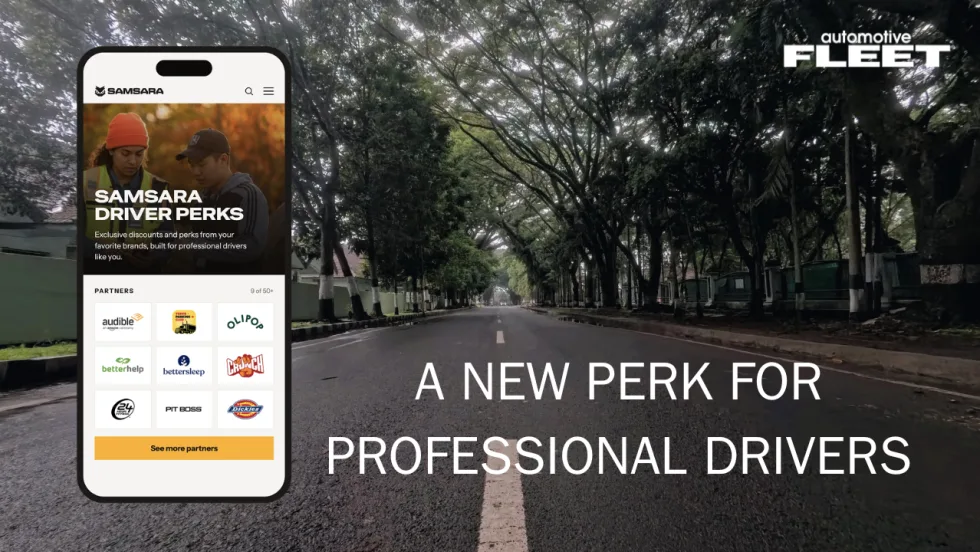
Samsara Driver Perks Adds New Benefit for Corporate Fleet Drivers
The rewards program gives eligible professional drivers access to discounts from more than 50 brands while giving fleets another way to support recruitment, retention, and the driver experience.
Read More →
Inside the Church of Jesus Christ of Latter-day Saints’ Two-Track Telematics Strategy
With 20,000 vehicles and two fundamentally different driver populations, the Church faced a fleet management problem that a single telematics program couldn't solve. How it responded offers a replicable framework for any fleet where one size doesn't fit every driver.
Read More →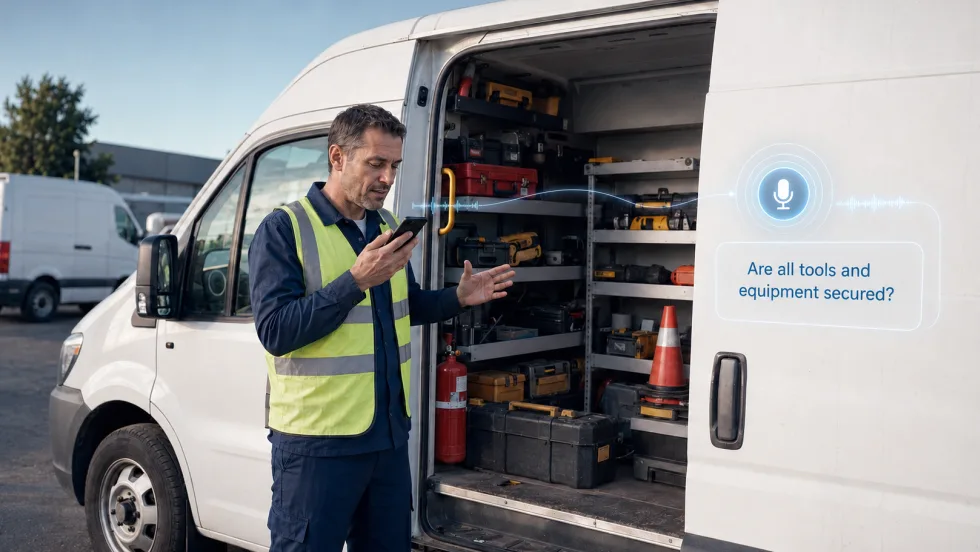
How Conversational AI Can Make Fleet Tasks Easier for Drivers
While most generative AI tools help fleet managers interpret data at their desks, Connex2X is applying voice interaction to tasks behind the wheel.
Read More →
Why Fleets Are Creating Dedicated Fleet Analyst Positions
Are fleet analyst positions the new norm? Listen here to find out.
Read More →
Teletrac Navman Begins Next Chapter as Standalone Private Company
What's new with Teletrac Navman and its new owner?
Read More →
Why Fleets Are Creating Dedicated Fleet Analyst Positions
Telematics, AI, EVs, and connected technologies are generating more fleet data than traditional teams can effectively manage. Reed Jackson explains why dedicated fleet analytics roles are emerging to turn that information into better operational decisions.
Read More →