




Genesis G90 Highlights Safety Tech, Advanced Powertrain
The Genesis brand showed its luxury flagship sedan, the G90, at the North American International Auto Show in Detroit, Mich. The 2017 G90 features Genesis Smart Sense, a suite of driver safety technologies.
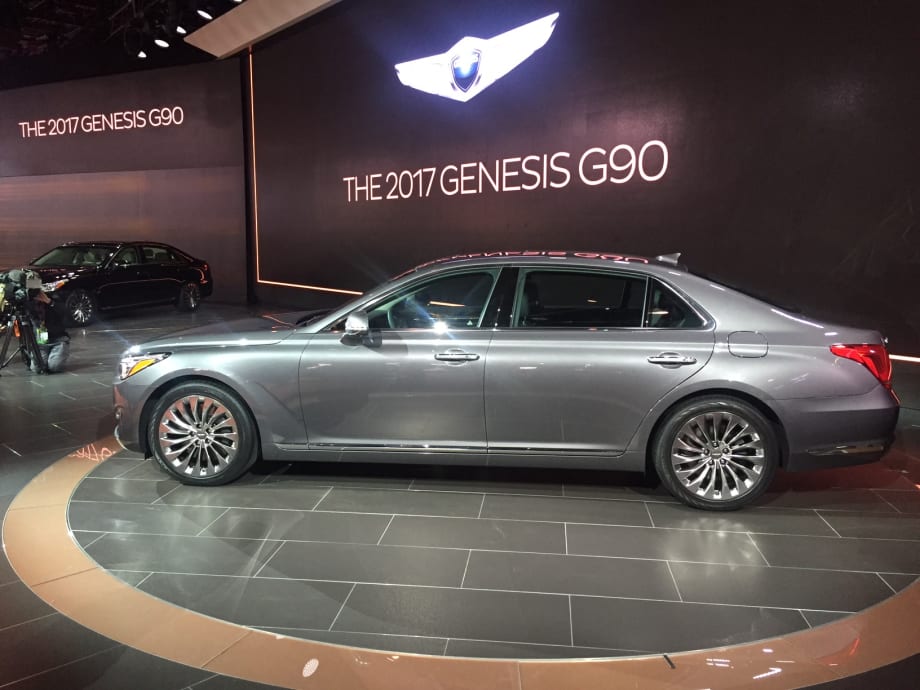
Photo by Mike Antich.
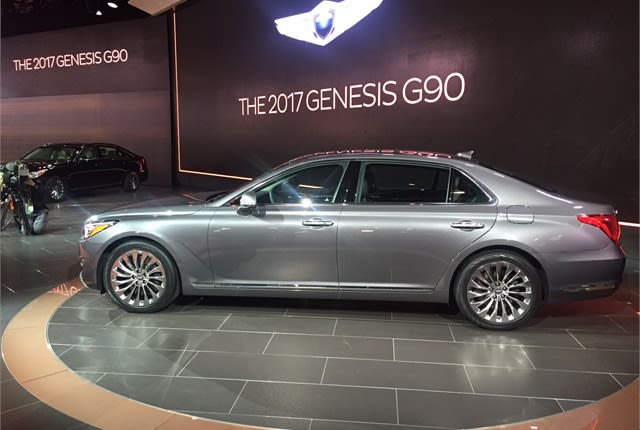
Photo by Mike Antich.
The Genesis brand showed its luxury flagship sedan, the G90, at the North American International Auto Show in Detroit, Mich. The 2017 G90 features Genesis Smart Sense, a suite of driver safety technologies.
Genesis' flagship luxury sedan has two engine options, the 3.3L twin-turbocharged V-6, capable of reaching an estimated 365 hp and 376 lb.-ft. of torque and the 5.0L direct-injected V-8 engine which is capable of 420 hp and 383 lb.-ft. of torque. Rear-wheel drive comes standard for the G90.
An advanced H-TRAC all-wheel drive (AWD) system is available with either powertrain, for confident control under adverse driving conditions such as ice or snow. This system features an electronic transfer case with active torque control and offers dual-mode sport or normal calibrations that are linked to the Intelligent Drive Mode.
The H-TRAC system can direct up to 40% of available torque to the front axle, for enhanced traction in adverse conditions. In more ideal conditions, the H-TRAC Sport calibration features a high degree of rear-drive bias for sportier cornering and acceleration characteristics, with up to 90% of available torque distributed to the rear axle.
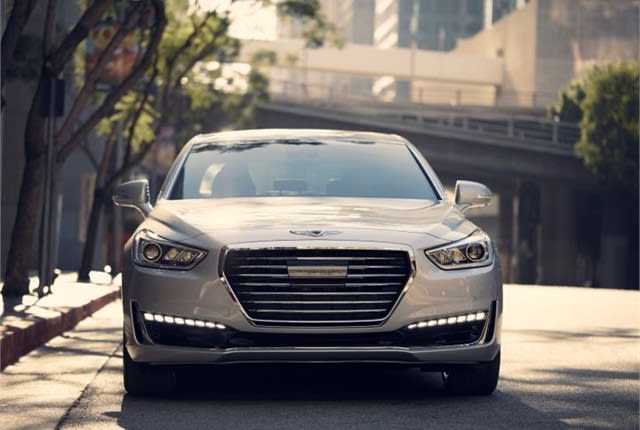
Photo of 2017 Genesis G90 courtesy of Hyundai.
The G90 features Genesis Smart Sense, a suite of driver safety technologies. These features cover the full spectrum of active and passive safety, including driver alertness and focus to total occupant safety, and even the safety of other drivers around you. This suite brings together systems such as Automatic Emergency Braking with Pedestrian Detection, Smart Cruise Control with Stop/Start, Smart Blind Spot Detection and Lane Keep Assist.
G90’s Automatic Emergency Braking, uses sensor fusion technology to help avoid a potential collision or reduce its impact. With this system, G90 will employ automatic braking when it detects another vehicle or pedestrian at an unsafe closing rate of speed. This system uses the front radar from the Smart Cruise Control system and the forward camera from the Lane Keep Assist to provide this extra margin of safety.
The G90 aims to appeal with its interior and exterior stylings. After nearly four years of intense research and planning, engineers and designers opted for something sporty and spacious.
From the front perspective, the G90 identity is conveyed through a Genesis-family design feature, the ‘CREST’ grille, and crowned with the winged Genesis emblem.
Passenger space is a key component of interior comfort and design, and the new G90 has significantly improved spaciousness, derived in part from a 4.5-inch increase in wheelbase for passenger comfort. This increase in wheelbase also resulted in reduced overall overhangs when compared with the previous model. Inside the cabin, this translates to more front headroom (41.1 inches) and legroom (46.3 inches) compared with key competitors.
More Operations

How Fleets Can Recruit and Train Veterans for Technician Roles
Here's how the technician shortage has affected uptime for fleets, and what to do about it.
Read More →
Avis Budget Group Deploys Neology Toll Management Technology Across Major Brands
Neology’s neoFleet platform will manage toll transactions and toll-authority operations for vehicles across Avis, Budget, Payless, Budget Truck and Zipcar.
Read More →
Fleet Personal-Use Charges Edge Higher in 2026
Nearly eight in 10 surveyed fleets allow personal use of company vehicles, while just over half of respondents report charging employees for the privilege.
Read More →
The Future of Fleet + What’s Changing Right Now | AF News Recap
Could developments overseas offer a preview of what’s coming for U.S. fleets? This week, we’re looking at the future of AI, autonomy, and electrification, plus Ford Pro’s new certified pre-owned program, smarter vehicle offboarding, and a new way for fleets to manage toll expenses.
Read More →
How to Handle Vehicle Offboarding
What do fleet managers need to do when a driver leaves?
Read More →
Fleet Manager’s Ultimate Playbook: Navigating the New Standard in OEM Connectivity
Rising operating costs, driver safety concerns, and unplanned downtime are putting unprecedented pressure on modern fleets. Discover how fleet managers use embedded OEM connectivity and real-time vehicle data to cut TCO, prevent downtime, and protect drivers without aftermarket telematics hardware.
Read More →
U.S. Bank Adds Verra Mobility Toll Management to Voyager Fleet Platform
The integration allows U.S. Bank Voyager fleet customers to manage toll payments and violations alongside fuel, EV charging and maintenance expenses.
Read More →
ADAS Prevents Crashes. But Repairs Cost More | AF News Recap
ADAS-equipped vehicles may crash less often, but they can cost more when they do. This week, we’re breaking down what that tradeoff means for fleets, plus Subaru’s first Forester Wilderness Hybrid, Nissan’s new e-POWER Rogue, and why Calstart has become Catalyst Mobility.
Read More →
Moventum Fleet Management Names Mark Iorillo Head of Sales
Iorillo brings nearly 20 years of fleet management and sales experience to the role, including previous positions at Element Fleet Management, CEI, Donlen and Ryder.
Read More →
Fleet Has a Talent Pipeline Problem. What Comes Next? | AF News Recap
Where will fleet’s next generation of leaders come from? This week, we’re looking at the industry’s talent pipeline, what certification can add to a fleet career, how to build an award-worthy track record, and the return of Automotive Fleet’s Personal Use Survey.
Read More →