





How Fleet Managers Are Using Generative AI to Transform Daily Operations
General Motors Highlights Developments in AI, Robotics, Energy, and Autonomy at GM Forward Event
General Motors outlined its next phase of innovation at the GM Forward event in New York, detailing upcoming advances in AI, robotics, energy systems, and autonomous driving.
October 23, 2025

GM announced plans for eyes-off driving by 2028, new conversational AI capabilities, and a centralized computing platform debuting with the Cadillac ESCALADE IQ.
Photo: GM
3 min to read
At its GM Forward media event in New York, General Motors outlined how manufacturing scale, software integration, and artificial intelligence are influencing the company’s approach to vehicle design and technology.
Chair and CEO Mary Barra and other senior leaders presented updates in several areas, including AI, robotics, energy, and autonomous driving, as part of GM’s ongoing development of advanced transportation technologies.
Eyes-Off Driving
GM announced plans to introduce eyes-off driving capability in 2028, beginning with the Cadillac ESCALADE IQ electric SUV.
The company reported that its Super Cruise system has mapped approximately 600,000 miles of hands-free roads in North America. Customers have driven more than 700 million miles using Super Cruise, with no reported crashes attributed to the system. GM stated that data and validation frameworks from Cruise contribute an additional five million fully driverless miles of experience.
According to GM, these combined technologies and safety systems form the foundation for its next phase of autonomous driving development.
Conversational AI
Starting next year, GM plans to introduce conversational AI features in its vehicles through Google Gemini.
The technology will allow drivers to interact with the vehicle through natural language commands.
The company also announced plans to develop a proprietary AI system in the future. With user permission, it will be fine-tuned using data from the vehicle and individual preferences, connected through OnStar. GM said this technology could provide features such as explaining vehicle functions, identifying maintenance issues, or suggesting nearby destinations.
Computing Upgrade
In 2028, GM will debut a new centralized computing platform, beginning with the Cadillac ESCALADE IQ. Designed to support both electric and internal combustion vehicles, the platform will consolidate key systems—such as propulsion, steering, infotainment, and safety—on a single high-speed computing core.
GM stated that the new platform will offer 10 times more over-the-air software update capacity, 1,000 times more bandwidth, and up to 35 times greater AI performance compared to its current systems. The company described this as part of a long-term effort to improve vehicle computing capability over time.
Advanced Robotics
GM provided an update on its robotics initiatives at the Autonomous Robotics Center (ARC) in Warren, Michigan, and at a related facility in Mountain View, California. The company said more than 100 engineers and specialists are developing robotics systems trained on production data, including telemetry, quality metrics, and sensor information from existing manufacturing processes.
ARC is also working on software and components for collaborative robots, or “cobots,” which GM plans to deploy in U.S. assembly plants this year. The company stated that these systems are designed to improve efficiency and support workplace safety.
Backup Power
GM noted that most of its current electric vehicles can provide backup power to properly equipped homes and that future models will be capable of supplying power back to the electrical grid.
Beginning in 2026, GM plans to offer the GM Energy Home System—a combination of bidirectional EV charging and stationary home battery storage—through leasing programs, starting with GM EV owners and later expanding to other customers. The system is designed to integrate with solar energy and includes app-based controls and education tools for managing home energy use.
More Telematics
Element Expands Waymo Partnership to Support Toronto Robotaxi Fleet
As Waymo prepares to enter the Canadian market, Element Fleet Management will oversee the fleet operations supporting its planned Toronto launch. The partnership highlights the maintenance, charging, and infrastructure requirements behind operating autonomous vehicles at scale.
Read More →
GM Launches OnStar Fleet Intelligence Platform With AI Assistant
The new platform brings vehicle data, order tracking, connected services and fleet analytics into one system, with an AI assistant that can answer fleet questions using natural-language prompts.
Read More →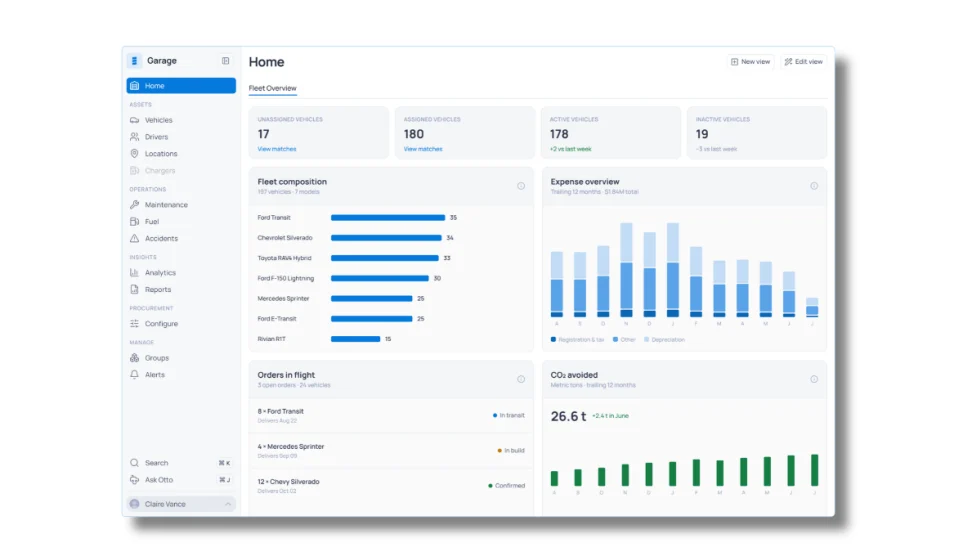
Inspiration Fleet Introduces Garage 2.0 Fleet Intelligence Platform
Fleet managers increasingly have access to data from vehicles, telematics, fuel, charging, and other systems, but those sources don't always communicate with one another. Inspiration Fleet's Garage 2.0 platform brings that information together while letting fleets keep working with different technology and service providers.
Read More →
Inside Inspiration Fleet’s New Platform for Connecting Fleet Data
Inspiration Fleet CTO Chris Getner explains how the new Garage 2.0 platform is designed to connect disparate fleet data and what that could mean for fleet managers in practice.
Read More →
Sponsored•October 1, 2026
Fleet Manager’s Ultimate Playbook: Navigating the New Standard in OEM Connectivity
Rising operating costs, driver safety concerns, and unplanned downtime are putting unprecedented pressure on modern fleets. Discover how fleet managers use embedded OEM connectivity and real-time vehicle data to cut TCO, prevent downtime, and protect drivers without aftermarket telematics hardware.
Read More →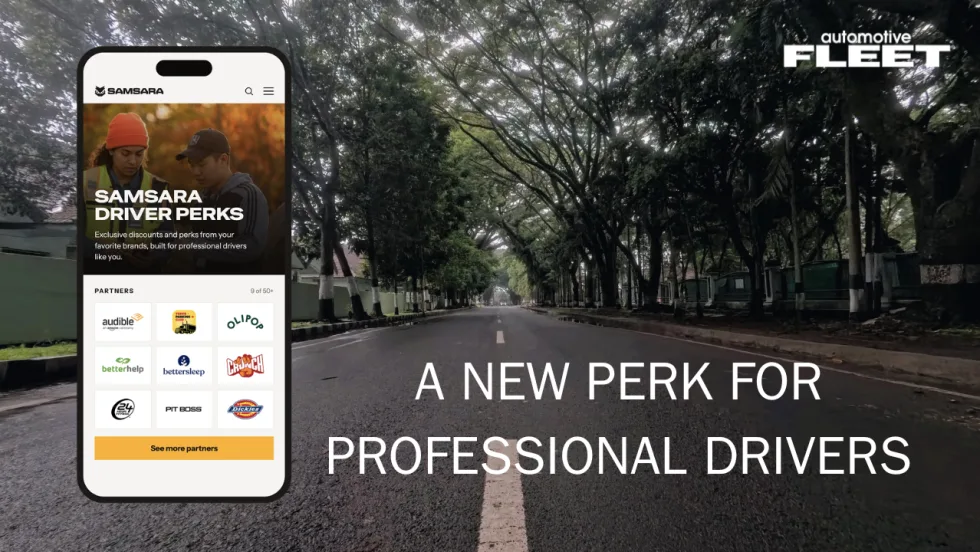
Samsara Driver Perks Adds New Benefit for Corporate Fleet Drivers
The rewards program gives eligible professional drivers access to discounts from more than 50 brands while giving fleets another way to support recruitment, retention, and the driver experience.
Read More →
Inside the Church of Jesus Christ of Latter-day Saints’ Two-Track Telematics Strategy
With 20,000 vehicles and two fundamentally different driver populations, the Church faced a fleet management problem that a single telematics program couldn't solve. How it responded offers a replicable framework for any fleet where one size doesn't fit every driver.
Read More →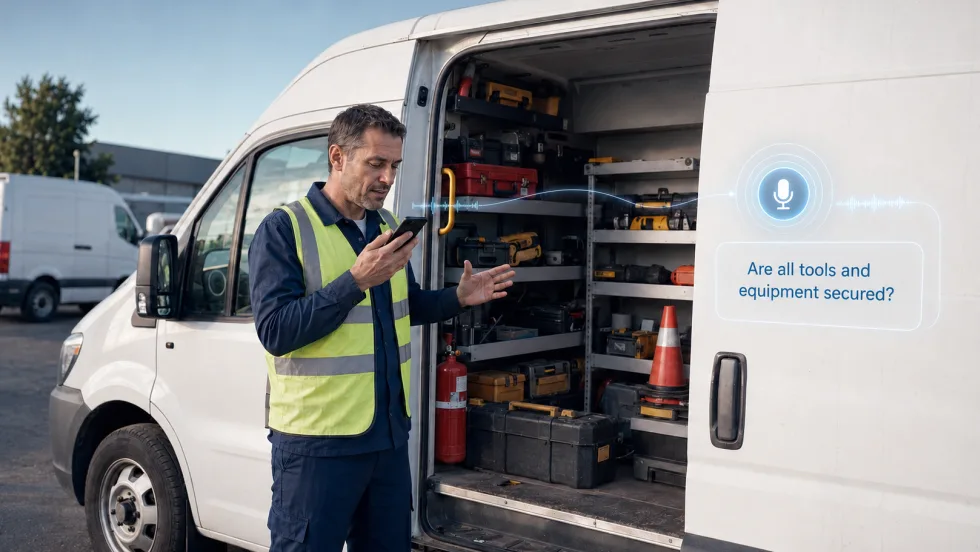
How Conversational AI Can Make Fleet Tasks Easier for Drivers
While most generative AI tools help fleet managers interpret data at their desks, Connex2X is applying voice interaction to tasks behind the wheel.
Read More →
Why Fleets Are Creating Dedicated Fleet Analyst Positions
Are fleet analyst positions the new norm? Listen here to find out.
Read More →
Teletrac Navman Begins Next Chapter as Standalone Private Company
What's new with Teletrac Navman and its new owner?
Read More →