




GE Global Research Announces $6.8 Million to Accelerate Technology Advancements for Plug-in Hybrid Electric Vehicles
NISKAYUNA, NY – GE Global Research, the centralized research organization of the General Electric Company, has $6.8 million in funding for two projects with the U.S. Department of Energy to help accelerate the introduction of plug-in hybrid vehicles to market.
NISKAYUNA, NY – GE Global Research, the centralized research organization of the General Electric Company, has $6.8 million in funding for two projects with the U.S. Department of Energy to help accelerate the introduction of plug-in hybrid vehicles to market, according to the Web site www.ge.com.
The first project is a $5.6 million contract to develop smaller, lower cost, higher performing hybrid drivetrain motors for hybrid electric vehicles. The second is a $1.2 million project to develop advanced high temperature, high energy density capacitors. Both technologies are critical to helping enable the commercialization of plug-in hybrid vehicles. These projects are co-funded by the DOE’s Office of Vehicle Technologies and managed by the National Energy Technology Laboratory (NETL).
GE’s ecomagination initiative has pledged to more than double its investment in the development of cleaner energy technologies from $700 million to $1.5 billion during the next five years.
The focus of the advanced motors project is to have a scalable family of hybrid vehicle interior permanent magnet motor designs that are validated by testing and ready to supply the U.S. and global hybrid vehicle market. Researchers in Niskayuna also will utilize expertise from the Center’s Nanotechnology Advanced Technology Program to drive key nanomaterial advancements to deliver an increase in machine efficiency, according to www.ge.com.
The project is scheduled to last three years and carried out in two phases. Phase 1, will entail a detailed study to assess low-cost manufacturing approaches, improved geometries, and the advanced materials and motor designs applied to build the motor. Phase 2 will involve testing both light-automobile rated and heavier-vehicle rated prototype motors.
Capacitors are a critical component of the power electronics used in a plug-in hybrid drive system. As part of a second and separate DOE project, GE will focus on developing capacitors with higher power density and higher temperature capability. This will help reduce the size, cost, and weight of the vehicle, while also improving performance.
GE researchers will be working on new capacitor materials and integrated device design. The project will be executed in two phases over a three-year period. In the first phase, the team will focus on the fundamental material development and upon success, be moving forward with building prototype capacitors in the final phase. GE will be working with multiple industry partners on the overall system integration, according to www.ge.com.
More Fuel

October Fuel Trends Show Diverging Gasoline and Diesel Prices
Get the latest fuel trends from October.
Read More →
Fuel Prices Surge in September | September Fuel Update
September brought major fuel price swings, including diesel crossing $6 a gallon. Here’s how gas and diesel prices changed throughout the month, and where they stood heading into October.
Read More →
Turning Fleet Payment Data into Executive Insights
Ramel Lindsay of U.S. Bank Voyager discusses how fleets can transform payment and transaction data into actionable intelligence to reduce costs, improve oversight, and support executive decision-making.
Read More →
Why the IRS Raised Its Mileage Rate in the Middle of 2026
Fuel-price volatility drove the rare increase to 76 cents per mile, the fifth midyear adjustment since 2000.
Read More →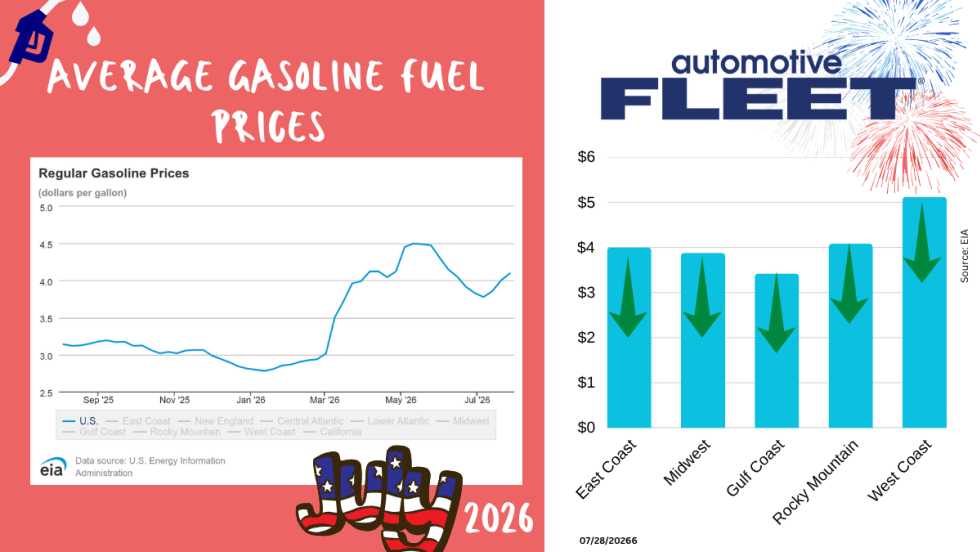
July Fuel Update: Prices Keep Rising in Light of More Conflict
Gas prices continue to rise as more and more conflicts do, too.
Read More →
Bob Adamsky on Fuel Volatility: "Don't Panic, Have a Plan."
When it comes to up and down fuel prices, Adamsky has a message for fleets: “Don’t panic.”
Read More →
How Fleets Can Gain Control of Non-Fuel Spend
Fuel often gets the spotlight, but non-fuel expenses can have a major impact on fleet costs. Ramel Lindsay of U.S. Bank Voyager discusses how fleets can gain better visibility and control over these often-overlooked expenditures.
Read More →
Fuel is Just the Start: How Middle East Tensions are Driving Up Fleet Maintenance Costs
The Middle East conflict is doing more than pushing up fuel prices. It’s also raising the cost of key maintenance products your fleet depends on, from motor oil to tires to windshield wipers. Here’s what you need to know about this budget-busting situation.
Read More →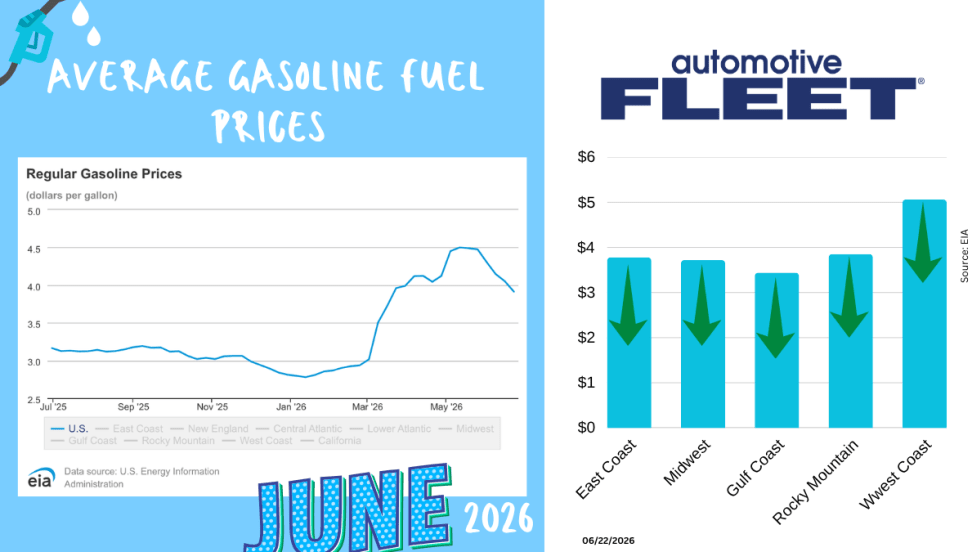
June Fuel Update: Prices Fall Below $4
Drivers are finally getting some relief at the pump. The national average gas price has dropped below $4 a gallon for the first time in months, with prices falling in 47 states as oil markets react to developments in U.S.-Iran negotiations.
Read More →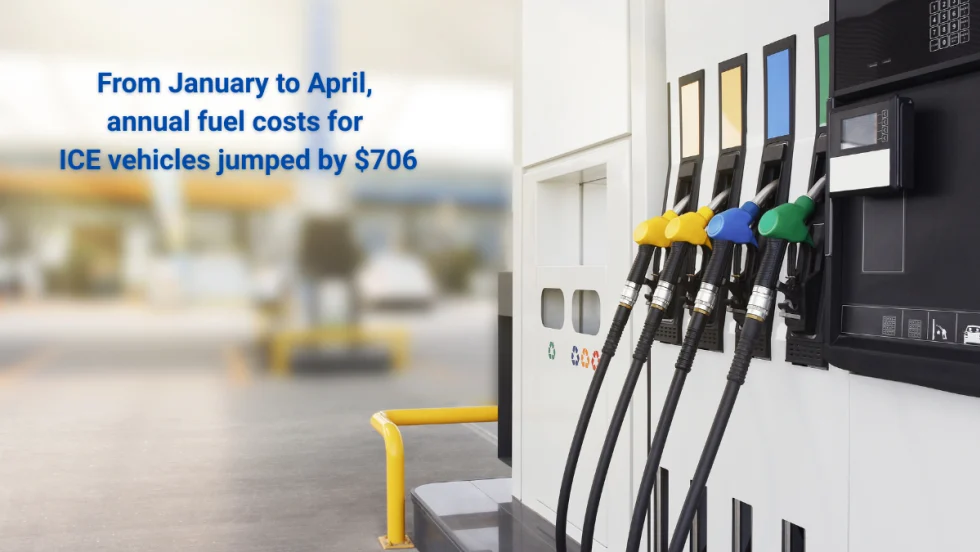
Study: How 2026's Gas Price Hikes Affect Different Vehicle Types
New data from iSeeCars reveals how rising fuel costs have affected different vehicle segments as gasoline prices climbed nearly 46% over the past four months.
Read More →