




Ford's Vehicle Designs Improve Visibility of Gauges, Controls
With the help of Ford’s Visual Performance Evaluation Lab, engineers ensure that drivers can easily read vehicle controls and instrument panels under a wide range of lighting conditions.
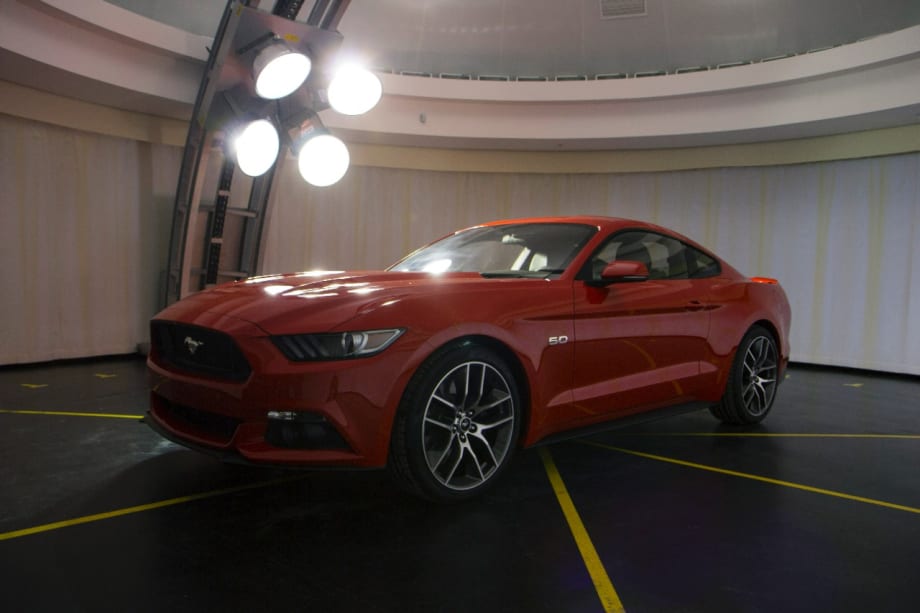
The 2015 Ford Mustang in Ford's Visual Performance Evaluation Lab in Dearborn, Mich. Photo courtesy of Ford.
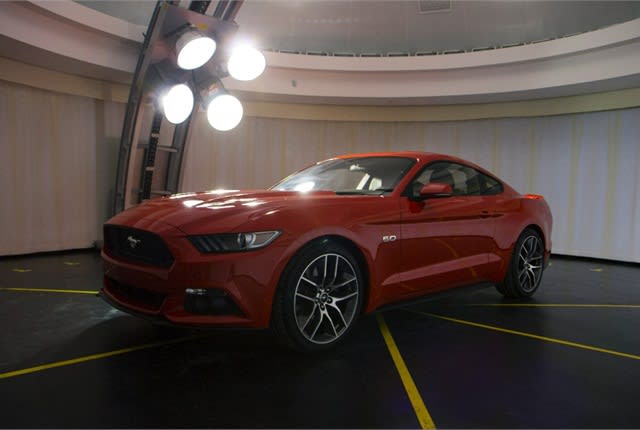
The 2015 Ford Mustang in Ford's Visual Performance Evaluation Lab in Dearborn, Mich. Photo courtesy of Ford.
Sun glare can seriously compromise a driver’s ability to see vehicle controls and instrument panels, particularly during sunrise and sunset. Unfortunately, this time of year such periods of heightened sun glare coincide with morning and evening rush hours.
But the right vehicle design can mitigate this risk. At Ford Motor Co., engineers use the company’s Visual Performance Evaluation Lab – known internally as the Lighting Lab -– to re-create daylight so they can work to reduce sun glare on vehicle controls and instrument panels.
The Lighting Lab uses a planetarium-like dome to replicate sunlight conditions from dawn to dusk, simulating the phases of the earth’s revolution around the sun. Additional lights lining the perimeter of the dome can be adjusted to simulate the effects of weather conditions.
The designers behind the 2015 Ford Mustang used the Lighting Lab to ensure the car’s newly available aluminum dash panel does not cause glare to drivers under a variety of conditions, and that the instruments found in Mustang’s optional gauge pack are always legible.
“With the Lighting Lab, we can ensure that the first time a buyer sits in the 2015 Ford Mustang, that person will be able to see the interior as the designers originally envisioned it – in the best light possible,” said Mahendra Dassanayake, Ford lighting technical specialist. “Whether the car is parked outside or is sitting on an auto show floor, whether it is a bright, sunny day, or overcast and snowing, the materials and controls in the Mustang will be both visually satisfying and highly functional.”
To conduct an evaluation of switches, clusters, climate controls, navigation systems, radios or entertainment systems, the car or the individual component is first placed in the middle of a large circular space. A switch is then flipped to power on four 1,500-watt lights mounted on a moveable steel arm.
By physically pushing the arm to specific points around the circle’s edge, and adjusting the spotlights and floodlights in the ceiling, the Lighting Lab can simulate light conditions at every time of day, while the additional lighting in the dome is used to vary weather conditions from bright sun to full cloud cover.
These tools allow Ford engineers to re-create any kind of lighting condition found anywhere in the world when they're designing new vehicles. This ability is critical to the development of global products such as the 2014 Ford Fiesta, Ford said.
More Safety

Nexar-Nauto Merger Aims to Give Fleets Better Safety Intelligence Through Larger Driving Dataset
Stefan Heck tells Automotive Fleet that combining more than 10 billion miles of driving history with Nexar's AI models will give fleets deeper insights into driver risk and roadway conditions than either company could provide independently.
Read More →
Don't Wait for a Crisis: 5 Ways to Build Mental Health Into Your Fleet Safety Program
For Suicide Prevention Month, fleet and safety leaders have an opportunity to put mental health where it belongs: at the center of workplace safety.
Read More →
How Camera Data Can Strengthen a Fleet’s Insurance Renewal
Insights from a commercial insurance carrier and a broker show how fleets can turn video telematic data, driver coaching, and improved claims results into a stronger case at insurance renewal.
Read More →
The Safest Fleets Aren’t the Ones with the Most Technology
You’ve made the telematics investment. Here’s how to capture the other half of its value and build the safest fleet on the road.
Read More →
Hidden in Plain Sight: Fleet Compliance Risks
Fleet compliance isn't just about having policies — it's about consistently enforcing them. This practical guide reveals six hidden compliance risks common in public sector and shared fleet operations and outlines proven strategies to improve visibility, accountability, and audit readiness
Read More →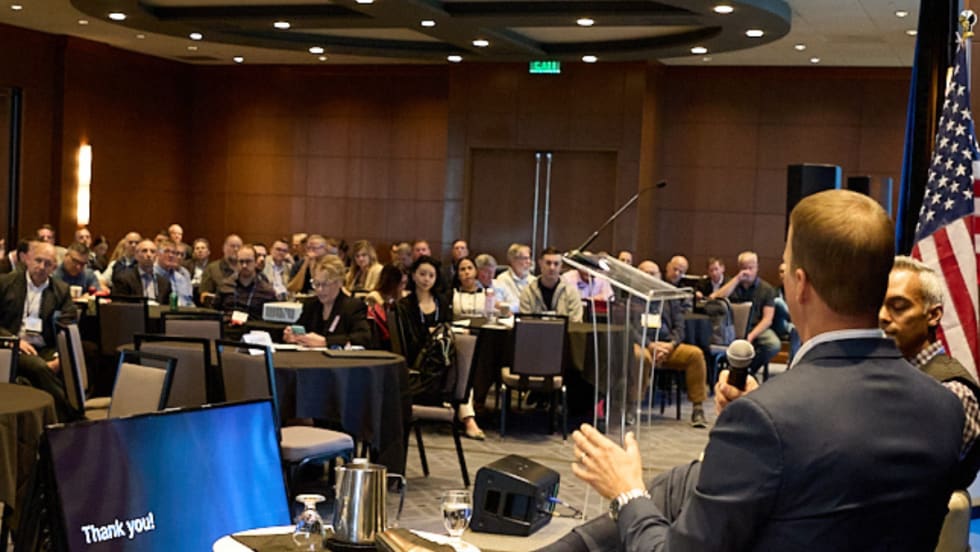
NETS Sets 2026 Fleet Safety Benchmark Conference for Indianapolis
The Sept. 15–17 program will feature fleet benchmarking data, case studies, emerging technologies, and implementation strategies while running alongside the NSC Safety Congress & Expo.
Read More →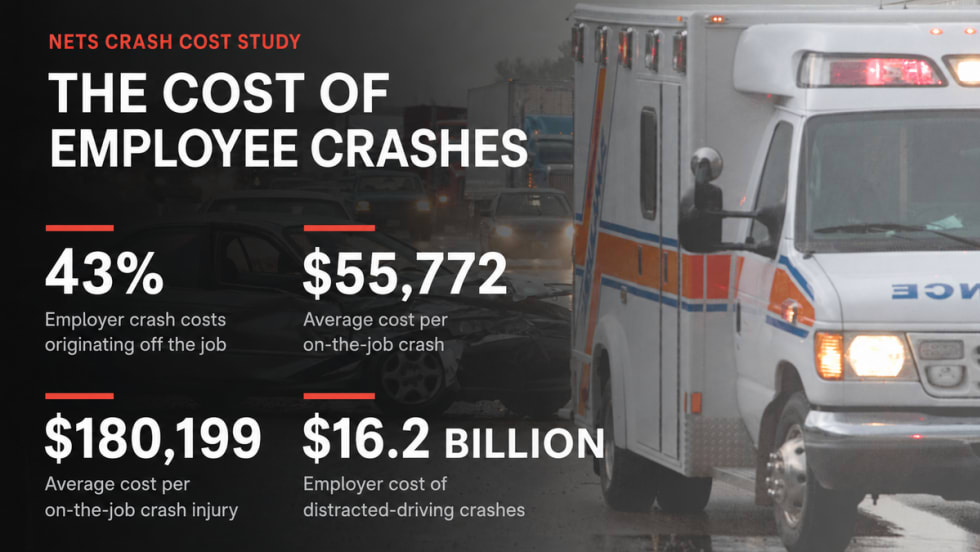
Off-the-Job Crashes Account for 43% of Employers’ $61.7 Billion Crash Burden
NETS quantifies costs dispersed across fleet, risk, HR, and other departments while providing new per-crash benchmarks for employers.
Read More →
Ram Recalls More Than 1.27 Million 1500 Pickups for Seat Belt Anchor Issue
The recall affects certain 2019-2026 Ram 1500 pickups that may have improperly attached second-row seat belt buckle anchors.
Read More →
How Better Visibility Cut Speeding Violations by 48%
Fleet leaders don't need more data, they need clearer visibility into what the data is saying. This case study explores how one utility replaced speeding-event counts with a single metric — miles driven in violation — to strengthen safety and significantly reduce speeding violations.
Read More →
Operation Safe Driver Week: Why the Industry's Oldest Safety Campaign Still Matters to Fleets
A look at how a 2007 enforcement initiative became one of the most consequential weeks on the fleet safety calendar, and what it means for your drivers in 2026.
Read More →