




WASHINGTON, D.C. --- Calling on lawmakers to "act with urgency," a Ford executive this week told the Senate Energy and Natural Resources Committee that policies are needed to support an aggressive, integrated approach by industry and government stakeholders to develop renewable fuels and advanced technology vehicles. "It is clear the solution to America ’s energy challenges will need to come from advances in fuels and vehicle technology. The fact is, without the whole-hearted involvement of the oil industry, we cannot move forward far enough and fast enough," said Sue Cischke, Ford vice president of environmental and safety engineering. "We obviously need key partners like the oil industry to invest in developing and marketing renewable fuels, like E85." Ford is committed to a portfolio of advanced technology vehicles, including hybrids, flexible fuel vehicles, advanced clean diesels, hydrogen-powered internal combustion engines and fuel cells. At the Washington Auto Show in January, Ford unveiled the first-ever hybrid-ethanol demonstration vehicle, a Ford Escape Hybrid E85. Pointing out that Ford alone has put more than 1.6 million ethanol-capable, or flex-fuel, vehicles on the road in the last decade, Cischke emphasized the need for rapid production of renewable fuels, and the infrastructure to support them. Only 600 of the 170,000 retail gas stations in the country carry E85 ethanol, a blend of 85% ethanol and 15% gasoline. Cischke said expanding the availability of E85 will be critical to moving America toward energy independence. "For ethanol to be a real player in the transportation sector and lessen America’s dependence on foreign oil, we need a strong, long-term focus on policies that increase U.S. ethanol production and accelerate E85 infrastructure development," she said. "We need national research efforts to pursue producing ethanol from more energy efficient cellulosic materials like rice straw, corn stover, switch grass, wood chips or forest residue." Cischke also reiterated Ford’s commitment to produce 250,000 hybrids by 2010, including offering hybrids on half of all Ford, Lincoln and Mercury models. Cischke advocated an integrated approach between government and industry stakeholders. She called for an expanded role for federal and state government, including tax credits for research and development and tax incentives for consumers and businesses to use renewable fuels. "We fully support government incentives to encourage and accelerate this investment," she said. "The challenges are considerable but not insurmountable, and there is an enormous amount we can achieve if we act together in an integrated manner."
Ford V.P. Urges Senators to Support Renewable Fuel Development
WASHINGTON, D.C. ---Calling on lawmakers to "act with urgency," a Ford executive this week told the Senate Energy and Natural Resources Committee that policies are needed to support an aggressive, integrated approach by industry and government stakeholders to develop renewable fuels and advanced technology vehicles.
More Operations

Why Fleet Managers Are Replacing Departmental Vehicles with Shared Motor Pools
Departmentally assigned vehicles often create hidden costs through underutilization, poor visibility, and increased administrative burden. This white paper explores how shared motor pool strategies help fleets reduce costs, improve accountability, and optimize vehicle utilization.
Read More →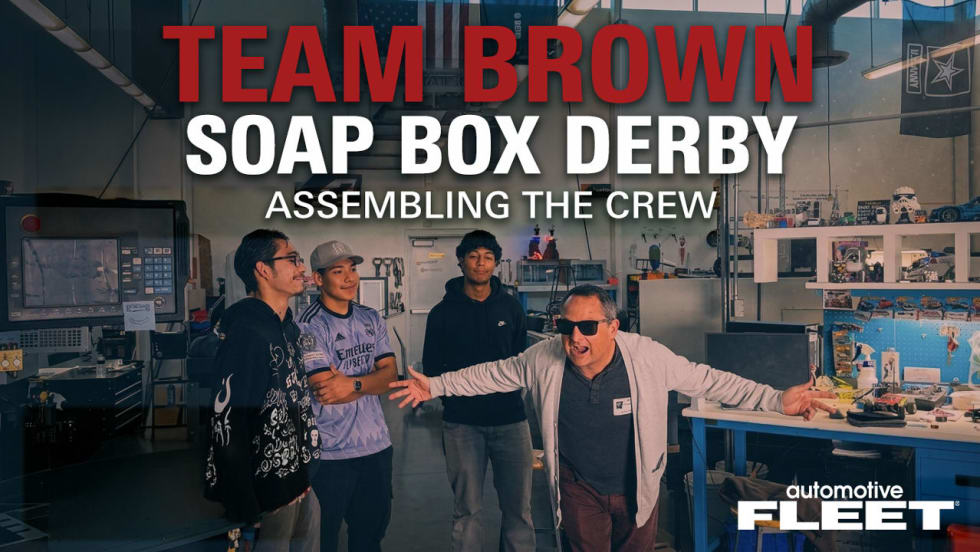
Soap Box Derby Challenge: Assembling the Crew
Meet Gabriel, Matthew, and Angel — the team helping bring this soap box derby build to life.
Read More →
BBL Fleet Acquires Velcor Leasing Corporation
BBL Fleet expanded its footprint in the fleet management industry with the acquisition of Velcor Leasing Corporation of Madison through a stock purchase agreement finalized Feb. 27, 2026.
Read More →
Lytx Introduces New AI Fleet Technologies at Protect 2026
The company introduced new AI-driven fleet safety and operations technologies during its annual user conference.
Read More →
Fleet Costs Are Rising: Here’s How Leaders Are Responding
Fleet leaders are under pressure to reduce costs, adapt to economic uncertainty, and make smarter decisions. See how peers across North America are responding with real data, proven strategies, and forward-looking insights. Download the 2026 Market Pulse Report to benchmark your strategy and uncover where you can gain an edge.
Read More →
From Waffle House to AI: Fleet Trends You Need to Know
In this AF news recap, host Faith Howell covers how Waffle House stepped up during disaster response and new AI tech on the market.
Read More →
Fleet Operations in the Age of AI: Navigating Ethical and Legal Challenges
AI is no longer a future concept for fleets—it’s already embedded in the tools, data, and decisions that operators rely on every day. In this episode of the Fleet Forward Podcast, recorded live at Fleet Forward, industry leaders take the conversation beyond hype to examine what responsible AI adoption really looks like in fleet operations.
Read More →
Factory Installed vs. Aftermarket: Choosing the Right Telematics Path & Managing the Data
As fleets rethink how they capture, manage, and act on vehicle data, telematics is at a major inflection point. In this episode of the Fleet Forward Podcast, we dive deep into one of the most pressing questions facing fleet leaders today: Should you rely on OEM factory-installed connectivity, aftermarket devices, or a hybrid of both?
Read More →
What Real-Time Data Reveals About EV Cost, Performance, and Scalability
Experts from telematics analytics, fleet-as-a-service operations, and national EV benchmarking share how real-time data is reshaping fleet strategy—dispelling assumptions, validating best practices, and exposing costly missteps.
Read More →
Planning Through Policy Shifts: What Fleets Must Track in 2026
A powerhouse panel featuring experts from the American Automotive Leasing Association, CalSTART, and municipal fleet leadership dives into the realities of navigating shifting emissions rules, regulatory waivers, federal agency actions, the future of the EPA’s endangerment finding, and the push for unified standards. They also examine the impacts of tariffs, autonomous vehicle policy, battery innovation, and the accelerating global EV market.
Read More →