




Related: Ford Super Duty to Offer Driver-Assist Technologies
Ford Ups Power, Hauling for 2017 Super Duty Pickups
Ford Motor’s 2017 F-Series Super Duty pickups with aluminum bodies have higher engine output ratings and more towing and hauling capability than ever, while “smart” technologies make backing and monitoring trailers easier.
by Staff
July 18, 2016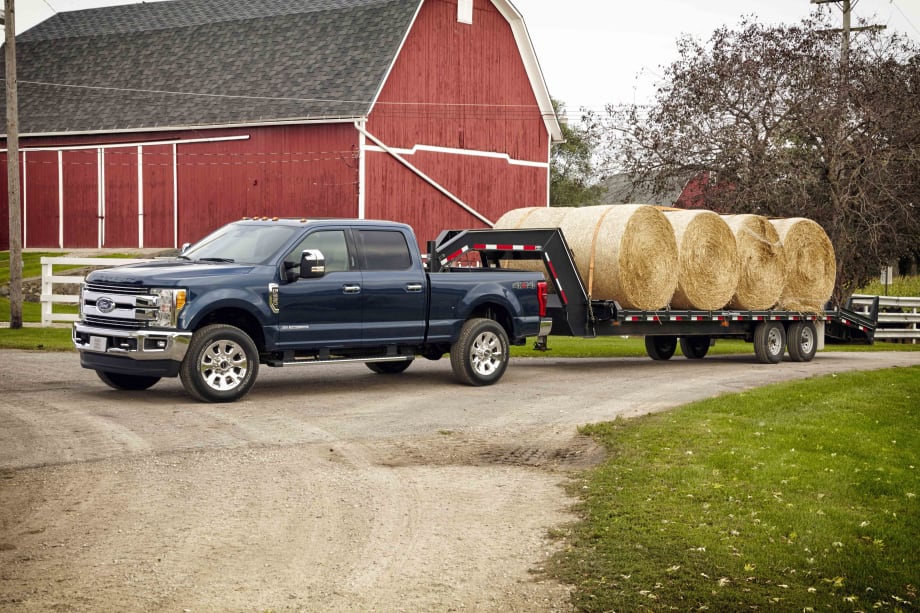
Photo courtesy of Ford.
3 min to read
Photo courtesy of Ford.
Ford Motor’s 2017 F-Series Super Duty pickups with aluminum bodies have higher engine output ratings and more towing and hauling capability than ever, while “smart” technologies make backing and monitoring trailers easier, the company announced Monday.
"Military-grade" aluminum alloy and high-strength steel help reduce weight by up to 350 pounds, depending on cab configuration, compared to earlier models, the announcement said. More robust components throughout the chassis also enable the higher hauling capacities.
The 6.7-liter Power Stroke V-8 turbo diesel boosts horsepower to 440 and torque to a class-leading 925 lb.-ft. for F-250 to F-450 pickups, and the 6.2-liter V-8 gasoline engine's torque goes to 430 lb.-ft. with 385 hp, said Doug Scott, Ford’s truck marketing manager.
“This is the best heavy-duty truck we’ve ever made,” he said. “We listened to our customers and created the toughest, smartest and most capable Super Duty ever.”
Foundational improvements for 2017 Super Duty pickups include fully boxed frame rails and redesigned crossmembers that are more than 95% high-strength steel, and are up to 24 times stiffer than the previous frame to support increased towing and hauling. The new aluminum-alloy body is more dent and ding resistant than the previous steel body.
Ford’s F-450 Super Duty SuperCrew 4x4 now has a maximum gooseneck tow rating of 32,500 pounds – 1,290 pounds more than its nearest competitor, a regular cab two-door pickup, Scott said. Maximum fifth-wheel towing is increased to 27,500.
Maximum conventional towing is increased to 21,000 pounds. Maximum conventional towing for an F-250 with the new trailer tow package, and F-350 single-rear wheel pickup, are increased to 18,000 pounds.
Maximum gross combined weight rating for truck and trailer now tops out at a class-leading 41,800 pounds. That is more than half the maximum weight of an 18-wheel tractor-trailer combination on most federal highways, he said.
Super Duty also offers adaptive cruise control and collision warning with brake support for heavy trailers, allowing drivers to traverse steep mountain grades while maintaining speed, even with a gooseneck trailer weighing 32,500 pounds.
A center high-mounted stop lamp camera provides visibility into the cargo box, which is especially helpful when hooking up gooseneck and fifth-wheel trailers. An Ultimate Trailer Tow Camera System uses four digital, high-definition cameras to give the driver a 360-degree bird’s-eye view surrounding Super Duty.
Trailer Reverse Guidance provides visual cues and tips to help ease backing up a trailer. A first-ever factory-available trailer camera can be custom-placed on a trailer to improve visibility backing up.
A Blind Spot Information System, or BLIS, with trailer tow includes the length of the trailer up to 33 feet long; BLIS uses radar sensors in the tail lamps to monitor areas that may not otherwise be visible to the driver. Tire pressures can be monitored from inside the cab while stopped or moving.
Maximum payload of the 2017 Super Duty F-350 is 7,630 pounds, which Scott said is more than any competitor. The F-250’s maximum payload is 4,200 pounds.
Diesel and gasoline engines use a TorqShift six-speed SelectShift automatic transmission. The F-250 pickup with 6.2-liter gasoline V-8 gets a new TorqShift-G six-speed automatic for improved fuel economy and capability.
The Super Duty series goes on sale this fall.
More Operations

How Fleets Can Recruit and Train Veterans for Technician Roles
Here's how the technician shortage has affected uptime for fleets, and what to do about it.
Read More →
Avis Budget Group Deploys Neology Toll Management Technology Across Major Brands
Neology’s neoFleet platform will manage toll transactions and toll-authority operations for vehicles across Avis, Budget, Payless, Budget Truck and Zipcar.
Read More →
Fleet Personal-Use Charges Edge Higher in 2026
Nearly eight in 10 surveyed fleets allow personal use of company vehicles, while just over half of respondents report charging employees for the privilege.
Read More →
The Future of Fleet + What’s Changing Right Now | AF News Recap
Could developments overseas offer a preview of what’s coming for U.S. fleets? This week, we’re looking at the future of AI, autonomy, and electrification, plus Ford Pro’s new certified pre-owned program, smarter vehicle offboarding, and a new way for fleets to manage toll expenses.
Read More →
How to Handle Vehicle Offboarding
What do fleet managers need to do when a driver leaves?
Read More →
Sponsored•October 1, 2026
Fleet Manager’s Ultimate Playbook: Navigating the New Standard in OEM Connectivity
Rising operating costs, driver safety concerns, and unplanned downtime are putting unprecedented pressure on modern fleets. Discover how fleet managers use embedded OEM connectivity and real-time vehicle data to cut TCO, prevent downtime, and protect drivers without aftermarket telematics hardware.
Read More →
U.S. Bank Adds Verra Mobility Toll Management to Voyager Fleet Platform
The integration allows U.S. Bank Voyager fleet customers to manage toll payments and violations alongside fuel, EV charging and maintenance expenses.
Read More →
ADAS Prevents Crashes. But Repairs Cost More | AF News Recap
ADAS-equipped vehicles may crash less often, but they can cost more when they do. This week, we’re breaking down what that tradeoff means for fleets, plus Subaru’s first Forester Wilderness Hybrid, Nissan’s new e-POWER Rogue, and why Calstart has become Catalyst Mobility.
Read More →
Moventum Fleet Management Names Mark Iorillo Head of Sales
Iorillo brings nearly 20 years of fleet management and sales experience to the role, including previous positions at Element Fleet Management, CEI, Donlen and Ryder.
Read More →
Fleet Has a Talent Pipeline Problem. What Comes Next? | AF News Recap
Where will fleet’s next generation of leaders come from? This week, we’re looking at the industry’s talent pipeline, what certification can add to a fleet career, how to build an award-worthy track record, and the return of Automotive Fleet’s Personal Use Survey.
Read More →