




Ford Unveils New Super Duty With Aluminum Body
Ford introduced the 2017 Ford F-Series Super Duty with a number of enhancements including a lighter weight aluminum-alloy body.
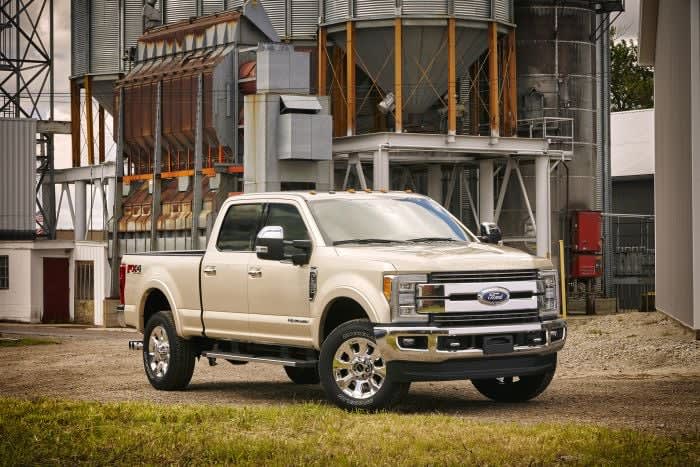
Ford's 2017 Super Duty Photo: Ford

Ford's 2017 Super DutyPhoto: Ford
Ford introduced the 2017 Ford F-Series Super Duty with a number of enhancements including a lighter weight aluminum-alloy body.
The 2017 model includes a new stronger steel frame, aluminum body, improved axles/springs and suspension, class-exclusive features and technologies, and multiple gasoline and diesel engine and transmission combinations.
Following a similar change in the latest F-150, the 2017 Super Duty will include a military-grade aluminum-alloy body, which the company says is more dent- and ding-resistant than the outgoing steel body and not subject to red rust corrosion.
The Super Duty’s frame is composed of more than 95% high-strength steel that offers up to 24 times more stiffness than the previous frame and is designed to improve towing and hauling capability, according to Ford. The aluminum body and steel frame combine to reduce the Super Duty’s weight by up to 350 pounds.
“As we remove weight, we’re making Super Duty more productive by giving our customers better towing and payload capability,” said Craig Schmatz, Super Duty chief engineer.
For powertrains, the 6.7L Power Stroke V-8 diesel engine is available for both pickup and chassis cab models. Available on the F-250 pickup is a 6.2L V-8 gasoline engine that is equipped with Ford's TorqShift-G transmission, which improves capability, according to Ford. The Super Duty chassis-cab lineup includes a choice of 6.7L Power Stroke V-8 Diesel, 6.8L V-10 gasoline or 6.2L V-8 gasoline engines.
“We’re backing up improved capability with a stronger gasoline and diesel Super Duty engine lineup,” said Schmatz. “The bottom line is Super Duty customers will be able to tow and haul more than ever before.”
The F-Series Super Duty is also available with several driver-assist technologies, including lane departure, blind spot, adaptive cruise control and collision warning features.
The Blind Spot Information System with trailer tow is optimized for Super Duty to include the length of the trailer and uses radar sensors in the tail lamps to monitor blind spots. The lane departure warning feature alerts a driver when they stray from a lane through a series of steering wheel vibrations.
Adaptive cruise control and collision warning with brake support makes use of sensors to detect slower vehicles moving in the same direction. If another vehicle gets too close, red lights flash on the windshield and a warning is sounded. If a driver fails to brake, the brake system is pre-charged to stop faster when the brake pedal is pressed.
The truck also features lighting technology, including LED side-view mirror spotlights to light up a work site, LED cargo box lighting and class-exclusive quad-beam LED headlamps and tail lamps.
All three cabs — Regular Cab, SuperCab and Crew Cab — are longer and include new interior design. The new interior features a dual-compartment glove box, overhead console-mounted auxiliary switches and a completely flat SuperCab and Crew Cab second-row floor to make loading large items in the cab easier.
There are five models in the Super Duty lineup — XL, XLT, Lariat, King Ranch and Platinum. The 2017 Super Duty will be built at Ford’s Kentucky truck plant, and goes on sale late next year.
More Operations

Here's When You Should Make an Exception to Fleet Policy
Fleet policies are designed to create consistency, but not every driver or situation fits neatly within standard rules.
Read More →
AI-Native or AI-Acquired: What Should Fleet Managers Look for in an AI Platform?
Six questions can help fleet managers look beyond AI marketing claims to evaluate integration, data access, and real-world operational performance.
Read More →
A buyer's guide to fleet management software in 2027
Buying fleet management software in 2027 means looking beyond features and price. As fleet operations, technology and expectations evolve, this guide explores what today’s fleet professionals should consider when choosing a system that can deliver value now and adapt to what comes next.
Read More →

What Will Shape the Next Era of Fleet Management?
EVs, AI, and autonomous vehicles are reshaping fleet management. Discover what’s ahead—and how fleet leaders can prepare for the next era.
Read More →
How Fleets Can Recruit and Train Veterans for Technician Roles
Here's how the technician shortage has affected uptime for fleets, and what to do about it.
Read More →
Avis Budget Group Deploys Neology Toll Management Technology Across Major Brands
Neology’s neoFleet platform will manage toll transactions and toll-authority operations for vehicles across Avis, Budget, Payless, Budget Truck and Zipcar.
Read More →
Fleet Personal-Use Charges Edge Higher in 2026
Nearly eight in 10 surveyed fleets allow personal use of company vehicles, while just over half of respondents report charging employees for the privilege.
Read More →
The Future of Fleet + What’s Changing Right Now | AF News Recap
Could developments overseas offer a preview of what’s coming for U.S. fleets? This week, we’re looking at the future of AI, autonomy, and electrification, plus Ford Pro’s new certified pre-owned program, smarter vehicle offboarding, and a new way for fleets to manage toll expenses.
Read More →
How to Handle Vehicle Offboarding
What do fleet managers need to do when a driver leaves?
Read More →
Fleet Manager’s Ultimate Playbook: Navigating the New Standard in OEM Connectivity
Rising operating costs, driver safety concerns, and unplanned downtime are putting unprecedented pressure on modern fleets. Discover how fleet managers use embedded OEM connectivity and real-time vehicle data to cut TCO, prevent downtime, and protect drivers without aftermarket telematics hardware.
Read More →