




Related: Ford Adds 850 F-150 Production Jobs
Ford Trains 8,000 on Aluminum F-150 Production
Ford is putting 8,000 of its workers through an intensive training program to ensure everyone knows how to work with the new materials, such as aluminum panels,in the 2015 F-150 full-size pickup at its Kansas City Assembly Plant.
by Staff
February 24, 2015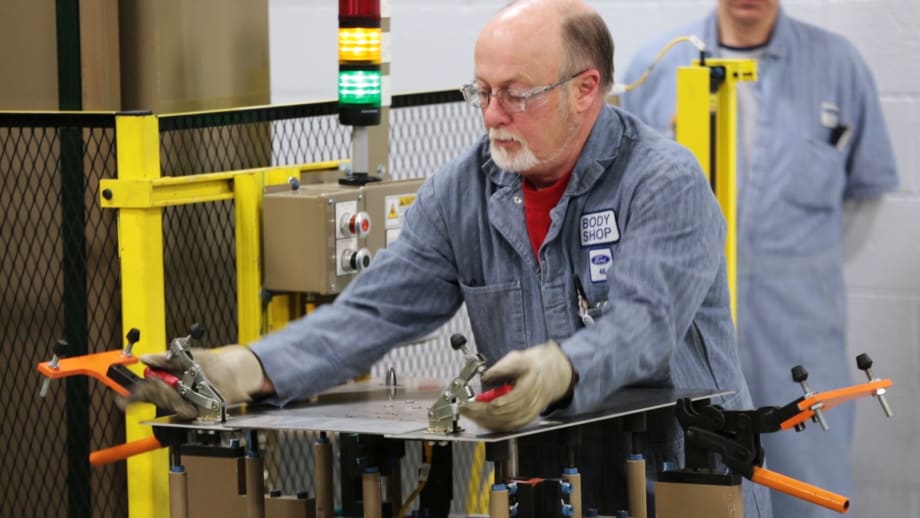
Photo courtesy of Ford Motor Co.
2 min to read
Photo courtesy of Ford Motor Co.
Ford is putting 8,000 of its workers through an intensive training program to support production of the 2015 F-150 full-size pickup at its Kansas City Assembly Plant. The new training program was prompted by the switch from steel-bodied F-150 construction to the new aluminum alloy body, according to the automaker.
The program consists of more than 400 hours of in-class and hands-on courses, and covers topics from installing and configuring new equipment for the production line to constructing the truck’s advanced electrical control system, according to Ford.
The training for Dearborn Truck Plant and Kansas City Plant workers started in May 2013. One unique aspect to the program is the “train-the-trainer” side where Ford employees learn and teach their own coworkers.
“Through this program, we have armed both our skilled trades and production workers with the skills necessary to produce the next generation of vehicle technology,” said Aris Janitens, Ford Launch Planning and Work Force Readiness manager. “Our workers now are able to deal with the latest in automotive manufacturing technology and, as a result, keep production on schedule to deliver best-in-class, quality trucks to our customers.”
Dearborn’s renovation was its largest manufacturing transformation in decades, according to the automaker, with Ford installing new press lines, new hydroforming lines, a new chemical and heat-treat area, a closed-top aluminum recycling system, and other technology.
Production of the all-new F-150 will start in Kansas City by the end of the first quarter of 2015.
The company says with both plants up and running Ford will have the capacity to produce more than 700,000 F-150 pickups per year for availability of in 90 markets globally.
More Operations

Here's When You Should Make an Exception to Fleet Policy
Fleet policies are designed to create consistency, but not every driver or situation fits neatly within standard rules.
Read More →
AI-Native or AI-Acquired: What Should Fleet Managers Look for in an AI Platform?
Six questions can help fleet managers look beyond AI marketing claims to evaluate integration, data access, and real-world operational performance.
Read More →
Sponsored•October 14, 2026
A buyer's guide to fleet management software in 2027
Buying fleet management software in 2027 means looking beyond features and price. As fleet operations, technology and expectations evolve, this guide explores what today’s fleet professionals should consider when choosing a system that can deliver value now and adapt to what comes next.
Read More →

What Will Shape the Next Era of Fleet Management?
EVs, AI, and autonomous vehicles are reshaping fleet management. Discover what’s ahead—and how fleet leaders can prepare for the next era.
Read More →
How Fleets Can Recruit and Train Veterans for Technician Roles
Here's how the technician shortage has affected uptime for fleets, and what to do about it.
Read More →
Avis Budget Group Deploys Neology Toll Management Technology Across Major Brands
Neology’s neoFleet platform will manage toll transactions and toll-authority operations for vehicles across Avis, Budget, Payless, Budget Truck and Zipcar.
Read More →
Fleet Personal-Use Charges Edge Higher in 2026
Nearly eight in 10 surveyed fleets allow personal use of company vehicles, while just over half of respondents report charging employees for the privilege.
Read More →
The Future of Fleet + What’s Changing Right Now | AF News Recap
Could developments overseas offer a preview of what’s coming for U.S. fleets? This week, we’re looking at the future of AI, autonomy, and electrification, plus Ford Pro’s new certified pre-owned program, smarter vehicle offboarding, and a new way for fleets to manage toll expenses.
Read More →
How to Handle Vehicle Offboarding
What do fleet managers need to do when a driver leaves?
Read More →
Sponsored•October 1, 2026
Fleet Manager’s Ultimate Playbook: Navigating the New Standard in OEM Connectivity
Rising operating costs, driver safety concerns, and unplanned downtime are putting unprecedented pressure on modern fleets. Discover how fleet managers use embedded OEM connectivity and real-time vehicle data to cut TCO, prevent downtime, and protect drivers without aftermarket telematics hardware.
Read More →