




Ford, Toyota to Collaborate on Hybrid System for Light Trucks, SUVs
DEARBORN, MI -- Ford Motor Co. and Toyota Motor Corp. announced they will equally collaborate on the development of an advanced new hybrid system for light truck and SUV customers.
DEARBORN, MI -- Ford Motor Co. and Toyota Motor Corp. announced they will equally collaborate on the development of an advanced new hybrid system for light truck and SUV customers.
Ford and Toyota have signed a memorandum of understanding (MOU) on the product development collaboration, with the formal agreement expected by next year. Both companies have been working independently on their own future-generation rear-wheel drive hybrid systems. Ford and Toyota said they believe that their collaboration will allow them to bring new hybrid technologies to customers sooner and more affordably than either company could have accomplished alone. “This agreement brings together the capability of two global leaders in hybrid vehicles and hybrid technology to develop a better solution more quickly and affordably for our customers,” said Derrick Kuzak, Ford group vice president of global product development. “Ford achieved a breakthrough with the Ford Fusion Hybrid, and we intend to do this again for a new group of truck and SUV buyers – customers we know very well.” Takeshi Uchiyamada, Toyota executive vice president of research and development, said: “In 1997, we launched the first-generation Prius, the world’s first mass-produced gasoline-electric hybrid. Since then, we have sold about 3.3 million hybrid vehicles. We expect to create exciting technologies that benefit society with Ford – and we can do so through the experience the two companies have in hybrid technology.” The two companies also agreed to work together on enablers to complement each company’s existing telematics platform standards, helping bring more Internet-based services and information to consumers globally. Under the MOU agreement, the two companies will bring the best of their independently developed hybrid powertrain technology and knowledge to a new co-developed hybrid system, which will be used in rear-wheel-drive light trucks arriving later this decade. Ford and Toyota will jointly develop as equal partners a new rear-wheel drive hybrid system and component technology for light trucks and SUVs, and independently integrate the new hybrid system in their future vehicles separately. For years, both Ford and Toyota have been working independently on similar new rear-wheel-drive hybrid systems aimed at delivering higher fuel economy in light trucks and SUVs. When the two companies began discussing this potential collaboration, they discovered how quickly they were able to find common ground. “By working together, we will be able to serve our customers with the very best affordable, advanced powertrains, delivering even better fuel economy,” said Ford President and CEO Alan Mulally. “This is the kind of collaborative effort that is required to address the big global challenges of energy independence and environmental sustainability.” Toyota President Akio Toyoda added: “Toyota is extremely proud to join Ford in developing a hybrid system for pickup trucks and SUVs. Not only is this tie-up clearly one aimed at making automobiles ever better, it should also become an important building block for future mobility in the U.S. By building a global, long-term relationship with Ford, our desire is to be able to continue to provide people in America automobiles that exceed their expectations.” This rear-wheel-drive hybrid system will be based on an all-new architecture to deliver greater fuel economy. While the rear-wheel-drive hybrid system will share significant common technology and components, Ford and Toyota will individually integrate the system into their own vehicles. Each company also will determine the calibration and performance dynamics characteristics of their respective light pickups and SUVs. In addition, both companies have agreed to collaborate on standards and technologies needed to enable a safer, more secure and more convenient in-car experience for next-generation telematics systems. The telematics collaboration relates only to standards and technologies, and each company will continue to separately develop its own in-vehicle products and features. “Ford has made tremendous progress in the area of telematics,” Kuzak said. “We have unique and very good solutions today with SYNC and MyFordTouch. Working together on in-vehicle standards can only enhance our customers’ experience with their vehicles.” Uchiyamada added: “Toyota has also invested heavily in telematics in various countries around the world, with services like the G-BOOK and G-Link. In the U.S., we have just introduced the accessible, easy-to-use Entune. By sharing our know-how and experience, we would like to offer even better telematics services in the future.”
More Green Fleet

Merchants Fleet Reports 290M EV Miles as Fleets Navigate Changing Electrification Market
From millions in operating savings to hundreds of millions of EV miles, Merchants Fleet’s latest report reveals what’s working and what’s changing in fleet electrification.
Read More →
The EV Breakdown Nobody's Talking About: Why Most Electric Vehicle Roadside Calls Aren't Mechanical Failures
Here's why EV breakdowns are widely misunderstood.
Read More →
ChargePoint Now Available in Energy Pass
ChargePoint and additional planned charging network integrations were added to GM's Energy Pass.
Read More →
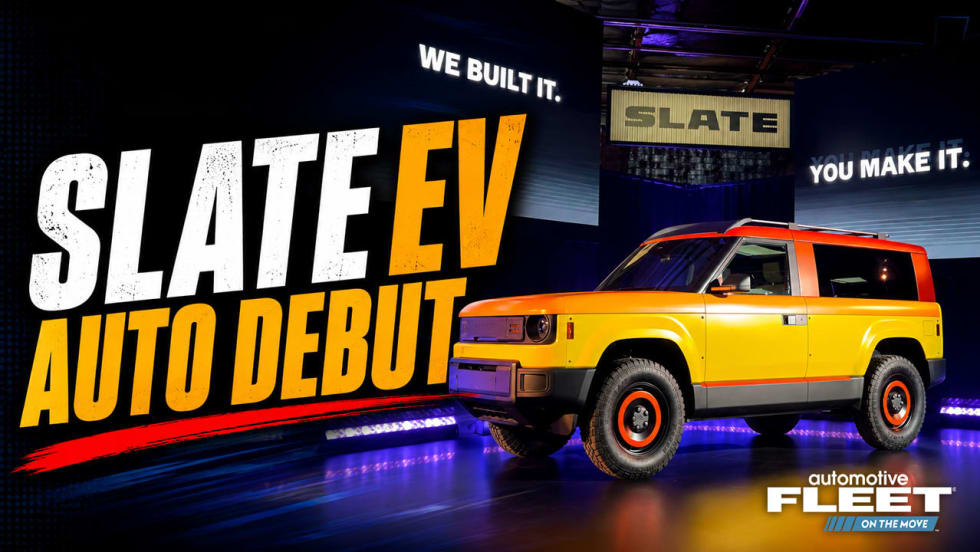
First Look: Slate Auto's Electric Fleet Pickup
Could an affordable, modular EV pickup make electrification more practical for fleets?
Read More →
Slate Debuts Colorful, Unique EV Models
A recent media and client event, studded with electric vehicles dressed up on platforms, planted a new position for the manufacturer in the wider EV market. Fleets will find cost-saving advantages.
Read More →
Slate Electric SUV, Pickup Switchable Model Aims For Light-Duty Fleets
Everything about this EV is counterintuitive and understated, making it stand out from the crowd.
Read More →
Inspiration Mobility Acquires Key Electrada Assets
Inspiration Mobility Group has acquired select assets of Electrada, adding the fleet electrification provider's team, technology, and charging infrastructure development capabilities to its energy management business.
Read More →
Turning Connected Vehicle Data Into Decisions That Matter
Fleet leaders have more data than ever, but turning that data into clear, actionable decisions remains a challenge. This white paper shows how leading organizations are using connected vehicle data to improve safety, reduce costs, and optimize fleet performance. Learn how to turn insight into action across your fleet.
Read More →
Are You Tracking Your Fleet's True Total Cost of Ownership?
Bobit Business Media surveyed 190 fleet professionals and found that while most fleets are tracking costs, fragmented systems and data gaps are keeping true TCO visibility out of reach. With rising pressure to control spend in an increasingly volatile environment, the gap between what fleets think they know and what the data actually shows is wider than you might expect. See how your peers are managing costs today and where the industry still has room to improve.
Read More →