




Ford Showcases Fuel Cell Hybrid Electric Plug-In Vehicle During Bush Visit
KANSAS CITY --- Ford Motor Co. on Tuesday showcased a drivable fuel cell hybrid electric plug-in vehicle at the Kansas City assembly plant during a visit by President George W. Bush.
KANSAS CITY --- Ford Motor Co. on Tuesday showcased a drivable fuel cell hybrid electric plug-in vehicle at the Kansas City assembly plant during a visit by President George W. Bush. The vehicle combines an onboard hydrogen fuel cell generator with lithium-ion batteries to deliver more than 41 mpg with zero emissions. It is built on a flexible powertrain architecture that will enable Ford to use new fuel and propulsion technologies. The new HySeries Drive powertrain featured in a Ford Edge uses a real-world version of the powerplant envisioned in the Ford Airstream concept unveiled in January at the 2007 North American International Auto Show in Detroit. The HySeries Drive powertrain delivers a combined city/highway gasoline equivalent fuel economy rating of 41 mpg. For those who drive less than 50 miles each day, the average jumps to more than 80 mpg. The plug-in hybrid is powered by a 336-volt lithium-ion battery pack at all times. The vehicle drives the first 25 miles each day on stored electricity alone, after which the fuel cell begins operating to keep the battery pack charged. This provides another 200 miles of range for a total of 225 miles with zero emissions. Individual experiences will vary widely and can stretch out the time between fill-ups to more than 400 miles. Drivers with modest daily needs would need to refuel only rarely. Drivers who travel less than 50 miles each day will see fuel economy well over 80 mpg, while those with long daily commutes will see somewhat lower numbers because the fuel cell must run a larger fraction of the time. The Ford Edge with HySeries Drive can travel at speeds of up to 85 mph. An on-board charger (110/220 VAC) can refresh the battery pack when a standard home outlet is available, making the concept a true plug-in hybrid. When the battery pack is depleted to approximately 40 percent, the hydrogen fuel cell --– supplied by Ford partner Ballard --– automatically turns on and begins generating electricity to recharge the batteries. Like a conventional automobile, the Ford Edge with HySeries Drive will go until it runs out of fuel --– in this case via a 350-bar hydrogen tank that supplies 4.5 kg of useable hydrogen. The HySeries Drive name is derived from the powertrain's structure: a hydrogen fuel-cell-powered series hybrid drivetrain. This approach reduces the size, weight, cost and complexity of a conventional fuel cell system by more than 50 percent, according to Ford. This powertrain architecture enables the use of new fuel and propulsion technologies as they develop and become available without the need to redesign the vehicle and its control systems. Many significant technical hurdles need to be overcome before a vehicle such as the Edge with HySeries Drive can become a reality, Ford said. Fuel cell vehicles remain expensive, costing millions of dollars each. And the single biggest hurdle to plug-ins remains the cost of lithium-ion batteries. Much work also needs to be done to make fuel cells more durable and to create a hydrogen infrastructure. Research into hydrogen, including the Ford Edge with HySeries Drive, is part of Ford's overall effort to address the challenges of climate change and energy independence. Ford is moving ahead with a range of technology solutions simultaneously, including vehicles such as the Ford Escape Hybrid and Mercury Mariner Hybrid, hydrogen fuel cells, hydrogen internal combustion engines, ethanol, clean diesel and refinements to gasoline fueled engines and advanced transmissions. Some of the technology, such as that seen in Ford’s lineup of hybrid vehicles, represents near-term approaches. Other technologies, including hydrogen fell cells, provide a long-term option, Ford said.
More Fuel
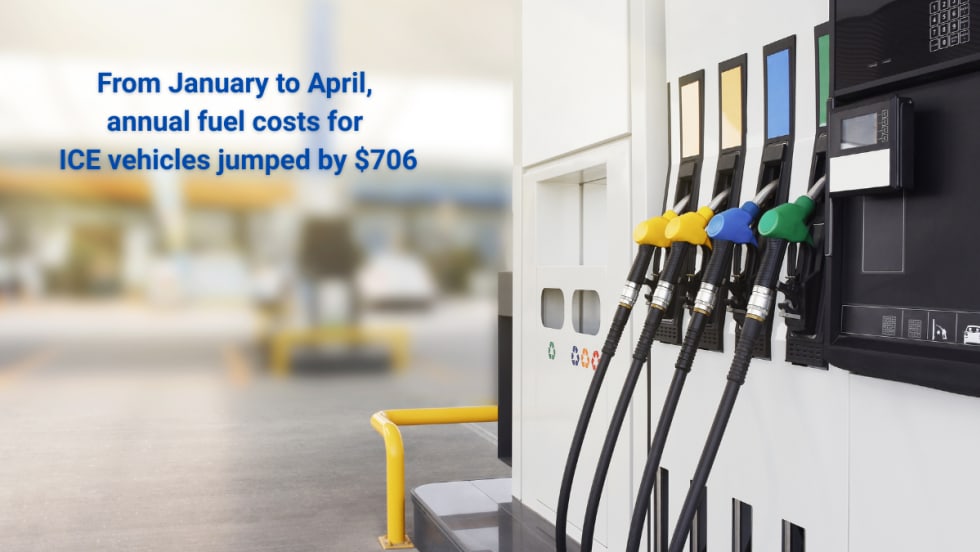
Study: How 2026's Gas Price Hikes Affect Different Vehicle Types
New data from iSeeCars reveals how rising fuel costs have affected different vehicle segments as gasoline prices climbed nearly 46% over the past four months.
Read More →
Are You Tracking Your Fleet's True Total Cost of Ownership?
Bobit Business Media surveyed 190 fleet professionals and found that while most fleets are tracking costs, fragmented systems and data gaps are keeping true TCO visibility out of reach. With rising pressure to control spend in an increasingly volatile environment, the gap between what fleets think they know and what the data actually shows is wider than you might expect. See how your peers are managing costs today and where the industry still has room to improve.
Read More →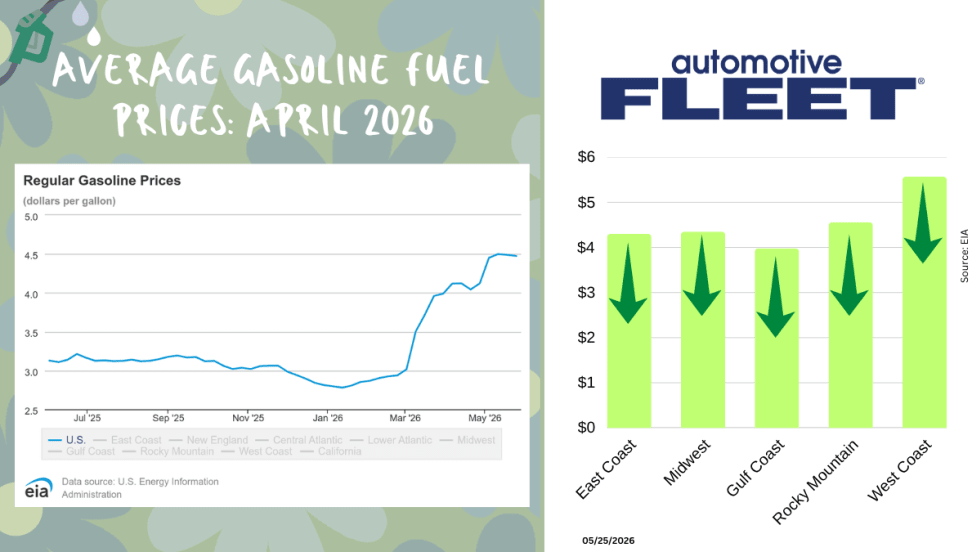
May Fuel Update: All Regions Experience Declines
Gas prices are finally easing in much of the country, but experts warn global tensions could quickly reverse the trend as the national average remains well above last month’s levels.
Read More →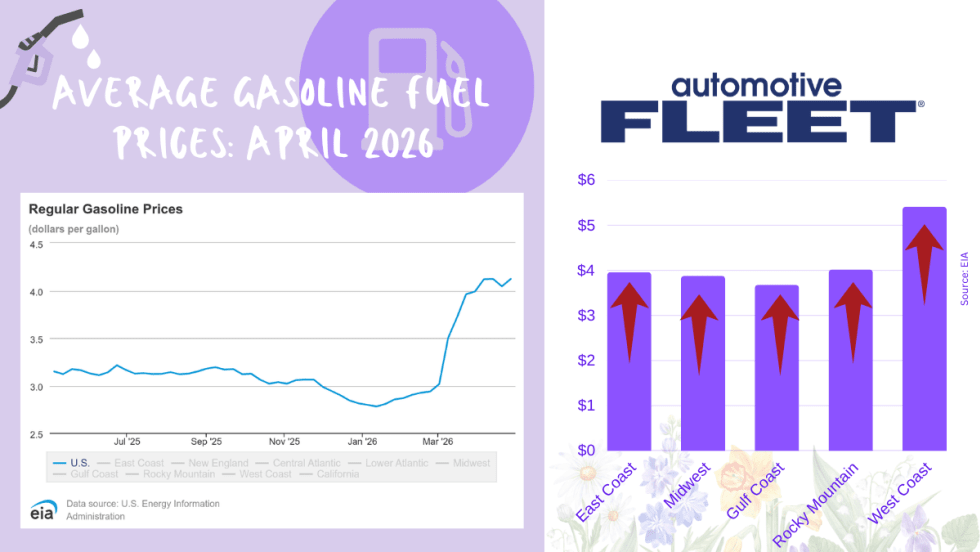
April Fuel Update: Prices Climb Above $4 as Spring Surge Accelerates
National average jumps to $4.04 per gallon, up sharply from last year, with West Coast prices topping $5 and further increases expected amid rising oil tensions.
Read More →
Tips from Fleet Managers on Saving Fuel Costs
Fleet leaders share practical strategies to reduce fuel spend through smarter policy, routing, and driver guidance.
Read More →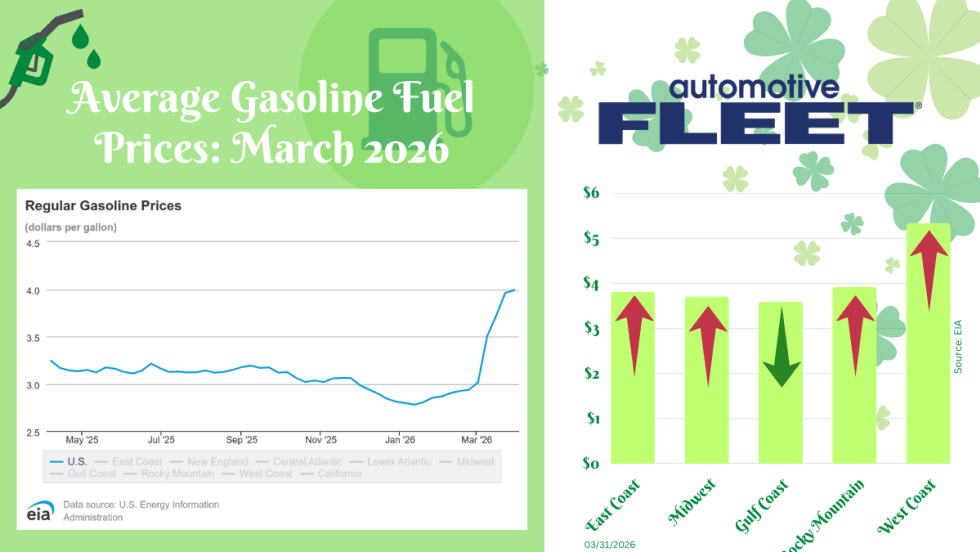
March Fuel Update: Prices Settle With a $4 Average
Fuel prices significantly slowed this week, but a $4 national average is still expected.
Read More →
Bob Adamsky on Fuel Volatility: “Don’t Panic — Have a Plan”
With oil prices rising again, AWP Safety’s fleet manager shares how to respond to rising fuel costs and how the right strategy can turn fuel spikes into cost-saving opportunities.
Read More →
Oil Market Turbulence Is Complicating Fleet Cost Planning
Rapid swings in crude oil prices driven by the conflict in the Middle East could create longer-term cost pressures for fleets, affecting fuel prices, supply chains, and vehicle strategy, says NTEA’s Andrew Wrobel.
Read More →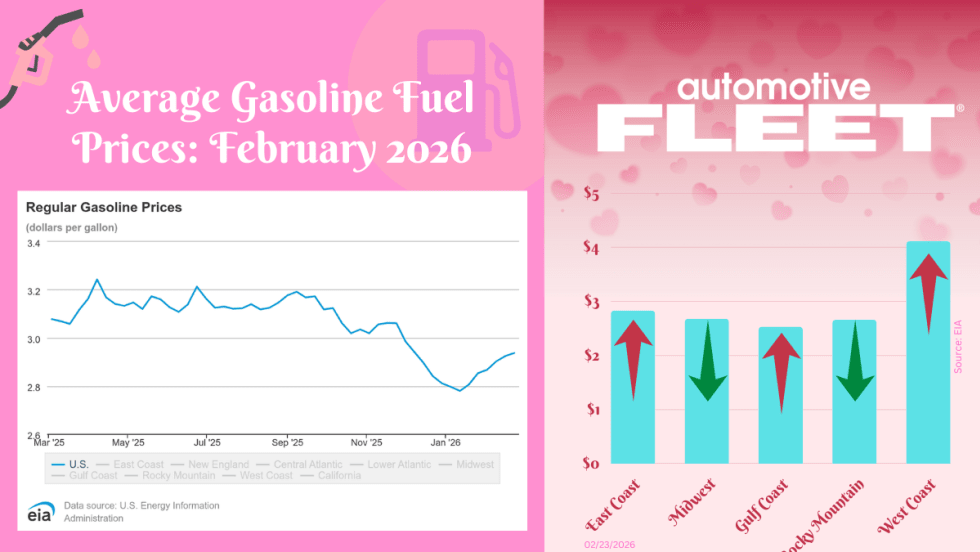
February Fuel Update: Prices Inch Higher for Third Week in a Row
The final February fuel update reveals prices continuing to inch higher for the third week in a row.
Read More →
The 2026 Fuel Economy Guide: Updated Cost and Efficiency Benchmarks for Fleets
Fleet managers can use the DOE’s 2026 Fuel Economy Guide to benchmark MPG across powertrain types using side-by-side vehicle ratings and compare new model-year options.
Read More →