




Ford Recalls Fusion, Lincoln MKZ for Seat Belts
The recall covers nearly 603,000 vehicles in the 2013 to 2016 model years.
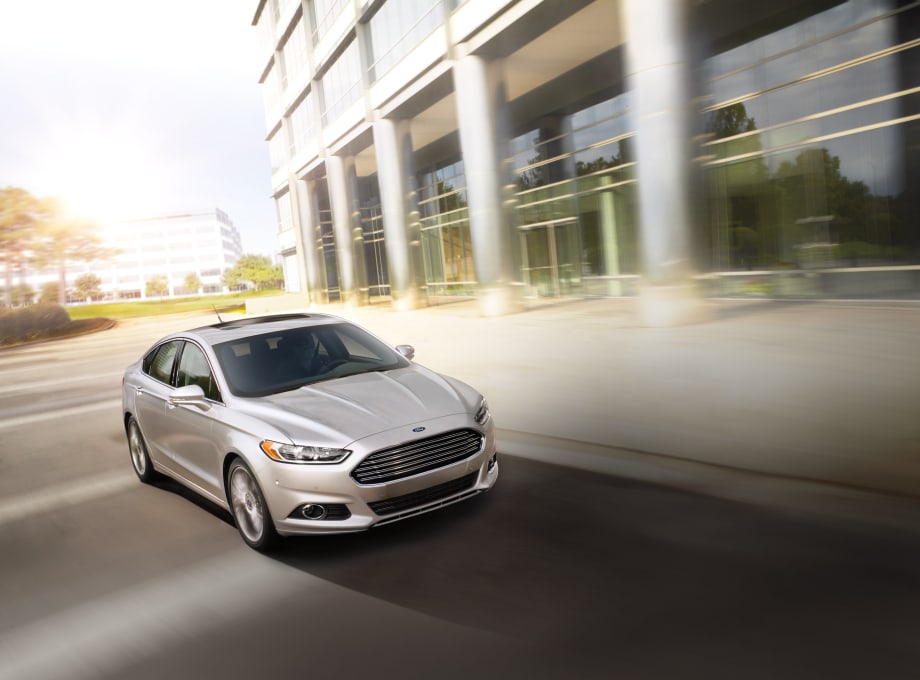
Image of Ford Fusion courtesy of Ford.
Image of Ford Fusion courtesy of Ford.
Ford Motor Co. is recalling 602,739 Ford Fusion and Lincoln MKZ vehicles in the U.S. so dealers can address a problem involving seat belt anchor pretensioners, the automaker said.
The Ford Fusion cars are in the 2013-2016 model years, while the Lincoln MKZ cars are in the 2013-2015 model years. They were built at the Hermosillo and Flat Rock assembly plants.
In these vehicles, higher temperatures generated during deployment of the seat belt anchor pretensioner might cause the pretensioner cables to separate. As a result, occupants may not be adequately restrained during a crash.
To remedy the problem, dealers will insulate the front driver and passenger seat belt anchor pretensioners to prevent cable separation in a crash, Ford said in a released statement about the recall. A conformal coating will be injected into the seat belt anchor pretensioners to protect the cables from the extra heat. There will be no charge for this service.
Ford noted it is aware of two accidents and two injuries associated with this issue.
In addition to the vehicles recalled in the U.S., Ford is recalling 35,614 Ford Fusion and Lincoln MKZ cars in Canada, 8,665 in Mexico, and 653 in federalized territories to fix the same problem. Ford’s reference number for this recall is 16S42.
In related news, Ford is also recalling 25 2017-model year Ford Fusion vehicles in the U.S. to replace the second-row left-rear seat back frame because it may have been built with improperly welded pivot pins. In these cars, the seat backs may not adequately retain cargo in a crash, increasing the risk of injury, Ford said. However, the company isn’t aware of any related accidents or injuries.
Ford is also recalling two Fusion cars in Canada for the same problem.
Dealers will resolve the issue by replacing the second-row left-rear seat back frame at no cost to the customer. Ford’s number for this recall is 16S43.
More Safety

From Driver Well-Being to EV Charging | AF News Recap
Mental health belongs in the fleet safety conversation. This week, we’re looking at five ways fleets can support employee well-being before a crisis, plus Holman’s expansion in Mexico, new one-day Fleet Forward passes, and why EV charging demand is outpacing infrastructure growth.
Read More →
Nexar-Nauto Merger Aims to Give Fleets Better Safety Intelligence Through Larger Driving Dataset
Stefan Heck tells Automotive Fleet that combining more than 10 billion miles of driving history with Nexar's AI models will give fleets deeper insights into driver risk and roadway conditions than either company could provide independently.
Read More →
Don't Wait for a Crisis: 5 Ways to Build Mental Health Into Your Fleet Safety Program
For Suicide Prevention Month, fleet and safety leaders have an opportunity to put mental health where it belongs: at the center of workplace safety.
Read More →
How Camera Data Can Strengthen a Fleet’s Insurance Renewal
Insights from a commercial insurance carrier and a broker show how fleets can turn video telematic data, driver coaching, and improved claims results into a stronger case at insurance renewal.
Read More →
The Safest Fleets Aren’t the Ones with the Most Technology
You’ve made the telematics investment. Here’s how to capture the other half of its value and build the safest fleet on the road.
Read More →
Hidden in Plain Sight: Fleet Compliance Risks
Fleet compliance isn't just about having policies — it's about consistently enforcing them. This practical guide reveals six hidden compliance risks common in public sector and shared fleet operations and outlines proven strategies to improve visibility, accountability, and audit readiness
Read More →
NETS Sets 2026 Fleet Safety Benchmark Conference for Indianapolis
The Sept. 15–17 program will feature fleet benchmarking data, case studies, emerging technologies, and implementation strategies while running alongside the NSC Safety Congress & Expo.
Read More →
Off-the-Job Crashes Account for 43% of Employers’ $61.7 Billion Crash Burden
NETS quantifies costs dispersed across fleet, risk, HR, and other departments while providing new per-crash benchmarks for employers.
Read More →
Ram Recalls More Than 1.27 Million 1500 Pickups for Seat Belt Anchor Issue
The recall affects certain 2019-2026 Ram 1500 pickups that may have improperly attached second-row seat belt buckle anchors.
Read More →
Operation Safe Driver Week: Why the Industry's Oldest Safety Campaign Still Matters to Fleets
A look at how a 2007 enforcement initiative became one of the most consequential weeks on the fleet safety calendar, and what it means for your drivers in 2026.
Read More →