




Ford Pushes Vehicles to the Limit in Cold Weather Testing
Ford vehicles of all sizes – from Focus to F-Series Super Duty – annually submit to subzero testing in the U.S. military’s all-weather laboratory designed to recreate nearly every weather condition on earth.
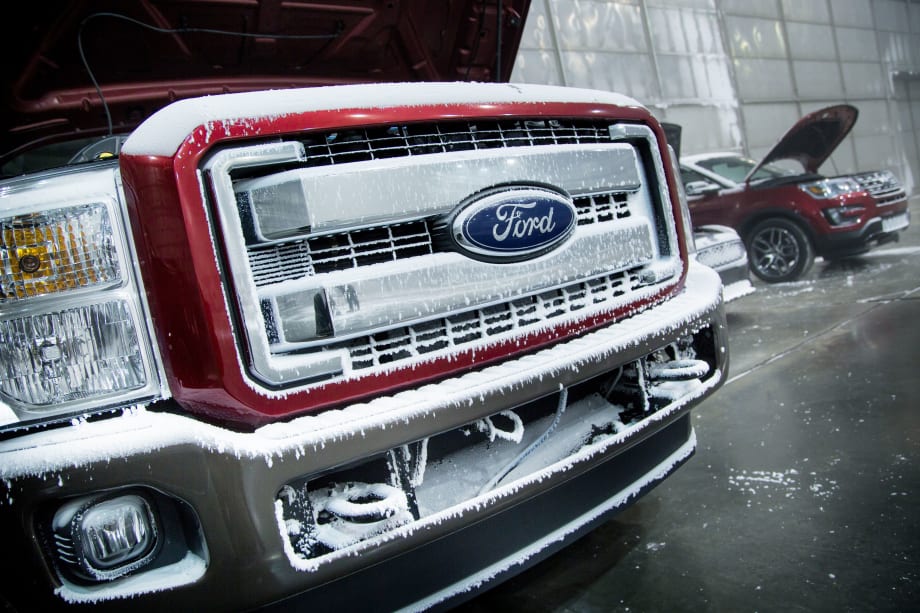
Photo courtesy of Ford.
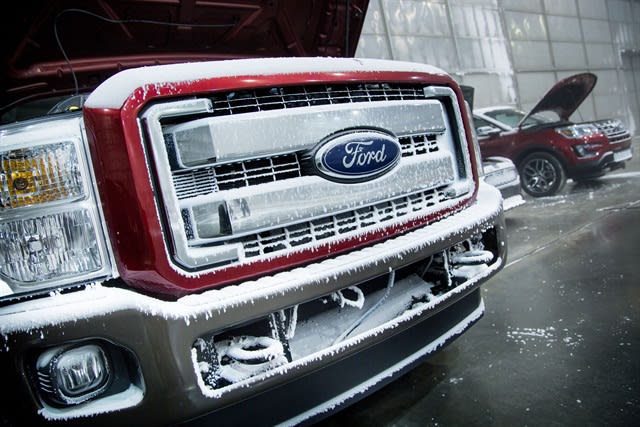
Photo courtesy of Ford.
Each year, Ford brings global prototype vehicles and a team of engineers to the world’s largest climatic test facility at McKinley Climatic Laboratory at Eglin Air Force Base in the Florida panhandle to push the limits of extreme cold-weather testing.
Ford engineers test vehicles ranging from the F-Series Super Duty to the Focus in a laboratory with temperatures as low as minus-40 degrees Fahrenheit over 10 hours. The hot, humid climate of northwest Florida in August has no impact on conditions inside the lab, which makes it ideal for simulating winter in Alaska’s Prudhoe Bay or Canada’s Yellowknife region, according to the automaker.
The opportunity to accommodate 75 global prototype vehicles of all sizes for rigorous testing creates efficiency in the company’s product development cycle that helps Ford learn in just three weeks what could take twice as long in a smaller facility. Collecting multiple data sets, analyzing results, and comparing and contrasting enables Ford engineers to quickly implement changes that enhance vehicle quality and ultimately benefit the customer, according to the automaker.
Engineers test the vehicles for specific situations.
In the oil fields of Alaska’s Prudhoe Bay, Ford F-Series trucks are not only a mode of transportation, but also a safety device for workers who need a warm cabin to retreat to on-site to prevent cold-weather injury on the job. Ford engineers conduct idle tests at the lab by running the engine week after week as temperature fluctuates from 40 degrees to minus-40 degrees, and examining the exhaust as it heats up then cools back down.
For those customers who depend on their vehicles for work commutes and to transport their families around town, Ford testing at the lab ultimately seeks to provide them with the assurance that their vehicles are designed to start and run in the bitter cold. As temperatures in the lab drop to minus-22 degrees, Ford engineers examine the volatility of 13 different types of fuel commonly used by customers across the globe to calibrate the cold start.
When running tests at such low temperatures inside McKinley Climatic Lab, engineers make changes daily to help ensure engine start and vehicle driveability. Learnings from these cold-weather tests helped Ford engineers perfect the 6.7-liter engine that powers the current F-Series Super Duty.
Engineers found that replacing metallic plugs with ceramic gold plugs enabled the engine to heat up more quickly, for a more robust start, according to the automaker.
More Operations
A buyer's guide to fleet management software in 2027
Buying fleet management software in 2027 means looking beyond features and price. As fleet operations, technology and expectations evolve, this guide explores what today’s fleet professionals should consider when choosing a system that can deliver value now and adapt to what comes next.
Read More →
What Will Shape the Next Era of Fleet Management?
EVs, AI, and autonomous vehicles are reshaping fleet management. Discover what’s ahead—and how fleet leaders can prepare for the next era.
Read More →
How Fleets Can Recruit and Train Veterans for Technician Roles
Here's how the technician shortage has affected uptime for fleets, and what to do about it.
Read More →

Avis Budget Group Deploys Neology Toll Management Technology Across Major Brands
Neology’s neoFleet platform will manage toll transactions and toll-authority operations for vehicles across Avis, Budget, Payless, Budget Truck and Zipcar.
Read More →
Fleet Personal-Use Charges Edge Higher in 2026
Nearly eight in 10 surveyed fleets allow personal use of company vehicles, while just over half of respondents report charging employees for the privilege.
Read More →
The Future of Fleet + What’s Changing Right Now | AF News Recap
Could developments overseas offer a preview of what’s coming for U.S. fleets? This week, we’re looking at the future of AI, autonomy, and electrification, plus Ford Pro’s new certified pre-owned program, smarter vehicle offboarding, and a new way for fleets to manage toll expenses.
Read More →
How to Handle Vehicle Offboarding
What do fleet managers need to do when a driver leaves?
Read More →
Fleet Manager’s Ultimate Playbook: Navigating the New Standard in OEM Connectivity
Rising operating costs, driver safety concerns, and unplanned downtime are putting unprecedented pressure on modern fleets. Discover how fleet managers use embedded OEM connectivity and real-time vehicle data to cut TCO, prevent downtime, and protect drivers without aftermarket telematics hardware.
Read More →
U.S. Bank Adds Verra Mobility Toll Management to Voyager Fleet Platform
The integration allows U.S. Bank Voyager fleet customers to manage toll payments and violations alongside fuel, EV charging and maintenance expenses.
Read More →
ADAS Prevents Crashes. But Repairs Cost More | AF News Recap
ADAS-equipped vehicles may crash less often, but they can cost more when they do. This week, we’re breaking down what that tradeoff means for fleets, plus Subaru’s first Forester Wilderness Hybrid, Nissan’s new e-POWER Rogue, and why Calstart has become Catalyst Mobility.
Read More →