




Ford Predicts It Will Lead U.S. Sales for '13
The automaker is reporting a 15% increase in retail sales compared to 2012, when it outsold Toyota by 329,677 vehicles in the U.S. Through November, Ford held a lead over Toyota of 396,041 vehicles sold.
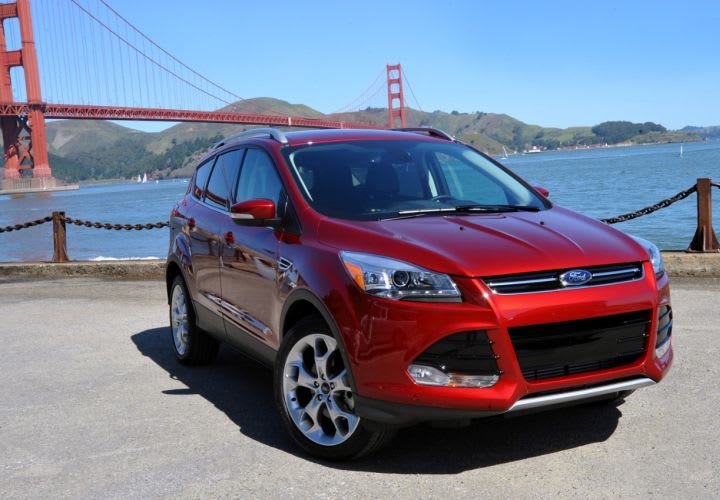
2013 Escape photo courtesy of Ford.
2013 Escape photo courtesy of Ford.
Ford Motor Co. expects to sell more than 2.4 million Ford branded vehicles in 2013 in retail and fleet channels, leading the way for the fourth consecutive year.
The automaker is reporting a 15% increase in retail sales compared to 2012, when it outsold Toyota by 329,677 vehicles in the U.S. Through November, Ford held a lead over Toyota of 396,041 vehicles sold during the calendar year, according to Ford.
Ford expects retail sales to surpass 1.7 million vehicles and fleet sales to surpass 710,000.
Ford expects strong sales growth in cars, trucks, utility vehicles and hybrids. Retail sales rose 23% in the West region and 18% in the Southeast region.
"The great news is that we are not overly reliant on any one segment," said John Felice, vice president of U.S. marketing, sales and service. "We're seeing double-digit sales growth in cars, trucks and utilities."
Ford is seeing growth across various segments. Ford expects to sell more than 70,000 Fiesta subcompact cars and 290,000 Fusion full-size sedans. Fiesta sales will reach a new high-water mark.
Ford expects to lead utility sales with a 10.3% increase from 2012 to 621,652 vehicles. The Ford Escape is leading the increase with a projected 300,000 vehicles sold. 2013 will be a peak year for the Escape, which was introduced in 1999. Ford Explorer sales are up 15% over 2012.
Ford's hybrid sales are also a notable story of 2013, as the automaker expects to exceep 80,000 hybrid sales, nearly triple the number of hybrids sold a year ago.
As expected, the F-Series truck should be the best-selling vehicle of the year with 688,810 sales through November.
More Operations

Company Vehicle or Reimbursement? How Fleets Are Rethinking Assignments
As fleet costs and insurance pressures rise, fleet managers are taking a closer look at which employees need company-provided vehicles and when a reimbursement program may make more sense.

Fleetio, ASE Launch Scholarship Program for Automotive Technicians
The second annual program will award 15 scholarships totaling $35,000 to support ASE certification, testing fees, and equipment costs.

Reading the Global Signals: What AI and the Energy Transition Mean for Fleets Now
In this opening keynote of the 2026 Fleet Forward Conference, John Rossant, founder of CoMotion, How can fleet managers navigate a never-ending, changing industry landscape?

90% Use Telematics. Are Fleets Getting Safer? | AF News Recap
This week, we're breaking down which industries have the highest rates, how Jamie McKay manages 2,400 vehicles, what's happening with the 2027 fleet awards, and why software-defined vehicles could introduce new costs.

What's Best Handled by an FMC, and What's Better Done Directly?
Fleet managers continue to rely on FMCs for essential services but are taking a closer look at where working directly with suppliers can improve efficiency and responsiveness.

Fleet Meets: Erin Gilchrist
Meet Erin Gilchrist, the inaugural Mike Antich Spirit of Fleet Award winner, as she shares insights on leadership, mentorship, the power of industry connections, and why people remain at the heart of fleet's future.

How 2026 Fleet Visionary Jamie McKay Manages 2,400 Vehicles Across 37 States
How do you keep 2,400 vehicles running across 37 states? Fleet Visionary Award winner Jamie McKay shares how collaboration, flexibility, and a few simple strategies help her tackle fleet management challenges at Aptive Pest Control.

Managing Fleet Costs in an Era of Permanent Volatility
Fleet operating costs have risen more than 20% since 2020, raising a key question: When does extending a vehicle's service life stop making financial sense?

The Next Evolution of Fleet Management: Autonomous Operations
This opening keynote session at the Fleet Forward Conference highlights the future of autonomous driving for fleets.

How to Reduce the Total Cost of Risk From Catalytic Converter Theft
A stolen catalytic converter can cost fleets far more in downtime and lost productivity than in repairs. A total-cost-of-risk approach can help fleet managers quantify their exposure and prioritize theft prevention.