




Ford Highlighting Intelligent Vehicle Research at ITS World Congress
VIENNA, GERMANY – The 19th ITS World Congress, which got under way Oct. 22 in Vienna, Germany, is exploring the latest trends and policies in intelligent vehicle systems. Among the event’s participants is Ford of Europe, which is highlighting a number of research projects aimed at advancing car-to-car and car-to-infrastructure communications as well as intelligent driver assistance systems.
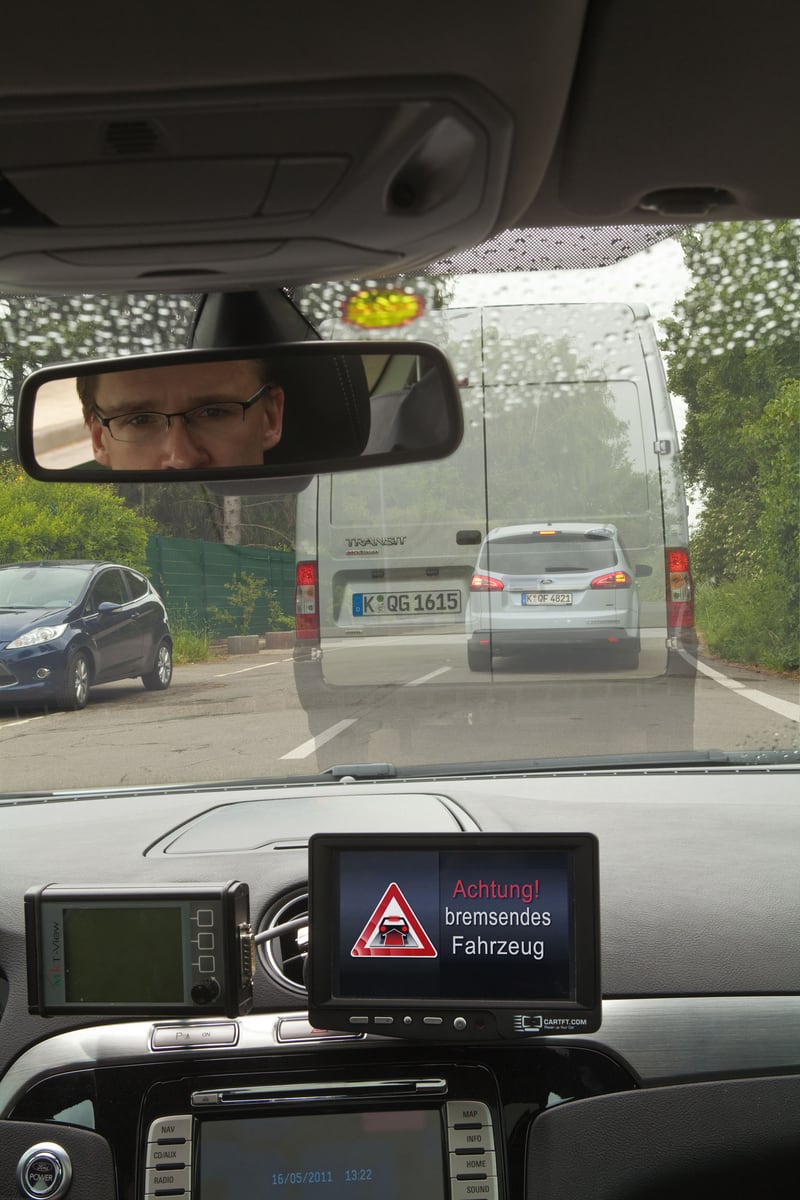
Ford's ongoing research projects are advancing a range of vehicle safety technologies.
VIENNA, GERMANY – The 19th ITS World Congress, which got under way Oct. 22 in Vienna, Germany, is exploring the latest trends and policies in intelligent vehicle systems. Among the event’s participants is Ford of Europe, which is highlighting a number of research projects aimed at advancing car-to-car and car-to-infrastructure communications as well as intelligent driver assistance systems.
Andreas Ostendorf, Ford of Europe’s vice president of sustainability, environment and safety engineering, will deliver a keynote speech at ITS World Congress. He is expected to provide insight into ongoing research efforts focused on improving safety, fuel efficiency and traffic flow. These research endeavors reflect Ford's future global vision for transportation.
“Car makers have developed independent mobility solutions for today’s vehicles, but we will need to change this paradigm and work together to resolve the mobility issues of the future,” Ostendorf said.
Event visitors will be able to see first-hand some of the innovations that Ford and its partners are developing.
“The automobile is just one element of a transportation ecosystem,” Ostendorf explained. “We need to optimize the entire system to deliver a customer experience that is safer and more efficient.”
Experts from the Ford European Research and Advanced Engineering Europe Centre in Aachen, Germany, are leading and contributing to a number of high-profile research projects. These include:
• simTD (Safe Intelligent Mobility – Testfield Germany) – a joint research project supported by the German government that began in 2008. It is testing car-to-car and car-to-infrastructure communication systems under real-world conditions in a large-scale test environment. Such systems could deliver road safety and efficiency improvements from existing traffic infrastructures, potentially improving traffic flow and reducing CO2 emissions. One hundred and 20 vehicles, including 20 Ford S-MAX cars began daily field operational tests in Frankfurt in July 2012
• DRIVE C2X – a joint research project supported by the European Commission that began in 2011. It is testing the compatibility and scalability of cooperative car-to-car and car-to-infrastructure communication systems under real-world conditions. The DRIVE C2X reference system is used to demonstrate cooperative vehicles in real-world traffic in concert with the Car2Car Communication Consortium and Testfeld Telematik. ITS World Congress visitors can experience these car-to-car functionalities in a Ford S-MAX
• eCoMove (Cooperative Mobility Systems and Services for Energy Efficiency) – a joint consortium of automotive industry, fleet operators and traffic management providers supported by the European Commission that began in 2010. It is targeting improved traffic flow and reductions in CO2 emissions through cooperative systems. Congress visitors can view a Focus demonstrating eCoMove-developed features.
• interactIVe (Accident Avoidance by Active Intervention of Intelligent Vehicles) – a consortium of 29 partners coordinated by Ford and supported by the European Commission that began in 2010. It is testing the performance of implemented driver assistance systems through active intervention. These include autonomous braking and steering in critical situations. The goal is to avoid collisions and mitigate impact severity.
Ford's ongoing research projects are advancing a range of vehicle safety technologies.
In 2011, Ford Motor Co. spent $5.3 billion (€4.1 billion) on research and development globally in areas including car-to-car communication, driver assistance features, materials development and manufacturing.
“Ford has been highly successful in democratizing active safety and driver assistance systems,” said Ostendorf. “The connected vehicle will enable the next generation of these systems.”
Ford vehicles already offer advanced safety and convenience features including Ford Active Park Assist, which controls vehicle steering for hands-free parking; Lane Keeping Aid, which provides steering input to assist the driver to steer the vehicle back into the lane if an unintentional drift is detected; and Active City Stop, which applies the brakes in emergencies to avoid or mitigate the effects of accidents in slow-moving traffic.
More Safety

What’s Next for Fleet? Safety, AI & Industry Recognition | AF News Recap
Could your company's culture be encouraging distracted driving? This week, we're exploring how workplace expectations affect driver safety, what AI, EVs, and autonomous vehicles could mean for the future of fleet management, and how fleet professionals can strengthen their award nominations.
Read More →
Does Your Fleet's Culture Encourage Distracted Driving?
What happens when the people responsible for enforcing safety rules are the ones setting the wrong example? The answer may reveal why some of the biggest risks to fleet drivers have little to do with what's written in the employee handbook.
Read More →
Fleet Manager’s Ultimate Playbook: Navigating the New Standard in OEM Connectivity
Rising operating costs, driver safety concerns, and unplanned downtime are putting unprecedented pressure on modern fleets. Discover how fleet managers use embedded OEM connectivity and real-time vehicle data to cut TCO, prevent downtime, and protect drivers without aftermarket telematics hardware.
Read More →
From Driver Well-Being to EV Charging | AF News Recap
Mental health belongs in the fleet safety conversation. This week, we’re looking at five ways fleets can support employee well-being before a crisis, plus Holman’s expansion in Mexico, new one-day Fleet Forward passes, and why EV charging demand is outpacing infrastructure growth.
Read More →
Nexar-Nauto Merger Aims to Give Fleets Better Safety Intelligence Through Larger Driving Dataset
Stefan Heck tells Automotive Fleet that combining more than 10 billion miles of driving history with Nexar's AI models will give fleets deeper insights into driver risk and roadway conditions than either company could provide independently.
Read More →
Don't Wait for a Crisis: 5 Ways to Build Mental Health Into Your Fleet Safety Program
For Suicide Prevention Month, fleet and safety leaders have an opportunity to put mental health where it belongs: at the center of workplace safety.
Read More →
How Camera Data Can Strengthen a Fleet’s Insurance Renewal
Insights from a commercial insurance carrier and a broker show how fleets can turn video telematic data, driver coaching, and improved claims results into a stronger case at insurance renewal.
Read More →
The Safest Fleets Aren’t the Ones with the Most Technology
You’ve made the telematics investment. Here’s how to capture the other half of its value and build the safest fleet on the road.
Read More →
Hidden in Plain Sight: Fleet Compliance Risks
Fleet compliance isn't just about having policies — it's about consistently enforcing them. This practical guide reveals six hidden compliance risks common in public sector and shared fleet operations and outlines proven strategies to improve visibility, accountability, and audit readiness
Read More →
NETS Sets 2026 Fleet Safety Benchmark Conference for Indianapolis
The Sept. 15–17 program will feature fleet benchmarking data, case studies, emerging technologies, and implementation strategies while running alongside the NSC Safety Congress & Expo.
Read More →