




Ford Focus Electric to Get 100 Miles Per Gallon Equivalent
WAYNE, MI – Ford announced its Michigan Assembly Plant is starting production of the new 2012 Focus Electric. The company said it expects the vehicle to achieve 100 miles-per-gallon-equivalent (MPGe) in fuel economy performance.
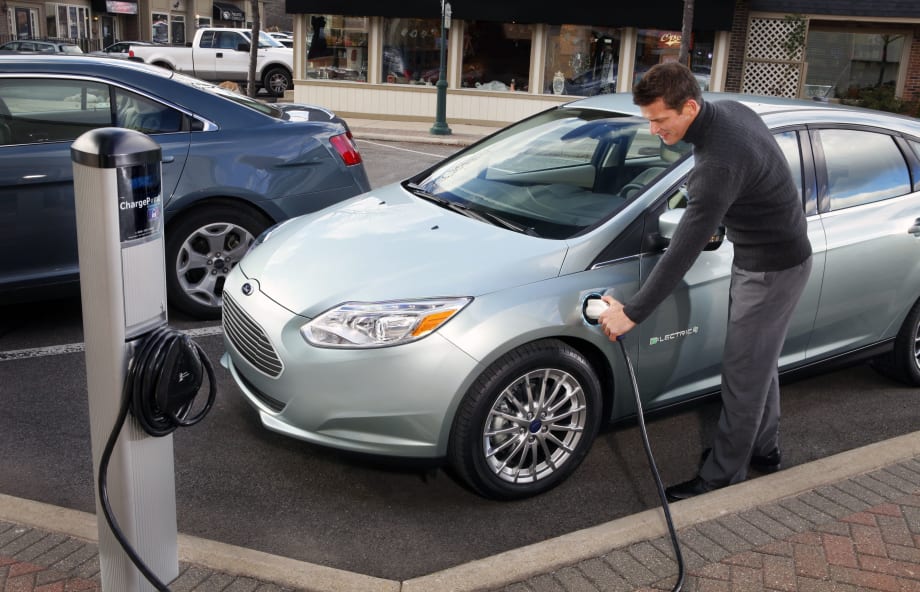
WAYNE, MI – Ford announced its Michigan Assembly Plant is starting production of the new 2012 Focus Electric. The company said it expects the vehicle to achieve 100 miles-per-gallon-equivalent (MPGe) in fuel economy performance. In terms of overall performance, the automaker said it expects the five-door hatchback has a top speed of 84 mph.
The Focus Electric will also have a faster charging system that works with 240-volt outlets. The new system will be capable of charging the vehicle up to 30 miles per charge hour.
The Focus Electric introduces new features and technologies, including a different version of the MyFord Touch driver connect system designed especially for electric vehicles and a smartphone app called MyFord Mobile. Ford said the app helps plug-in owners control their vehicles remotely.
The vehicle also features a gauge cluster system, SmartGauge, that includes a system called EcoGuide, which is designed to provide visual indicators that help a driver improve fuel-economy performance. The EcoGuide uses blue butterfly icons to represent the surplus range beyond the driver’s charge point destination. More butterflies means more surplus to get to a final destination.
At the end of each trip, a display screen provides the total distance driven, the number of miles gained through regenerative braking, the energy consumed, and comparative gasoline savings achieved.
As for market availability, a Ford spokesperson said the vehicle will be available to fleets in the second half of 2012.
Ford said the vehicles will first be available in California and the New York/New Jersey areas. Availability of the Focus Electric will expand in 2012 to the remaining 15 launch markets as production ramps up, according to the company.
The 19 launch markets also include Atlanta; Austin and Houston, Texas; Boston; Chicago; Denver; Detroit; Los Angeles; San Francisco; San Diego; New York; Orlando, Fla.; Phoenix and Tucson, Ariz.; Portland, Ore.; Raleigh-Durham, N.C.; Richmond, Va.; Seattle; and Washington, D.C.
The vehicle offers a number of standard features, including six airbags, electronic traction control, and MyKey for North America. Other standard features for North American customers include 15-spoke 17-inch aluminum wheels, a 60/40 split rear bench seat, push-button start, AM/FM/CD/MP3 Sony Audio with nine speakers, SiriusXM Satellite Radio and HD Radio. The vehicle also comes with a free, three-year subscription to SYNC Services.
All Focus gasoline and electric variants to be sold in North America will be built at Ford’s Michigan Assembly Plant in Wayne, Mich.
More Operations

How Fleets Can Recruit and Train Veterans for Technician Roles
Here's how the technician shortage has affected uptime for fleets, and what to do about it.
Read More →
Avis Budget Group Deploys Neology Toll Management Technology Across Major Brands
Neology’s neoFleet platform will manage toll transactions and toll-authority operations for vehicles across Avis, Budget, Payless, Budget Truck and Zipcar.
Read More →
Fleet Personal-Use Charges Edge Higher in 2026
Nearly eight in 10 surveyed fleets allow personal use of company vehicles, while just over half of respondents report charging employees for the privilege.
Read More →
The Future of Fleet + What’s Changing Right Now | AF News Recap
Could developments overseas offer a preview of what’s coming for U.S. fleets? This week, we’re looking at the future of AI, autonomy, and electrification, plus Ford Pro’s new certified pre-owned program, smarter vehicle offboarding, and a new way for fleets to manage toll expenses.
Read More →
How to Handle Vehicle Offboarding
What do fleet managers need to do when a driver leaves?
Read More →
Fleet Manager’s Ultimate Playbook: Navigating the New Standard in OEM Connectivity
Rising operating costs, driver safety concerns, and unplanned downtime are putting unprecedented pressure on modern fleets. Discover how fleet managers use embedded OEM connectivity and real-time vehicle data to cut TCO, prevent downtime, and protect drivers without aftermarket telematics hardware.
Read More →
U.S. Bank Adds Verra Mobility Toll Management to Voyager Fleet Platform
The integration allows U.S. Bank Voyager fleet customers to manage toll payments and violations alongside fuel, EV charging and maintenance expenses.
Read More →
ADAS Prevents Crashes. But Repairs Cost More | AF News Recap
ADAS-equipped vehicles may crash less often, but they can cost more when they do. This week, we’re breaking down what that tradeoff means for fleets, plus Subaru’s first Forester Wilderness Hybrid, Nissan’s new e-POWER Rogue, and why Calstart has become Catalyst Mobility.
Read More →
Moventum Fleet Management Names Mark Iorillo Head of Sales
Iorillo brings nearly 20 years of fleet management and sales experience to the role, including previous positions at Element Fleet Management, CEI, Donlen and Ryder.
Read More →
Fleet Has a Talent Pipeline Problem. What Comes Next? | AF News Recap
Where will fleet’s next generation of leaders come from? This week, we’re looking at the industry’s talent pipeline, what certification can add to a fleet career, how to build an award-worthy track record, and the return of Automotive Fleet’s Personal Use Survey.
Read More →