




Ford Faces Federal Emissions Probe
The U.S. Department of Justice has opened a criminal investigation into Ford Motor Co.’s emissions testing and certification processes, the factory revealed in an SEC filing today.

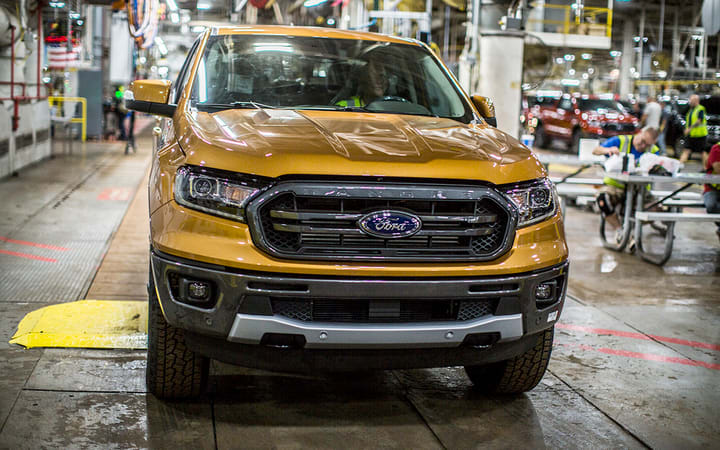
The 2019 Ford Ranger is reportedly among the first vehicles set to undergo retesting following the factory’s discovery of a potentially flawed methodology for calculating fuel economy.
Photo courtesy of Ford Motor Co.
Ford Motor Co. revealed it is the subject of a U.S. Department of Justice investigation into the factory’s emissions testing and certification processes in a report filed with the U.S. Securities and Exchange Commission.
In February, Ford’s directors self-reported to the EPA their concerns that engineers may have failed to properly calculate the effects of drag and tire friction in laboratory testing. At the time, executives said they could not be sure whether fuel economy ratings or emissions certifications would be affected. An outside law firm, Sidley Austin, was hired to investigate the matter and presumably oversee retesting.
“Our focus is on completing our investigation and a thorough technical review of this matter and cooperating with government and regulatory agencies,” said Kim Pittel, Ford’s vice president of sustainability, environment, and safety engineering, in a statement.
Ford is only the latest vehicle manufacturer to face scrutiny over emissions testing. In 2014, Hyundai and Kia paid a $100 million penalty for inflating the fuel economy ratings of more than 1 million units sold in the U.S. In 2017, the “Dieselgate” scandal cost Volkswagen billions of dollars in penalties and awards, including dealer compensation. More recently, Fiat Chrysler agreed to a multimillion-dollar settlement to resolve claims brought by the DOJ and the California Air Resources Board.
To read Ford’s SEC filing, click here.
Editor's note: This story was originally posted on Auto Dealer Today
More Operations

Company Vehicle or Reimbursement? How Fleets Are Rethinking Assignments
As fleet costs and insurance pressures rise, fleet managers are taking a closer look at which employees need company-provided vehicles and when a reimbursement program may make more sense.

Fleetio, ASE Launch Scholarship Program for Automotive Technicians
The second annual program will award 15 scholarships totaling $35,000 to support ASE certification, testing fees, and equipment costs.

Reading the Global Signals: What AI and the Energy Transition Mean for Fleets Now
In this opening keynote of the 2026 Fleet Forward Conference, John Rossant, founder of CoMotion, How can fleet managers navigate a never-ending, changing industry landscape?

90% Use Telematics. Are Fleets Getting Safer? | AF News Recap
This week, we're breaking down which industries have the highest rates, how Jamie McKay manages 2,400 vehicles, what's happening with the 2027 fleet awards, and why software-defined vehicles could introduce new costs.

What's Best Handled by an FMC, and What's Better Done Directly?
Fleet managers continue to rely on FMCs for essential services but are taking a closer look at where working directly with suppliers can improve efficiency and responsiveness.

Fleet Meets: Erin Gilchrist
Meet Erin Gilchrist, the inaugural Mike Antich Spirit of Fleet Award winner, as she shares insights on leadership, mentorship, the power of industry connections, and why people remain at the heart of fleet's future.

How 2026 Fleet Visionary Jamie McKay Manages 2,400 Vehicles Across 37 States
How do you keep 2,400 vehicles running across 37 states? Fleet Visionary Award winner Jamie McKay shares how collaboration, flexibility, and a few simple strategies help her tackle fleet management challenges at Aptive Pest Control.

Managing Fleet Costs in an Era of Permanent Volatility
Fleet operating costs have risen more than 20% since 2020, raising a key question: When does extending a vehicle's service life stop making financial sense?

The Next Evolution of Fleet Management: Autonomous Operations
This opening keynote session at the Fleet Forward Conference highlights the future of autonomous driving for fleets.

How to Reduce the Total Cost of Risk From Catalytic Converter Theft
A stolen catalytic converter can cost fleets far more in downtime and lost productivity than in repairs. A total-cost-of-risk approach can help fleet managers quantify their exposure and prioritize theft prevention.