




Ford Considers Tomato Fiber for Vehicles
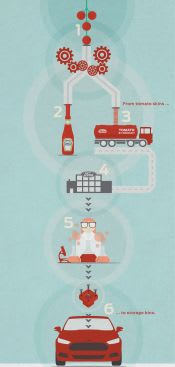
Ford has begun a collaboration with H.J. Heinz to explore the use of tomato fiber as a possible sustainable bio-plastic material for vehicles, the automaker announced.
Graphic courtesy of Ford.
Graphic courtesy of Ford.
Ford has begun a collaboration with H.J. Heinz to explore the use of tomato fiber as a possible sustainable bio-plastic material for vehicles, the automaker announced.
Ford researchers are now testing the material's durability for potential use in vehicle wiring brackets and storage bins.
Dried tomato skins could be repurposed for either of these uses.
If Ford is successful, the result would be a more sustainable composite that could reduce the use of petrochemicals in manufacturing and reduce the impact of vehicles on the environment.
"We are exploring whether this food processing byproduct makes sense for an automotive application," said Ellen Lee, plastics research technical specialist for Ford. "Our goal is to develop a strong, lightweight material that meets our vehicle requirements, while at the same time reducing our overall environmental impact."
Read Ford's full release here.
More Green Fleet

EV Charging Use Is Outpacing Infrastructure Growth
ChargePoint’s 2026 Charging Forward Report points to rising charger use, higher-powered charging, commercial vehicle electrification, and energy-management technology. Here’s what fleets should know.
Read More →
Merchants Fleet Reports 290M EV Miles as Fleets Navigate Changing Electrification Market
From millions in operating savings to hundreds of millions of EV miles, Merchants Fleet’s latest report reveals what’s working and what’s changing in fleet electrification.
Read More →
The EV Breakdown Nobody's Talking About: Why Most Electric Vehicle Roadside Calls Aren't Mechanical Failures
Here's why EV breakdowns are widely misunderstood.
Read More →
ChargePoint Now Available in Energy Pass
ChargePoint and additional planned charging network integrations were added to GM's Energy Pass.
Read More →
First Look: Slate Auto's Electric Fleet Pickup
Could an affordable, modular EV pickup make electrification more practical for fleets?
Read More →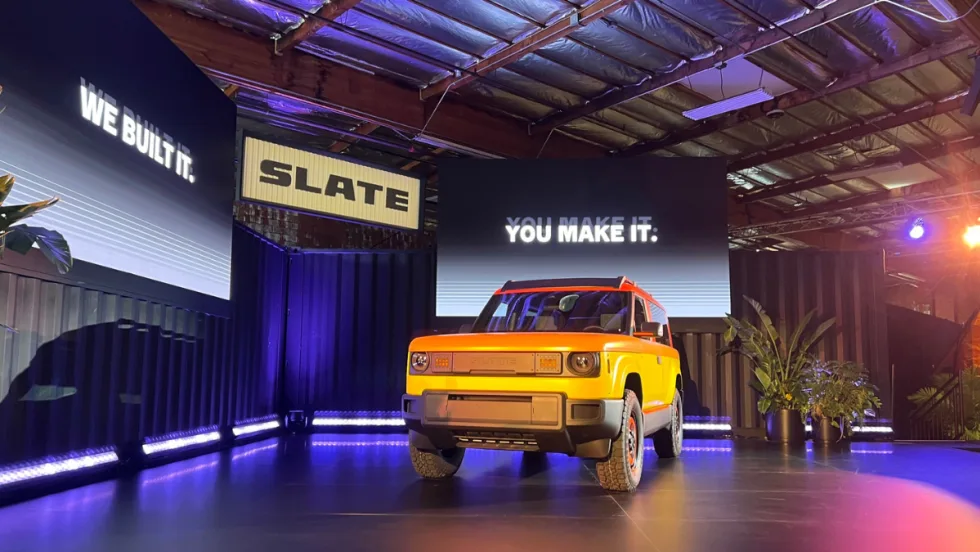
Slate Debuts Colorful, Unique EV Models
A recent media and client event, studded with electric vehicles dressed up on platforms, planted a new position for the manufacturer in the wider EV market. Fleets will find cost-saving advantages.
Read More →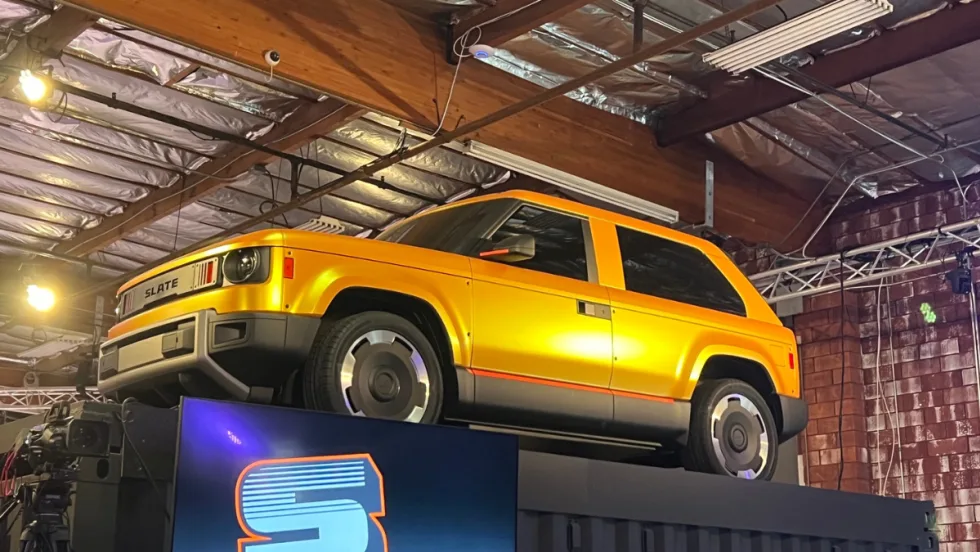
Slate Electric SUV, Pickup Switchable Model Aims For Light-Duty Fleets
Everything about this EV is counterintuitive and understated, making it stand out from the crowd.
Read More →
Inspiration Mobility Acquires Key Electrada Assets
Inspiration Mobility Group has acquired select assets of Electrada, adding the fleet electrification provider's team, technology, and charging infrastructure development capabilities to its energy management business.
Read More →
Turning Connected Vehicle Data Into Decisions That Matter
Fleet leaders have more data than ever, but turning that data into clear, actionable decisions remains a challenge. This white paper shows how leading organizations are using connected vehicle data to improve safety, reduce costs, and optimize fleet performance. Learn how to turn insight into action across your fleet.
Read More →