




Ford Begins Transit Van Production
Ford Motor Co. has begun producing its 2015 Transit full-size vans at its Kansas City assembly plant as its E-Series replacement and one of the most hotly anticipated commercial vehicles.

Photo courtesy of Ford.
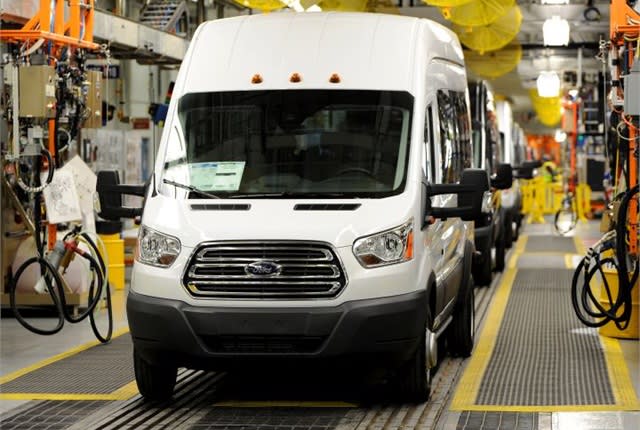
Photo courtesy of Ford.
Ford Motor Co. has begun producing its 2015 Transit full-size vans at its Kansas City assembly plant as its E-Series replacement and one of the most hotly anticipated commercial vehicles.
The first Transit vans rolled off the assembly line today, as Ford celebrated the economic benefits of the vehicle's production to the commercial vehicle market and the local community. Ford invested $1.1 billion in the plant and added 2,000 jobs.
"Our investment in Kansas City Assembly Plant for Transit production is about delivering world-class commercial vans for a new generation of commercial customers," said Joe Hinrichs, Ford's president of The Americas.
Missouri Gov. Jay Nixon called the Transit a "historic investment in Missouri." Ford plans to produce about 134,000 units annually, according to Anthony Piaza, Ford's assistant brand manager for the vehicle.
The order bank for the van opened in early March for fleet purchasers, and the first Transit vans will arrive in June. The Transit will be offered in 62 configurations, including three roof heights, two wheelbases in van and wagon, and three body lengths.
Initial versions of the long wheelbase Transit will arrive with a high and medium roof. The van will be offered in the XL and XLT trim levels.
Ford will offer three engines with the Transit, including the standard 3.7L V-6, the 3.5L EcoBoost V-6 offered with the F-150, and a 3.2L inline five Power Stroke diesel engine. The engines are paired with a six-speed automatic transmission and rear-wheel drive.
At the NAFA Institute and Expo earlier this month, Adrian Steel showed two Transit vans equipped with its upfit products. Adrian Steel has opened a Kansas City operation to accommodate fleet demand for the van.
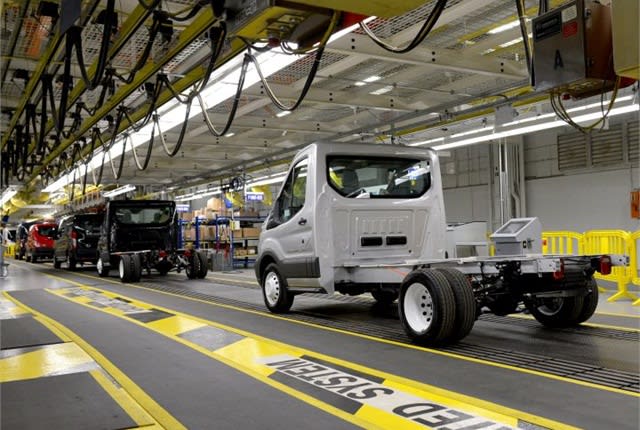
Photo courtesy of Ford.
More Operations

Fleet Has a Talent Pipeline Problem. What Comes Next? | AF News Recap
Where will fleet’s next generation of leaders come from? This week, we’re looking at the industry’s talent pipeline, what certification can add to a fleet career, how to build an award-worthy track record, and the return of Automotive Fleet’s Personal Use Survey.
Read More →
Smith System Launches Driver Risk Management Program
Fleets have more driver data than ever, but identifying risky behavior doesn't necessarily correct it. Smith System's new Driver Risk Management program combines monitoring, training, and follow-up coaching to help fleets connect risk signals with driver intervention.
Read More →
Automotive Fleet Opens 2026 Personal Use Survey for Commercial Fleet Managers
Less than two weeks left! Commercial and corporate fleet managers are invited to share how their organizations handle company vehicle personal-use policies, charges, and driver eligibility.
Read More →
From AI Prompts to AI-Generated Safety Songs | AF News Recap
Can better prompts make AI more useful for fleet managers? This week, we’re breaking down smarter fleet analysis, an AI-assisted experiment that turned safety training into music, and what happened to fuel prices in August.
Read More →
How to Write Better AI Prompts for Fleet Analysis
Include these six elements in your fleet prompts to generate more relevant analysis and accurate answers.
Read More →
Fleet Meets: Eric Kilgore
This edition of the Fleet Meets series features one of the industry's best leaders driving multi-market and national operations.
Read More →
Why Reactive Fleet Management Is Becoming Too Expensive to Sustain
Research highlights a growing need for proactive management strategies to address rising costs in fleet operations effectively.
Read More →
What Your Fleet KPIs Aren’t Telling You
Tracking fleet metrics is only useful when the data leads to better decisions. This guide helps fleet leaders assess cost, utilization, and downtime more accurately, identify performance gaps, and prioritize the actions that can improve operational results.
Read More →
Hidden in Plain Sight: Fleet Compliance Risks
Fleet compliance isn't just about having policies — it's about consistently enforcing them. This practical guide reveals six hidden compliance risks common in public sector and shared fleet operations and outlines proven strategies to improve visibility, accountability, and audit readiness
Read More →
Turning Fleet Payment Data into Executive Insights
Does data alone drive results in operations?
Read More →