




Related: Hundreds of Chassis Sent to Houston as Replacements
Florida Braces for Hurricane Irma’s Impact
Hurricane Irma, already one of the most powerful hurricanes to ever develop in the Atlantic, will likely make landfall on the U.S. mainland by the end of the week. In preparation, state and federal agencies are already declaring an emergency on the ground.
by Staff
September 6, 2017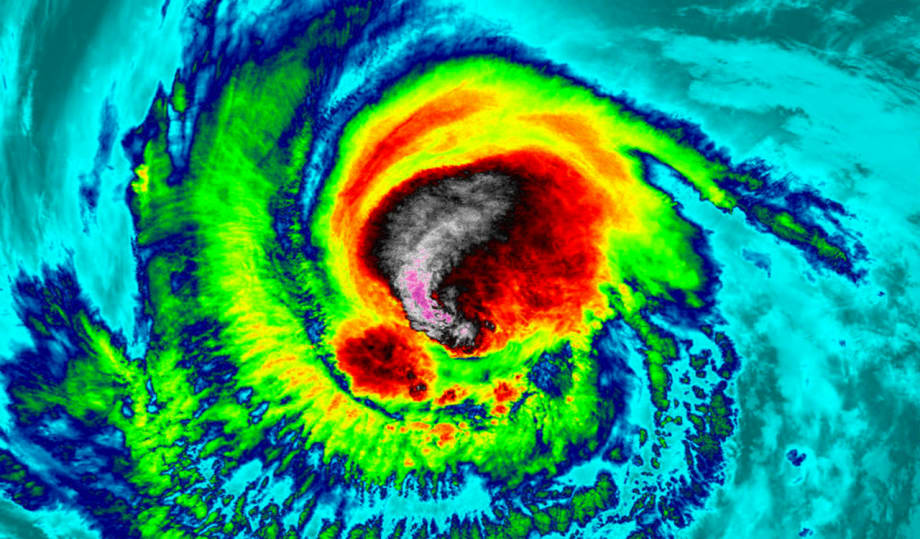
2 min to read
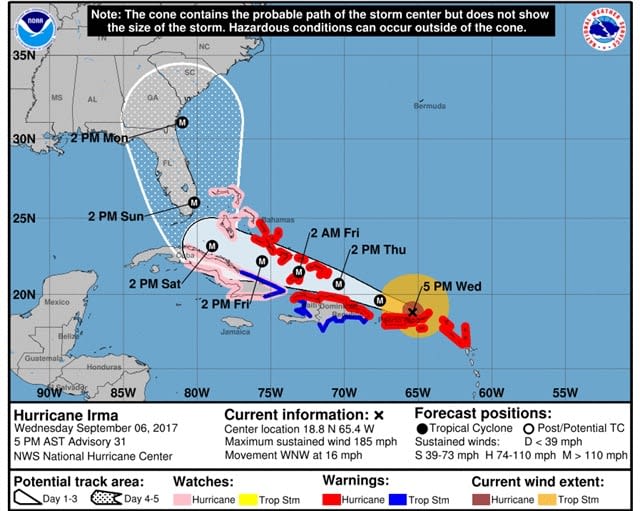
Hurricane Irma's likely path will take it along Florida's southern tip. Graphic: National Hurricane Center
Hurricane Irma, already one of the most powerful hurricanes to ever develop in the Atlantic, will likely make landfall on the U.S. mainland by the end of the week. In preparation, state and federal agencies are already declaring an emergency on the ground.
Similar to a declaration made for Hurricane Harvey, the Federal Motor Carrier Safety Administration has temporarily suspended several trucking regulations in the states in and around the expected path of Irma. Carriers and drivers in direct support of relief efforts related to Hurricane Irma are granted emergency relief from Parts 390 through 399 of Title 49 Code of Federal Regulations. By lifting regulations, FMCSA aims to ease the flow of emergency goods, fuel, and aid to and from the region.
The suspended regulations include those concerned with hours of service, inspection, repair, and maintenance, hazardous materials transportation, driving, parking, and other health and safety standards.
States covered by the Irma temporary suspension currently include Alabama, Florida, Georgia, Mississippi, North Carolina, South Carolina, Puerto Rico and the U.S. Virgin Islands. FMCSA has also set up page with all the latest transportation updates related to Hurricane Irma.
The same suspension of regulations was declared for 26 states during Hurricane Harvey and it is still in effect. FMCSA’s Hurricane Harvey page is available here.
On Sept. 5, President Trump declared an emergency in the state of Florida, Puerto Rico and in the U.S. Virgin Islands. Florida Governor Rick Scott also declared an emergency in the state and ordered the Florida National Guard to report for duty.
Irma is expected to make landfall on the southern tip of Florida. Mandatory evacuations began in Key West and more mandatory evacuations are likely as the storm nears. To help keep traffic moving, Gov. Scott suspended all tolls in the state for the duration of the storm’s impact on Florida.
Rated a Category 5 Hurricane, with sustained winds of over 185 miles per hour and considerable size, Irma is currently the strongest storm ever seen in the Atlantic basin. While it is still a few days away from hitting Florida, current models show a likely landfall of either late Saturday or early Sunday, hitting Southern Florida before possibly moving up the East Coast.
While Hurricane Harvey was known mostly for the incredible deluge of up to 50 inches of rain it brought down in some parts, Hurricane Irma is likely to be defined by its destructive winds and size, as it is only projected to produce 15 inches of rain at most.
More Operations

Fleet Has a Talent Pipeline Problem. What Comes Next? | AF News Recap
Where will fleet’s next generation of leaders come from? This week, we’re looking at the industry’s talent pipeline, what certification can add to a fleet career, how to build an award-worthy track record, and the return of Automotive Fleet’s Personal Use Survey.
Read More →
Smith System Launches Driver Risk Management Program
Fleets have more driver data than ever, but identifying risky behavior doesn't necessarily correct it. Smith System's new Driver Risk Management program combines monitoring, training, and follow-up coaching to help fleets connect risk signals with driver intervention.
Read More →
Automotive Fleet Opens 2026 Personal Use Survey for Commercial Fleet Managers
Less than two weeks left! Commercial and corporate fleet managers are invited to share how their organizations handle company vehicle personal-use policies, charges, and driver eligibility.
Read More →
From AI Prompts to AI-Generated Safety Songs | AF News Recap
Can better prompts make AI more useful for fleet managers? This week, we’re breaking down smarter fleet analysis, an AI-assisted experiment that turned safety training into music, and what happened to fuel prices in August.
Read More →
How to Write Better AI Prompts for Fleet Analysis
Include these six elements in your fleet prompts to generate more relevant analysis and accurate answers.
Read More →
Fleet Meets: Eric Kilgore
This edition of the Fleet Meets series features one of the industry's best leaders driving multi-market and national operations.
Read More →
Why Reactive Fleet Management Is Becoming Too Expensive to Sustain
Research highlights a growing need for proactive management strategies to address rising costs in fleet operations effectively.
Read More →
Sponsored•August 12, 2026
What Your Fleet KPIs Aren’t Telling You
Tracking fleet metrics is only useful when the data leads to better decisions. This guide helps fleet leaders assess cost, utilization, and downtime more accurately, identify performance gaps, and prioritize the actions that can improve operational results.
Read More →
Sponsored•August 7, 2026
Hidden in Plain Sight: Fleet Compliance Risks
Fleet compliance isn't just about having policies — it's about consistently enforcing them. This practical guide reveals six hidden compliance risks common in public sector and shared fleet operations and outlines proven strategies to improve visibility, accountability, and audit readiness
Read More →
Turning Fleet Payment Data into Executive Insights
Does data alone drive results in operations?
Read More →