




Fleets Struggle to Develop Policies Governing Take-Home EVs
Fleet managers say the integration of battery-electric vehicles (EVs) into nationally dispersed fleets is challenging due to regional variances in incentives, rebates, regional product availability versus national availability, and a limited infrastructure of recharging stations that is unevenly dispersed around the country.


Fleet managers say the fueling infrastructure for electric, natural gas, and hydrogen-based propulsion systems are not expanding at the pace of vehicle sales projected by OEMs.
Photo: Gettyimages.com/sl-f
Fleet managers say the integration of battery-electric vehicles (EVs) into nationally dispersed fleets is challenging due to regional variances in incentives, rebates, regional product availability versus national availability, and a limited infrastructure of recharging stations that is unevenly dispersed around the country.
In particular, fleet managers say the fueling infrastructure for electric, natural gas, and hydrogen-based propulsion systems are not expanding at the pace of vehicle sales projected by OEMs. “It’s just a matter of time before this becomes a big problem,” said David Meisel, executive vice president – operations for Quanta Services.
This concern was echoed by another fleet manager. “If you get past the budget concerns, policy issues surface, particularly if you are considering implementation of EVs,” said Sheri Hardesty, global fleet leader at Jones Lang LaSalle (JLL).“We are entering uncharted territory. How do you charge employees for their personal consumption of electricity in their EV or reimburse them for charging at home or elsewhere? If your company is really progressive and implements workplace charging stations, how do you allocate or align their usage?”
Future EV Challenges
In the future, fleet managers say they will have to contend with a new fleet management challenge, which is the management of 100% electric vehicle fleets. The expanded availability of plug-in hybrid electric vehicles (PHEV) by OEMs to fulfill traditional fleet applications ultimately makes its feasible to contemplate the creation of 100% battery-powered fleets.
“When EVs are assigned for take-home use, thus preventing the opportunity for recharging at a centralized location, this may require the investment of a Level 2 charger and adequate power supply at the employee’s home (a 240V / 30amp service similar to what is needed for a home laundry dryer) to which the Level 2 charger is plugged in,” said J.J. Keig, corporate fleet manager, The Americas for CBRE. “All vehicles may be charged by an OEM Level 1 charger, only requiring a standard 110V power supply. However, the total time required for a full charge may be excessive. Another challenge is determining the best method to meter the energy consumed by the charger. Add to this the significant challenge for most homeowners to fully understand their actual kilowatt hour (kWh) electric rate (including taxes, surcharges, and fees); what is an easy method for the employer to compensate the employee for the actual energy used to recharge an electric vehicle? Without an actual ‘use meter’ the method of calculation for energy used is anything but straightforward.”
This administrative burden only increases as the number of take-home fleet EVs expands. “Extrapolate this process with 10, 20, or several hundred employees. Metering and reimbursing employees driving company-provided EVs for energy used to recharge their company vehicle has the potential to become an administrative burden,” said Keig of CBRE. “Not all 240V / 30A receptacles use the same configuration, there are at least four different designs that I am aware of. Therefore, not all plugs will interchange with all 240 V / 30A receptacles. This can result in unplanned problems when sourcing a Level 2 charger.”
Another issue is that many employees who would be eligible to receive an EV company vehicle reside in an apartment building. “If an employee lives in an apartment complex (with no reserved parking spaces) or a parking garage, the cost to run a 240 V / 30A service may be much more than originally planned,” added Keig of CBRE.
All fleet managers agree that a corporate fleet sustainability program requires in-depth planning to integrate alt-fuel vehicles into day-to-day fleet operations. Most fleet managers haven’t figured out how to compensate for the use of electricity to recharge company-provided EVs at an employee’s home.
What complicates reimbursement is that the cost of electricity has much more pricing variability than gasoline and diesel. As exemplified by home electric bills, there are many variables that influence the cost of electricity, such as demand charges, time of use, or peak power. The cost of charging an EV will vary depending on whether it’s charged overnight, during the day, during the week, or on a weekend.
The other issue cited by fleet managers, especially with EVs, is the length of time it takes to refuel or recharge a vehicle. “My drivers cover wide territories, so a charge must be no longer than a gasoline fill up. It cannot take an hour or even a half-hour to charge a vehicle. I need EVs to get more miles per charge and have the ability to find a charging station anywhere as we travel to a lot of remote areas,” said Cynthia Walker, buyer and fleet manager for Caterpillar.
More Green Fleet
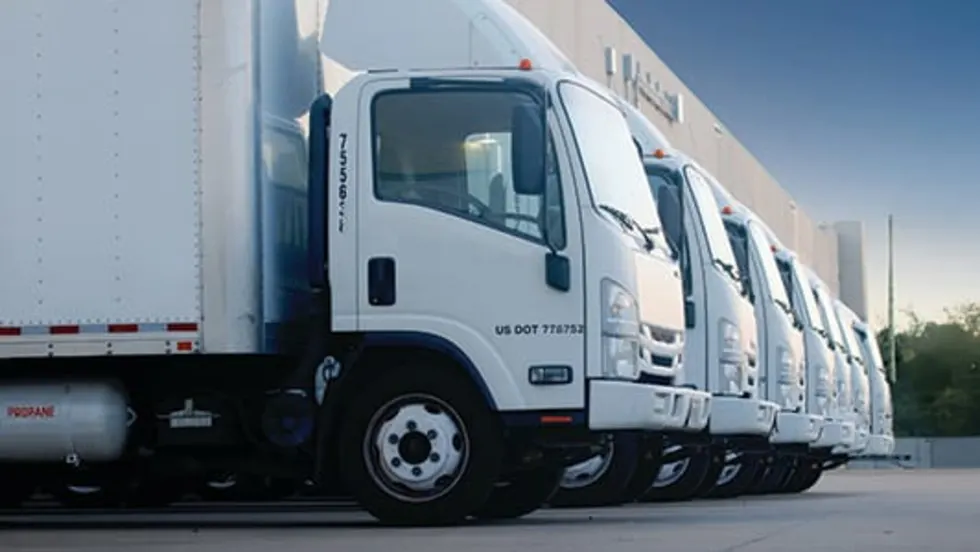
New Propane Autogas Program Offers Fleet Compensation
Qualified commercial fleets can receive $7,500 per eligible propane autogas vehicle and up to $10,000 for new refueling site prep. Learn how the program works and see whether your fleet qualifies.
Read More →
EV Charging Use Is Outpacing Infrastructure Growth
ChargePoint’s 2026 Charging Forward Report points to rising charger use, higher-powered charging, commercial vehicle electrification, and energy-management technology. Here’s what fleets should know.
Read More →
Merchants Fleet Reports 290M EV Miles as Fleets Navigate Changing Electrification Market
From millions in operating savings to hundreds of millions of EV miles, Merchants Fleet’s latest report reveals what’s working and what’s changing in fleet electrification.
Read More →
The EV Breakdown Nobody's Talking About: Why Most Electric Vehicle Roadside Calls Aren't Mechanical Failures
Here's why EV breakdowns are widely misunderstood.
Read More →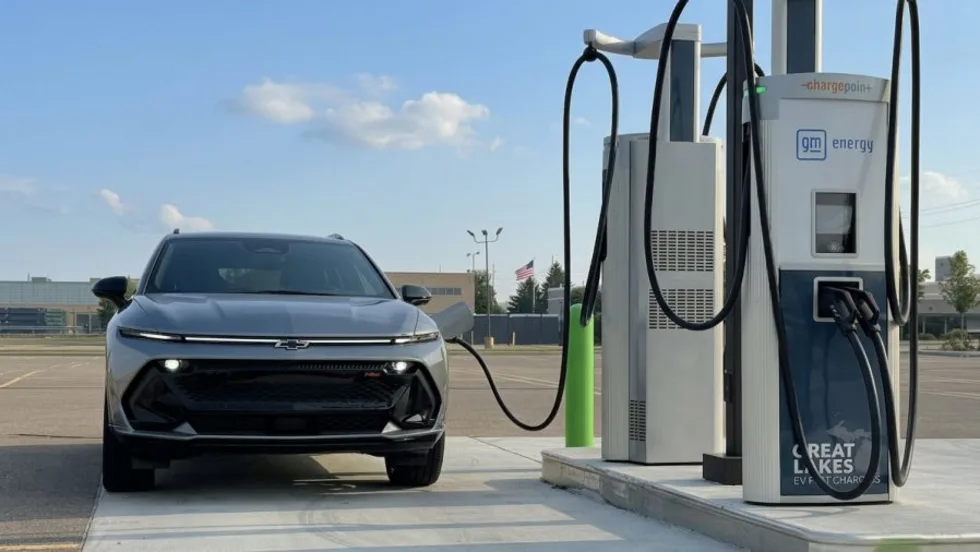
ChargePoint Now Available in Energy Pass
ChargePoint and additional planned charging network integrations were added to GM's Energy Pass.
Read More →

First Look: Slate Auto's Electric Fleet Pickup
Could an affordable, modular EV pickup make electrification more practical for fleets?
Read More →
Slate Debuts Colorful, Unique EV Models
A recent media and client event, studded with electric vehicles dressed up on platforms, planted a new position for the manufacturer in the wider EV market. Fleets will find cost-saving advantages.
Read More →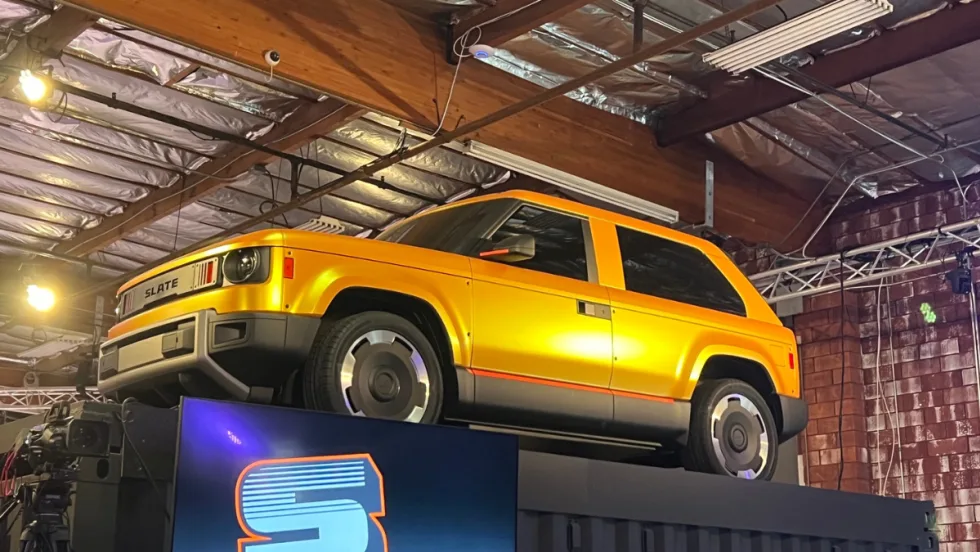
Slate Electric SUV, Pickup Switchable Model Aims For Light-Duty Fleets
Everything about this EV is counterintuitive and understated, making it stand out from the crowd.
Read More →
Inspiration Mobility Acquires Key Electrada Assets
Inspiration Mobility Group has acquired select assets of Electrada, adding the fleet electrification provider's team, technology, and charging infrastructure development capabilities to its energy management business.
Read More →