




FirstEnergy Invests in 850 New Vehicles to Enhance Fleet Safety and Efficiency
AKRON, OH – Utility company FirstEnergy Corp. is investing approximately $110 million in nearly 850 new vehicles in order to enhance crew safety and deliver improved service to its customers.
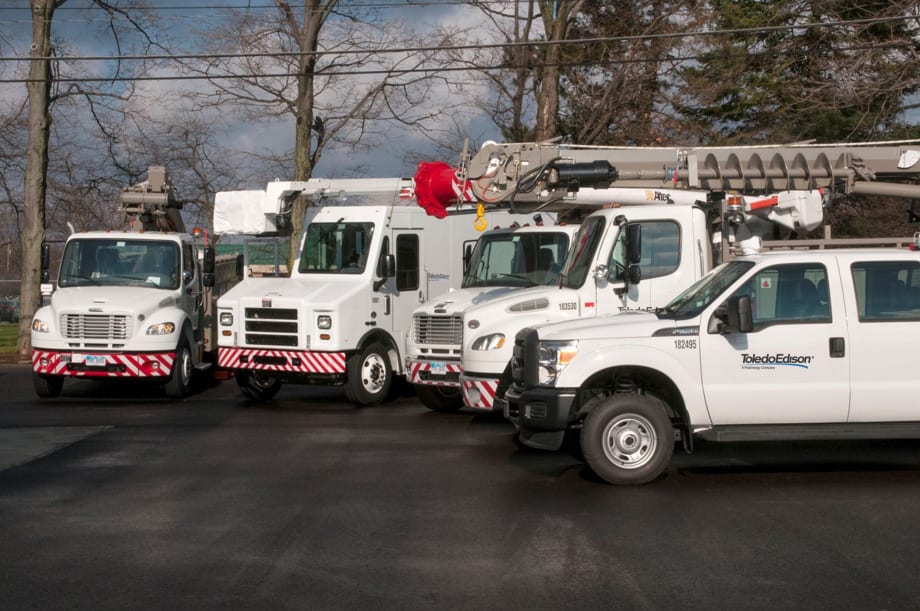
FirstEnergy is investing in new vehicles to replace older ones, many of which are more than 10 years old. Photo courtesy FirstEnergy.
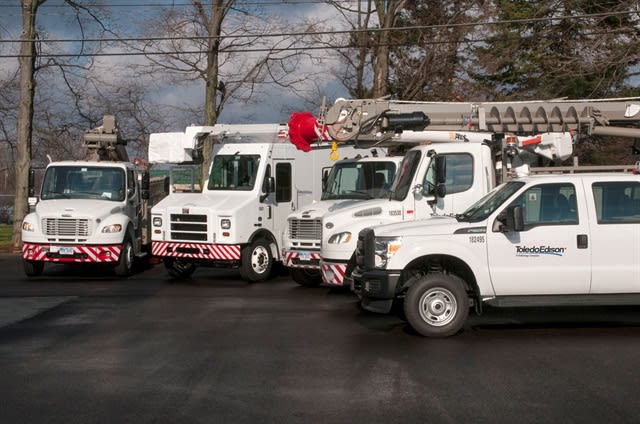
FirstEnergy is investing in new vehicles to replace older ones, many of which are more than 10 years old. Photo courtesy FirstEnergy.
AKRON, OH – Utility company FirstEnergy Corp. is investing approximately $110 million in nearly 850 new vehicles in order to enhance crew safety and deliver improved service to its customers. FirstEnergy and its subsidiaries operate a fleet of 9,549 assets, including vehicles, construction equipment, and trailers.
To start, the company said it will acquire the vehicles by the end of the year. The new vehicles replace many units that are more than 10 years old. The vehicles in the fleet are a mix of pickup trucks, vans, and “line” trucks, aerial units or digger derricks. FirstEnergy has a number of subsidiaries, and each is getting a group of vehicles to replace older models.
All of the following utilities are owned by FirstEnergy and are part of the overall investment in new vehicles. The Cleveland Electric Illuminating Co. (CEI) is investing more than $12 million in 105 new vehicles for line crews and other front-line service employees. Potomac Edison is investing $900,000 in 16 new vehicles that employees throughout Maryland and the Eastern Panhandle of West Virginia will use. Ohio Edison is investing $14 million 106 new vehicles. Toledo Edison is investing more than $9 million in 50. West Penn Power is investing more than $750,000 in 35. Mon Power is investing more than $300,000 in 12. Penn Power is investing more than $2.5 million in 18. Met-Ed is investing nearly $16 million in 140, and Penelec is investing more than $20 million in 165 new vehicles. Jersey Central Power and Light (JCP&L) will be receiving 233 new vehicles (of which 100 are aerial units) at an investment of more than $27 million.
Automotive Fleet contacted the company to find out more about the vehicles the company is acquiring. According to Patti L. Michel, a spokesperson for FirstEnergy, the pickup trucks and vans are from Ford, and the line trucks are Freightliner chassis outfitted with equipment from Altec. She added that all of the vehicles are built to FirstEnergy’s specifications.
The line trucks are equipped with work lighting, spot lighting, and safety lighting gear in order to create a safe work area during day and nighttime operations. Many of the lights on the vehicles are LED based, and the LED lights put less demand on each vehicle’s battery and electrical system while providing equal or better lighting, the spokesperson said. The new material handling units are equipped with a hydraulic jib feature, and many of the Line vehicles come with hydraulic tools.
Depending on the model, many of the truck bodies are partially or completely aluminum, which reduces weight and provides for superior longevity and appearance. The reduced weight enhances payload capacity or fuel economy, depending on the vehicle’s application.
The new vehicles are also more environmentally friendly. The diesel trucks’ engines are each equipped with a Selective Catalytic Reduction system, which results in close to zero toxic emissions.
Overall, the fleet purchases are designed to help the company operate a more sustainable, safe, and efficient fleet and to help its crews do their jobs more effectively.
By Greg Basich
More Operations

Fleet Has a Talent Pipeline Problem. What Comes Next? | AF News Recap
Where will fleet’s next generation of leaders come from? This week, we’re looking at the industry’s talent pipeline, what certification can add to a fleet career, how to build an award-worthy track record, and the return of Automotive Fleet’s Personal Use Survey.
Read More →
Smith System Launches Driver Risk Management Program
Fleets have more driver data than ever, but identifying risky behavior doesn't necessarily correct it. Smith System's new Driver Risk Management program combines monitoring, training, and follow-up coaching to help fleets connect risk signals with driver intervention.
Read More →
Automotive Fleet Opens 2026 Personal Use Survey for Commercial Fleet Managers
Less than two weeks left! Commercial and corporate fleet managers are invited to share how their organizations handle company vehicle personal-use policies, charges, and driver eligibility.
Read More →
From AI Prompts to AI-Generated Safety Songs | AF News Recap
Can better prompts make AI more useful for fleet managers? This week, we’re breaking down smarter fleet analysis, an AI-assisted experiment that turned safety training into music, and what happened to fuel prices in August.
Read More →
How to Write Better AI Prompts for Fleet Analysis
Include these six elements in your fleet prompts to generate more relevant analysis and accurate answers.
Read More →
Fleet Meets: Eric Kilgore
This edition of the Fleet Meets series features one of the industry's best leaders driving multi-market and national operations.
Read More →
Why Reactive Fleet Management Is Becoming Too Expensive to Sustain
Research highlights a growing need for proactive management strategies to address rising costs in fleet operations effectively.
Read More →
What Your Fleet KPIs Aren’t Telling You
Tracking fleet metrics is only useful when the data leads to better decisions. This guide helps fleet leaders assess cost, utilization, and downtime more accurately, identify performance gaps, and prioritize the actions that can improve operational results.
Read More →
Hidden in Plain Sight: Fleet Compliance Risks
Fleet compliance isn't just about having policies — it's about consistently enforcing them. This practical guide reveals six hidden compliance risks common in public sector and shared fleet operations and outlines proven strategies to improve visibility, accountability, and audit readiness
Read More →
Turning Fleet Payment Data into Executive Insights
Does data alone drive results in operations?
Read More →