




Facing New Mileage Rules, Porsche Preps a Hybrid SUV
STUTTGART, GERMANY – It is hard to imagine a less likely candidate for the hybrid treatment: the Porsche Cayenne, a 5,000-pound S.U.V. that ranks among the fastest, most powerful trucks ever built.
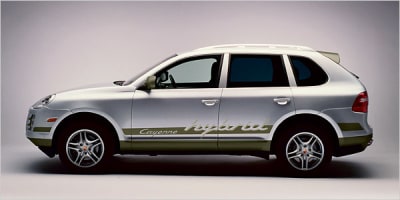
STUTTGART, GERMANY – It is hard to imagine a less likely candidate for the hybrid treatment: the Porsche Cayenne, a 5,000-pound S.U.V. that ranks among the fastest, most powerful trucks ever built, according to the New York Times.
But Porsche insists that its deep-pocketed clientele — whose concerns have involved acceleration, not conservation — will still appreciate a Cayenne that uses less fuel.
The German sports car company, which first announced its hybrid program in 2005, revealed the result at auto shows last fall in Frankfurt and Los Angeles. The Cayenne Hybrid combines a 34-kilowatt electric motor with a 3.6L, 290-horsepower V-6 and nickel-metal-hydride battery pack. The company says the Cayenne will be able to cruise on electricity alone — at least for short distances — at speeds up to 75 mph.
Porsche plans to have the hybrid in showrooms by 2009 or 2010.
The company pegs the hybrid’s overall fuel economy at 24 mpg a third better than the gas-only Cayenne with a V-6. Anticipated improvements in technology may raise the rating to 26 mpg and Porsche is studying the potential of lighter, stronger lithium-ion batteries.
Porsche is among manufacturers, including Toyota, General Motors, Ford and Chrysler, that are hybridizing SUVs and pickups to bump up mileage. A historic 40 percent jump in mileage standards, the largest in decades, is forcing automakers’ hands, and SUVs will not be immune: manufacturers’ car and truck fleets must average 35 miles per gallon by 2020, without the breaks that have benefited heavier sport utilities, pickups and minivans.
“We have to go back and do our homework like everyone else,” said a Porsche spokesman, Chris Wall.
That reckoning may be more difficult for a company like Porsche, an exclusive manufacturer of high-performance cars whose relatively low mileage cannot be offset by sales of thrifty compact cars (though the impending purchase of VW may change that). And Porsche customers are known for their exacting standards in power and performance, factors that can be at odds with fuel economy.
“The situation is unique for us and a few other small companies,” Wall said. The new rules “definitely make things interesting.”
For more than 20 years, Porsche has paid annual fines totaling $57 million for failing to meet the federal corporate average fuel economy standard. In 2006, it was fined $3 million for its fuel-thirsty Cayenne and $1.6 million for its cars.
Tony Fouladpour, a Porsche spokesman, noted that while Porsche’s fleet falls short of CAFE standards, no model consumes enough fuel to subject buyers to a guzzler tax.
“Whatever requirements we have to meet, our engineering will get us there,” Fouladpour said.
Porsche has not set a price on its hybrid. Current base prices range from $44,295 for the base Cayenne (with a V-6) to $94,595 for the Cayenne Turbo.
The Porsche saves additional fuel by using electricity to power its air-conditioning, brake vacuum pump and steering. The hybrid Cayenne’s peak torque will rise to more than 400 pound-feet, easily topping the 273 lb.-ft. of the gas-only V-6 version. The increased torque should help offset the 330 additional pounds of the hybrid drive system and batteries.
More Operations

Fleet Has a Talent Pipeline Problem. What Comes Next? | AF News Recap
Where will fleet’s next generation of leaders come from? This week, we’re looking at the industry’s talent pipeline, what certification can add to a fleet career, how to build an award-worthy track record, and the return of Automotive Fleet’s Personal Use Survey.
Read More →
Smith System Launches Driver Risk Management Program
Fleets have more driver data than ever, but identifying risky behavior doesn't necessarily correct it. Smith System's new Driver Risk Management program combines monitoring, training, and follow-up coaching to help fleets connect risk signals with driver intervention.
Read More →
Automotive Fleet Opens 2026 Personal Use Survey for Commercial Fleet Managers
Less than two weeks left! Commercial and corporate fleet managers are invited to share how their organizations handle company vehicle personal-use policies, charges, and driver eligibility.
Read More →
From AI Prompts to AI-Generated Safety Songs | AF News Recap
Can better prompts make AI more useful for fleet managers? This week, we’re breaking down smarter fleet analysis, an AI-assisted experiment that turned safety training into music, and what happened to fuel prices in August.
Read More →
How to Write Better AI Prompts for Fleet Analysis
Include these six elements in your fleet prompts to generate more relevant analysis and accurate answers.
Read More →
Fleet Meets: Eric Kilgore
This edition of the Fleet Meets series features one of the industry's best leaders driving multi-market and national operations.
Read More →
Why Reactive Fleet Management Is Becoming Too Expensive to Sustain
Research highlights a growing need for proactive management strategies to address rising costs in fleet operations effectively.
Read More →
What Your Fleet KPIs Aren’t Telling You
Tracking fleet metrics is only useful when the data leads to better decisions. This guide helps fleet leaders assess cost, utilization, and downtime more accurately, identify performance gaps, and prioritize the actions that can improve operational results.
Read More →
Hidden in Plain Sight: Fleet Compliance Risks
Fleet compliance isn't just about having policies — it's about consistently enforcing them. This practical guide reveals six hidden compliance risks common in public sector and shared fleet operations and outlines proven strategies to improve visibility, accountability, and audit readiness
Read More →
Turning Fleet Payment Data into Executive Insights
Does data alone drive results in operations?
Read More →