




European Sprinter Gets 990-Pound GVW Boost
Mercedes-Benz Vans has boosted the available gross vehicle weight rating of its European Sprinter by 990 pounds, to 5.5 metric tons or 12,122 pounds. An increase is being considered for North American vans, said a spokesman at the builder's U.S. headquarters.

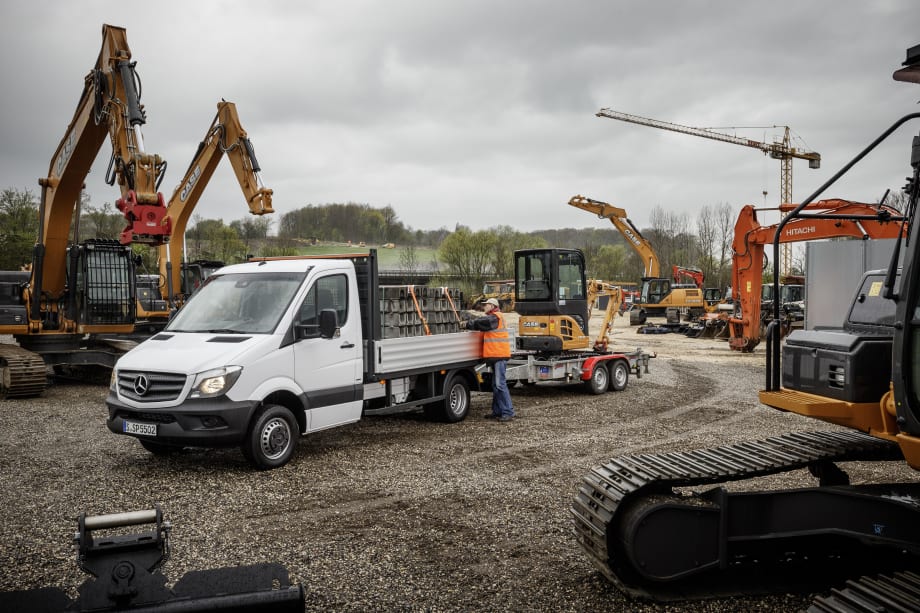
Gross-weight hike is primarily for users of specialized bodies, said Mercedes-Benz Vans in Germany.
Gross-weight hike is primarily for users of specialized bodies, said Mercedes-Benz Vans in Germany.
Mercedes-Benz Vans has boosted the available gross vehicle weight rating of its European Sprinter by 990 pounds, to 5.5 metric tons or 12,122 pounds. The Stuttgart, Germany-based builder also said it has raised power ratings for its engines.
The higher rating is aimed primarily at operators who require special bodies or conversions of standard van bodies, said Norman Kunz, head of Sprinter product management. European Sprinter payloads currently range from 2.95 to 3.41 metric tons, or 6,502 to 7,416 pounds, depending on the model. A metric ton equals 2,204 pounds.
The top GVW rating for the North American Sprinter is 11,030 pounds. “The changes you’re seeing in Europe are under consideration for the U.S. market, but no official decision has been made yet,” said spokesman Brian Cotter.
The new variant for Europe was developed in response to requests from bus and truck operators, Kunz said.
"Customers operating in weight-sensitive areas in particular have often expressed a demand for a version with a higher payload,” he said. “Such areas include the building sector or public service vehicles, for example.
“More payload is equally a boon for passenger transport. Wherever a particularly good ratio is desired between kerb weight and payload, we now have an appropriate solution at hand."
Previously, special arrangements were often necessary for ambulances, fire service trucks and other special vehicles, when the conversion resulted in a gross weight above the previous limit of 5 tons, explained Peter Strobach, head of the Mercedes-Benz Bodybuilder Centre. The new variant precludes the need for such arrangements.
"Our 5.5-ton Sprinter avoids additional work for our customers from the body and conversions," he said. "The required body can now be ordered in the customary, routine manner, with no need for individual approvals."
Mercedes-Benz Vans will offer new engine ratings for the European Sprinter as of summer 2016. The entry-level diesel now produces 84 kW (114 hp) as opposed to the previous 70 kW. The next-highest power rating has been upgraded from 95 kW to 105 kW (143 hp).
The Sprinter also remains available with the 120 kW (163 hp) and 140 kW (190 hp) engine variants. Torque on all engines has also been raised. All ratings comply with the Euro 6/VI emissions standards, which will become mandatory for vans in the mid-range weight class from September.
More Operations

Avis Budget Group Deploys Neology Toll Management Technology Across Major Brands
Neology’s neoFleet platform will manage toll transactions and toll-authority operations for vehicles across Avis, Budget, Payless, Budget Truck and Zipcar.
Read More →
Fleet Personal-Use Charges Edge Higher in 2026
Nearly eight in 10 surveyed fleets allow personal use of company vehicles, while just over half of respondents report charging employees for the privilege.
Read More →
The Future of Fleet + What’s Changing Right Now | AF News Recap
Could developments overseas offer a preview of what’s coming for U.S. fleets? This week, we’re looking at the future of AI, autonomy, and electrification, plus Ford Pro’s new certified pre-owned program, smarter vehicle offboarding, and a new way for fleets to manage toll expenses.
Read More →
How to Handle Vehicle Offboarding
What do fleet managers need to do when a driver leaves?
Read More →
Fleet Manager’s Ultimate Playbook: Navigating the New Standard in OEM Connectivity
Rising operating costs, driver safety concerns, and unplanned downtime are putting unprecedented pressure on modern fleets. Discover how fleet managers use embedded OEM connectivity and real-time vehicle data to cut TCO, prevent downtime, and protect drivers without aftermarket telematics hardware.
Read More →
U.S. Bank Adds Verra Mobility Toll Management to Voyager Fleet Platform
The integration allows U.S. Bank Voyager fleet customers to manage toll payments and violations alongside fuel, EV charging and maintenance expenses.
Read More →
ADAS Prevents Crashes. But Repairs Cost More | AF News Recap
ADAS-equipped vehicles may crash less often, but they can cost more when they do. This week, we’re breaking down what that tradeoff means for fleets, plus Subaru’s first Forester Wilderness Hybrid, Nissan’s new e-POWER Rogue, and why Calstart has become Catalyst Mobility.
Read More →
Moventum Fleet Management Names Mark Iorillo Head of Sales
Iorillo brings nearly 20 years of fleet management and sales experience to the role, including previous positions at Element Fleet Management, CEI, Donlen and Ryder.
Read More →
Fleet Has a Talent Pipeline Problem. What Comes Next? | AF News Recap
Where will fleet’s next generation of leaders come from? This week, we’re looking at the industry’s talent pipeline, what certification can add to a fleet career, how to build an award-worthy track record, and the return of Automotive Fleet’s Personal Use Survey.
Read More →
Smith System Launches Driver Risk Management Program
Fleets have more driver data than ever, but identifying risky behavior doesn't necessarily correct it. Smith System's new Driver Risk Management program combines monitoring, training, and follow-up coaching to help fleets connect risk signals with driver intervention.
Read More →