




Ethanol Industry May Not Be Able to Meet Supply Demand This Summer Prompting Possible Price Increase
WASHINGTON, D.C. – The U.S. ethanol industry is anticipating some growing pains that could bring it unwanted attention this summer.
WASHINGTON, D.C. – The U.S. ethanol industry is anticipating some growing pains that could bring it unwanted attention this summer, according to the Associated Press. Ethanol's public profile rose significantly for the better last July when Congress passed an energy bill mandating the doubling of biofuels output by 2012. In January, President Bush gave the industry a further boost with a strong endorsement in his State of the Union speech. And with the imminent phase-out of a petrochemical added to gasoline to reduce tailpipe emissions, more U.S. motorists will depend on the corn-derived fuel than ever before. However, the ethanol industry might not be ready to satisfy the expected summertime jump in demand. And by crimping the overall supply of motor fuel, this could contribute to a spike in gasoline pump prices at the start of the country's peak driving season, reported the Associated Press. That, at least, is the view of the Energy Department, which issued a report last month detailing the challenges Midwestern ethanol producers will have in getting their fuel to key markets along the East Coast because of railroad, trucking, and other distribution bottlenecks. The report also highlighted concerns about the limited output capacity of an industry still in its infancy. The Renewable Fuels Association, a trade group representing ethanol producers such as Archer Daniels Midland Co. and Pacific Ethanol Inc., said the industry's challenges and their influence on gasoline prices are being overblown. Still, ethanol-related worries hang over the U.S. market, contributing to a 42-cent-per-gallon increase in unleaded gasoline futures since mid-February. There are other factors behind the recent wholesale gasoline price spike, including soaring oil prices, strong demand and persistent strains on the U.S. refining system. The average retail price of gasoline in the United States is $2.51 a gallon – the highest level since October – and some analysts say $3 is a possibility by summer. Wholesale prices for ethanol, meanwhile, have surged to roughly $2.75 a gallon, or about 50 cents per gallon higher than usual, according to the Oil Price Information Service of Wall, N.J. Because ethanol makes up one-tenth of every gallon of unleaded gasoline with which it is blended, this windfall for ethanol producers ends up costing motorists an extra 5 cents per gallon at the pump. High prices will spur more ethanol production – there are 33 new plants under construction – but some minor near-term complications can be expected due to the rapid increase in demand, said Bob Dinneen, president of the Renewable Fuels Association. Dinneen said the industry is taking steps to mitigate the problems, such as filling ethanol storage tanks on the East Coast before summer arrives and contracting barges that can ship ethanol down the Mississippi River and then up the Atlantic seaboard. Energy analysts said it is unclear whether ethanol producers can manufacture and distribute enough supply once U.S. refiners phase out the use of a petrochemical called methyl tertiary butyl ether, or MTBE, which enables gasoline to burn more completely, and thus more cleanly, but carries some public health risks, reported the Associated Press. The refining industry says it warned Congress for years about the difficulty ethanol producers would have in offsetting the loss of MTBE, which accounts for about 10 percent of the volume of every gallon of gasoline with which it is blended. California, New York, and Connecticut have banned MTBE in recent years, but consumers from Virginia to New Hampshire, as well as in Texas, still depend on it. MTBE, a natural gas derivative, has been the oxygenate of choice since the mandate was established roughly 10 years ago as a byproduct of the Clean Air Act. But MTBE also has been found to contaminate drinking water supplies and it may cause cancer, exposing the petroleum industry to lawsuits filed by water districts and municipalities on behalf of their citizens. After Congress refused to grant the industry protection from such lawsuits, refiners made clear their intention to stop using MTBE. Valero Energy Corp., Exxon Mobil Corp., and Shell Oil Co., the U.S. subsidiary of Royal Dutch Shell Plc, all plan to stop using MTBE in gasoline by May 5, spokespersons for the companies said. Valero estimates the country's total gasoline supply will shrink by 145,000 barrels per day, or about 1.5 percent, once MTBE is removed – a transition expected to be complete by May 5. That is when an obscure provision of the energy bill goes into effect, eliminating the need for a so-called oxygenate in gasoline. Now it is up to ethanol producers to bridge the gap. While U.S. ethanol producers have the capacity to produce roughly 4.3 billion gallons – or 280,000 barrels per day – in 2006, the near-term crunch means more imports will be needed from Brazil, Dinneen said. The United States imported more than 150 million gallons of ethanol in 2005. Dinneen said part of the problem for the U.S. ethanol industry right now is that it was caught off guard by the oil industry's faster-than-expected phase-out of MTBE. Perhaps the biggest issue is distribution. Gasoline with or without MTBE can be shipped in large quantities through an extensive network of pipelines. But ethanol, which tends to corrode pipelines, must be transported on trucks, trains and barges in relatively small batches to storage terminals where it is then blended with gasoline. The trucking industry is faced with a multiyear labor shortage and railroad capacity is tight because of strong demand to ship coal, grain and steel, reported the Associated Press.
More Fuel
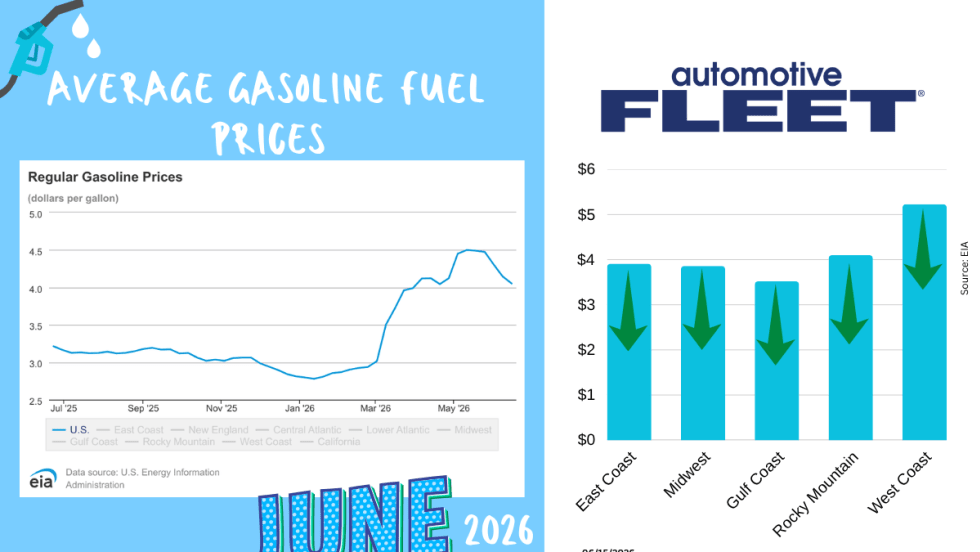
June Fuel Update: Prices Fall Below $4
Drivers are finally getting some relief at the pump. The national average gas price has dropped below $4 a gallon for the first time in months, with prices falling in 47 states as oil markets react to developments in U.S.-Iran negotiations.
Read More →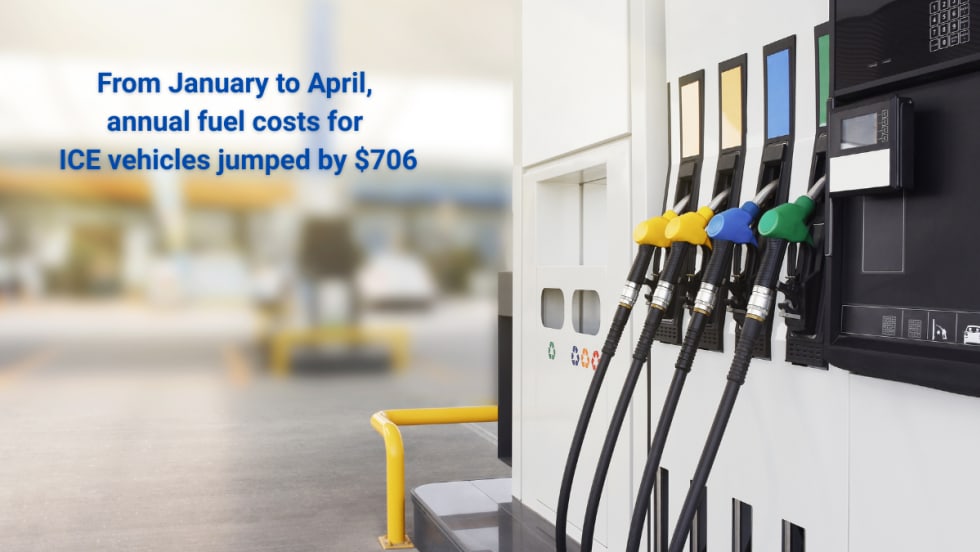
Study: How 2026's Gas Price Hikes Affect Different Vehicle Types
New data from iSeeCars reveals how rising fuel costs have affected different vehicle segments as gasoline prices climbed nearly 46% over the past four months.
Read More →
Are You Tracking Your Fleet's True Total Cost of Ownership?
Bobit Business Media surveyed 190 fleet professionals and found that while most fleets are tracking costs, fragmented systems and data gaps are keeping true TCO visibility out of reach. With rising pressure to control spend in an increasingly volatile environment, the gap between what fleets think they know and what the data actually shows is wider than you might expect. See how your peers are managing costs today and where the industry still has room to improve.
Read More →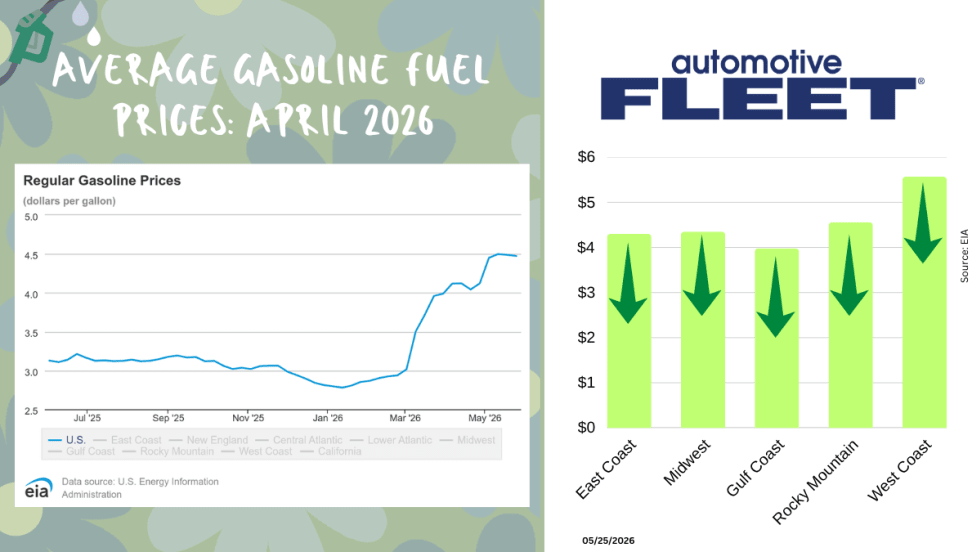
May Fuel Update: All Regions Experience Declines
Gas prices are finally easing in much of the country, but experts warn global tensions could quickly reverse the trend as the national average remains well above last month’s levels.
Read More →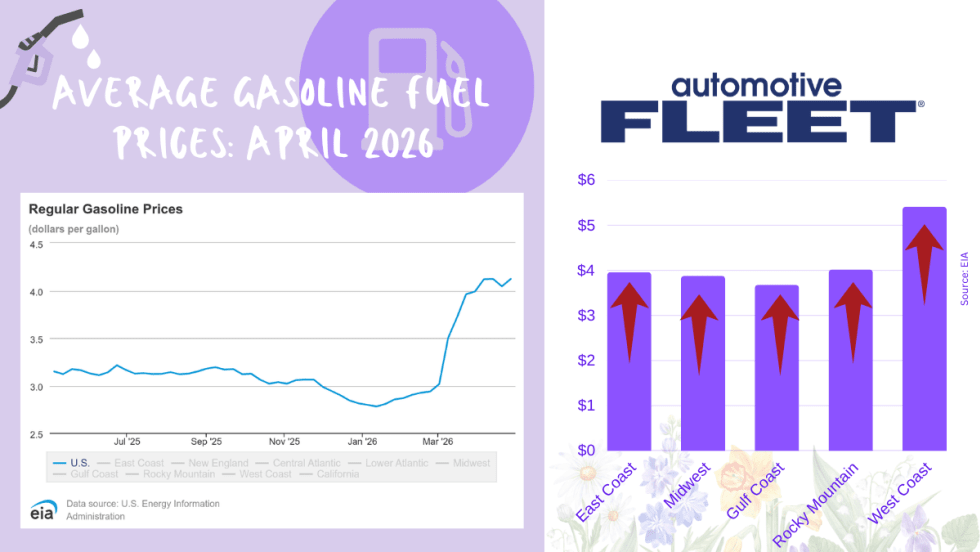
April Fuel Update: Prices Climb Above $4 as Spring Surge Accelerates
National average jumps to $4.04 per gallon, up sharply from last year, with West Coast prices topping $5 and further increases expected amid rising oil tensions.
Read More →
Tips from Fleet Managers on Saving Fuel Costs
Fleet leaders share practical strategies to reduce fuel spend through smarter policy, routing, and driver guidance.
Read More →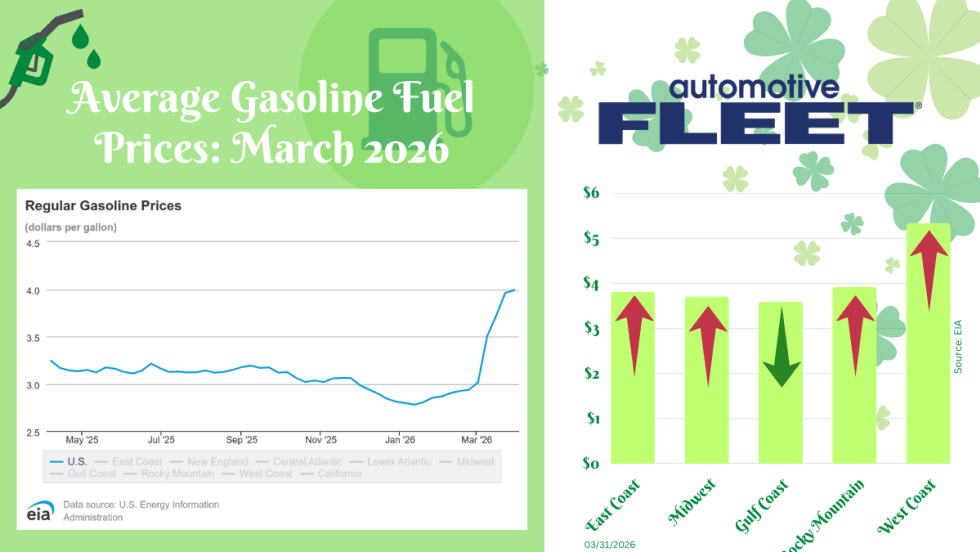
March Fuel Update: Prices Settle With a $4 Average
Fuel prices significantly slowed this week, but a $4 national average is still expected.
Read More →
Bob Adamsky on Fuel Volatility: “Don’t Panic — Have a Plan”
With oil prices rising again, AWP Safety’s fleet manager shares how to respond to rising fuel costs and how the right strategy can turn fuel spikes into cost-saving opportunities.
Read More →
Oil Market Turbulence Is Complicating Fleet Cost Planning
Rapid swings in crude oil prices driven by the conflict in the Middle East could create longer-term cost pressures for fleets, affecting fuel prices, supply chains, and vehicle strategy, says NTEA’s Andrew Wrobel.
Read More →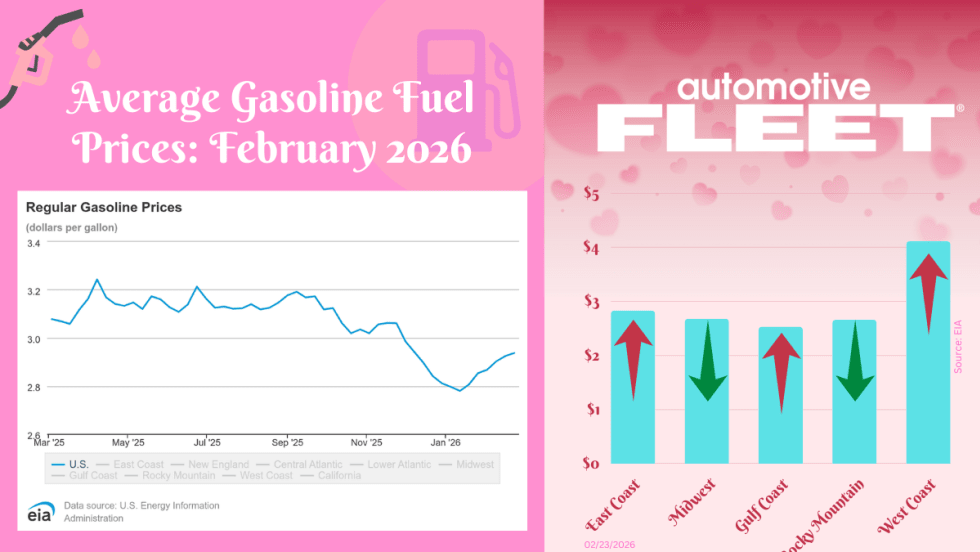
February Fuel Update: Prices Inch Higher for Third Week in a Row
The final February fuel update reveals prices continuing to inch higher for the third week in a row.
Read More →